China's Digital Silk Road in Iraq and the Middle East: How AI, smart cities, and 5G reshaping the region


By Halo Hassan Saeed*
While most international discussions surrounding China's Belt and Road Initiative (BRI) focus on railways, highways, ports, oil pipelines, and maritime trade routes, another strategic dimension is quietly reshaping global politics and economic connectivity: the Digital Silk Road. The Digital Silk Road represents the technological and digital component of China's broader global strategy. Through investments in artificial intelligence, cloud computing, smart cities, fiber-optic networks, 5G telecommunications, digital finance, e-commerce systems, and surveillance technologies, China is increasingly positioning itself as one of the leading technological powers influencing the Middle East. For countries across the Middle East, digital transformation has become a strategic necessity rather than a luxury. Governments in Saudi Arabia, the United Arab Emirates, Iraq, Egypt, Qatar, and other regional states are investing heavily in smart infrastructure, digital governance, artificial intelligence, renewable energy management, and technology-based economic diversification. As a result, China's Digital Silk Road is emerging as one of the most influential geopolitical and economic projects shaping the future of the Middle East.
The Rise of the Digital Silk Road
The concept of the Digital Silk Road was officially introduced by China in 2015 as part of the Belt and Road Initiative. While the original Silk Road connected civilizations through trade caravans and maritime commerce, the modern Digital Silk Road connects countries through data, information networks, digital infrastructure, and technological cooperation. Chinese policymakers argue that digital infrastructure is now as important as traditional infrastructure such as roads, railways, and ports. In the twenty-first century, economic competitiveness increasingly depends on internet connectivity, artificial intelligence, digital trade, cybersecurity, and technological innovation. The Digital Silk Road focuses on several major sectors: 5G telecommunications, artificial intelligence, cloud computing, smart-city systems, e-commerce, digital payment systems, satellite navigation, big data management, and fiber-optic communication networks. China's major technology companies, including Huawei, Alibaba, Tencent, ZTE, and Hikvision, play central roles in this global technological expansion.
Why the Middle East Matters
The Middle East occupies one of the world's most strategic geographic positions, connecting Asia, Europe, and Africa. Beyond its traditional importance in global energy markets, the region is increasingly becoming a major center for technological modernization and digital transformation. Several Middle Eastern countries have launched ambitious national development plans aimed at reducing dependence on oil-based economies. Saudi Arabia's Vision 2030, the UAE's smart-government initiatives, Qatar's technological infrastructure projects, and Iraq's reconstruction programs all prioritize digital modernization. China sees these modernization programs as major opportunities for long-term technological partnership. For Beijing, the Middle East serves multiple strategic goals: expanding Chinese technological influence, strengthening digital trade routes, protecting energy interests, building global technology markets, and competing with Western technological dominance. For Middle Eastern governments, Chinese companies often provide relatively affordable and rapidly deployable technology solutions compared to some Western alternatives.
Huawei and the Expansion of 5G
Huawei has become one of the most important symbols of China's Digital Silk Road strategy. The Chinese telecommunications giant plays a major role in constructing 5G infrastructure across the Middle East. Huawei technologies are increasingly integrated into telecommunications systems, smart-city projects, digital logistics, and artificial intelligence platforms throughout the region. Countries cooperating with Huawei include Saudi Arabia, the United Arab Emirates, Iraq, Egypt, Qatar, Kuwait, and Oman. The UAE has emerged as a particularly active partner. Emirati-based telecom du signed a memorandum of understanding with Huawei in March 2026 to advance the second phase of 5G-Advanced (5G-A) technology, aiming to deliver peak speeds of up to 10 Gbps across the country's networks while also incorporating AI-based network management and automation. In April 2026, e& UAE successfully completed the Middle East's first proof-of-concept for flexible dynamic network slicing in partnership with Huawei, significantly strengthening its 5G-A capabilities.
5G technology is considered critical for future economic development because it supports faster internet speeds, autonomous systems, industrial automation, digital healthcare, AI-driven transportation, and smart infrastructure. In Saudi Arabia and the UAE, Huawei technologies are connected to smart-city programs, logistics systems, digital surveillance, renewable energy management, and transportation infrastructure. In Iraq, Huawei has been a major player in the telecom sector for decades. According to an Atlantic Council report from January 2026, Chinese firms remain central to Iraq's digital growth. In June 2025, Asiacell (Iraq's largest mobile operator) and China Mobile International signed a memorandum of understanding to expand enterprise-level digital services, accelerating Iraq's digital transformation. Huawei also partnered with Iraq's Communication and Media Commission to train personnel in cybersecurity. China has established an expansive multisectoral presence in Iraq, spanning energy, telecommunications, consumer markets, and education, with the aim of embedding Beijing's influence within Iraq's long-term development trajectory. Despite geopolitical controversies surrounding Huawei, many Middle Eastern countries continue technological cooperation with China because of economic efficiency, infrastructure speed, and technological capability.
Artificial Intelligence and Smart Cities
Artificial intelligence has become one of the most important dimensions of the Digital Silk Road. China has invested heavily in AI technologies involving facial recognition, traffic management, urban surveillance, renewable energy optimization, smart transportation, automated logistics, and public administration systems. These technologies are increasingly being exported to the Middle East. Saudi Arabia's NEOM project represents one of the world's most ambitious smart-city developments. The futuristic city is expected to integrate artificial intelligence, robotics, renewable energy systems, autonomous transportation, and digital governance on a massive scale. Chinese technology companies participate in several areas connected to these projects. Similarly, the UAE has expanded AI integration into public services, airports, police systems, transportation management, and smart infrastructure.
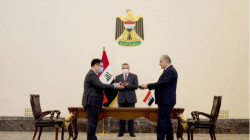
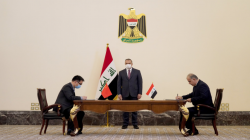
For Iraq, artificial intelligence and digital modernization could eventually become important tools for reconstruction and economic modernization. On January 17, 2026, DeepBlue Technology (深兰科技) signed a comprehensive cooperation agreement with the Iraq National Infrastructure Development Foundation. The partnership covers fund investment, post-war infrastructure reconstruction, intelligent upgrading of oil refining, digital banking payment systems, robotics, multi-level smart healthcare based on DeepBlue's medical diagnosis large model, and AI talent development. The agreement includes establishing a joint venture in Iraq to undertake various national projects. In March 2026, Hongchuan Smart signed a strategic cooperation agreement with the same Iraqi foundation, focusing on developing oil, gas, and chemical storage projects while promoting digital upgrades of storage and transportation systems for the oil and gas industry.
Iraq's growing internet penetration and young population create strong foundations for future technological expansion. Additionally, Iraq is advancing several major infrastructure projects. The designs for the $2.5 billion Baghdad Metro project—spanning over 148 km with 64 stations covering 85% of the city—have been fully completed. Twenty-six multinational corporations, including China Railway, have expressed interest in the project. Infrastructure work at the new Sadr City is also progressing, with a Chinese company contracted to establish comprehensive infrastructure for the city's first phase of 11,000 housing units. If properly developed, Iraq could become an important digital transit hub connecting the Gulf region, Türkiye, Iran, and the Eastern Mediterranean.
Digital Economy and E-Commerce
Another important dimension of the Digital Silk Road is electronic commerce and digital finance. China possesses one of the world's largest digital economies. Chinese companies such as Alibaba and Tencent have transformed online trade, digital payment systems, logistics technology, and e-commerce platforms. Middle Eastern governments increasingly seek to develop similar digital economies. Digital commerce creates opportunities for youth entrepreneurship, small business development, regional trade integration, financial inclusion, and cross-border economic activity.
In Iraq, digital transformation is accelerating. In January 2026, Rafidain Bank recorded more than IQD 841 billion (approximately $641.98 million) in electronic collection settlements on behalf of government entities, processing 73,226 electronic settlements in a single month. The number of government entities activated on the electronic collection system increased from 1,808 in January 2025 to 2,544 in January 2026. Digital adoption across ministries and public institutions rose from 18 percent in 2022 to 32 percent in 2025. In April 2026, Iraq launched an integrated electronic platform for company registration, including the digital archiving of more than 103,000 documents and 18 million records. According to Hasan Al-Khatib, Advisor to the Iraqi Prime Minister on digital transformation, over 90 percent of Iraqis already have the unified digital ID, and the government's strategic planning structure is now in formation to coordinate digital efforts. When asked to rate Iraq's progress on digital transformation, he was candid: "Less than 1 percent. But that is good news. Iraq is a green field. The potential is enormous. The global technology companies view Iraq as the biggest future digital market in the region—not Saudi Arabia, not UAE, not Qatar, Iraq".
Internet penetration in Iraq has risen from 44 percent in 2019 to 83 percent. The three major mobile operators—Zain Iraq, Asiacell, and Korek Telecom—together control over 90 percent of the mobile market, with total mobile users numbering approximately 34.8 million. In Iraq and the Kurdistan Region, digital trade platforms could help connect local businesses to international markets while reducing some traditional barriers connected to geography and weak infrastructure. The expansion of digital payment systems and online banking may also contribute to private-sector growth and economic diversification.
Cybersecurity and Global Competition
Despite its rapid growth, the Digital Silk Road also faces major international criticism and geopolitical controversy. The United States and several Western governments have expressed concerns regarding cybersecurity risks, data privacy, digital surveillance, technological dependence, and strategic influence. Critics argue that Chinese digital infrastructure may increase Beijing's geopolitical influence across strategic regions. Chinese officials reject these accusations and argue that the Digital Silk Road primarily promotes technological modernization, digital connectivity, and economic development.
However, global competition over artificial intelligence, telecommunications infrastructure, and digital governance increasingly reflects broader geopolitical rivalry between China and Western powers. The Middle East has therefore become an important arena in the international technology competition of the twenty-first century. China has already invested an estimated $79 billion in Digital Silk Road projects globally and is promoting the initiative as a foreign policy priority at major international forums such as the World Internet Conference and the Belt and Road Forum.
Technology and Future Geopolitics
The Digital Silk Road represents more than a technological project. It reflects a broader transformation in global politics and economic power. Historically, global influence depended heavily on military power, industrial production, and control over maritime trade routes. Today, influence increasingly depends on data control, digital infrastructure, artificial intelligence, information networks, cybersecurity capabilities, and technological innovation. China's technological expansion into the Middle East demonstrates how future geopolitical competition may increasingly revolve around digital systems rather than traditional military alliances alone.
For many Middle Eastern countries, balancing cooperation between China, the United States, and Europe will become increasingly important. Iraq continues to deepen its strategic partnership with China. In April 2026, First Deputy Speaker Adnan Fayhan Al-Dulaimi affirmed the Iraqi Parliament's readiness to enhance strategic partnership with China and activate the "Development Road" project. The Kurdistan Region is also deepening economic ties with China. Official statistics from the Kurdistan Region Board of Investment published in May 2026 show that more than $46.484 billion has been invested across various sectors of the Kurdistan Region over the past 20 years. Among foreign investors, China ranks first, with approximately $4.609 billion invested—representing around 10.55 percent of total foreign investment, concentrated mainly in energy, infrastructure, telecommunications, and industrial development projects.
Regional governments seek technological modernization while also attempting to maintain strategic flexibility within a rapidly changing international system.
Conclusion
The Digital Silk Road has become one of the most transformative dimensions of China's Belt and Road Initiative. While the ancient Silk Road connected civilizations through trade caravans, spices, textiles, and maritime commerce, the modern Silk Road increasingly connects societies through artificial intelligence, data networks, cloud computing, smart infrastructure, and digital connectivity. Across the Middle East, Chinese technological cooperation is influencing telecommunications, smart cities, renewable energy management, e-commerce, and artificial intelligence systems. For Iraq and the Kurdistan Region, digital modernization may eventually become as strategically important as traditional oil and infrastructure development. At the same time, the expansion of the Digital Silk Road also raises major geopolitical questions involving cybersecurity, digital sovereignty, technological dependence, and international competition“The future Silk Road may no longer be built with ports, railways, and highways alone, but with algorithms, satellites, fiber-optic cables, and artificial intelligence.”
Selected Sources
1. Belt and Road Portal (https://eng.yidaiyilu.gov.cn)
2. World Bank – Digital Development (https://www.worldbank.org/en/topic/digitaldevelopment)
3. International Telecommunication Union (ITU) (https://www.itu.int)
4. MERICS – Digital Silk Road Research (https://merics.org/en)
5. CSIS – China Power Project (https://chinapower.csis.org)
6. Middle East Institute (https://www.mei.edu)
7. Huawei Global Reports (https://www.huawei.com/en)
8. Reuters Technology News (https://www.reuters.com/technology/)
9. Financial Times – Technology Section (https://www.ft.com/technology)
10. UNCTAD Digital Economy Reports (https://unctad.org/topic/ecommerce-and-digital-economy)
*Halo Hassan Saeed is a writer and journalist, a member of the International Union of Journalists, and the author of two books on the People’s Republic of China.
Disclaimer: The views presented by the author do not necessarily reflect the official standpoint of Shafaq News Agency.