The Great divide: The myth of Iraq’s partition


Shafaq News
Since the fall of Saddam Hussein in 2003, Iraq has faced a persistent dilemma: can this multi-ethnic, multi-sect country survive under a fragile political system and an oil-dependent economy, or will internal and external pressures push it toward partition?
Discussions of dividing Iraq into three regions – a Kurdish region in the north, a Sunni region in the west and center, and a Shiite region in the south and along the middle Euphrates – are not new. The idea resurfaces during political crises or security escalations, often framed as a potential solution to long-standing sectarian conflicts, while critics caution it could deepen existing divisions.
An American Plan
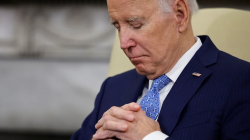
Early serious proposals emerged in US political circles. In 2006, then-Senator Joe Biden advanced a “soft federalism” plan that envisioned three semi-autonomous regions under a weak central government. Its stated aim was to reduce sectarian violence, but it reflected a deeper US perception that Iraq might not be capable of unified central governance.
Read more: Iraqi–Iranian Security MoU rekindles a decade of border deals—and old controversies
The sectarian conflict between 2006 and 2007 reinforced this notion. Baghdad effectively split into Sunni and Shiite zones, with hundreds of thousands of residents displaced. Meanwhile, the Kurdistan Region continued consolidating its autonomy, reinforcing the perception that Iraq was composed of three major blocs difficult to integrate into a single stable state.
However, implementing such a plan faces significant obstacles. Major cities remain ethnically and religiously mixed, while Iraq’s economy depends on a unified resource network. More than 80% of the country’s oil comes from the south, making any partition extremely complex both economically and socially.
Read more: Fractured alliance: Iraq's CF faces internal strife
The Golden South
Under the three-region scenario, the south would be the most important and sensitive region. Stretching from Basra to Maysan, Dhi Qar, al-Muthanna, al-Diwaniyah, Najaf, Karbala, Babil, and Wasit, it is home to around 12–13 million people, roughly one-third of Iraq’s population.
The South’s strategic weight comes not only from its population but also from its oil wealth. Basra alone produces over three million barrels of oil per day, accounting for about 90% of Iraq’s oil exports, which generate more than $100 billion annually. This makes the South the richest and most economically influential region in any partition scenario.
The region also serves as a strategic gateway to the Gulf through Umm Qasr port and the under-construction Grand Faw Port, which, upon completion, is expected to be one of the largest in the Middle East, with a capacity of up to 90 million tons annually. Such infrastructure positions the south as a pivotal player in Iraq’s internal balance and in wider regional geopolitics.
Ties that Bind
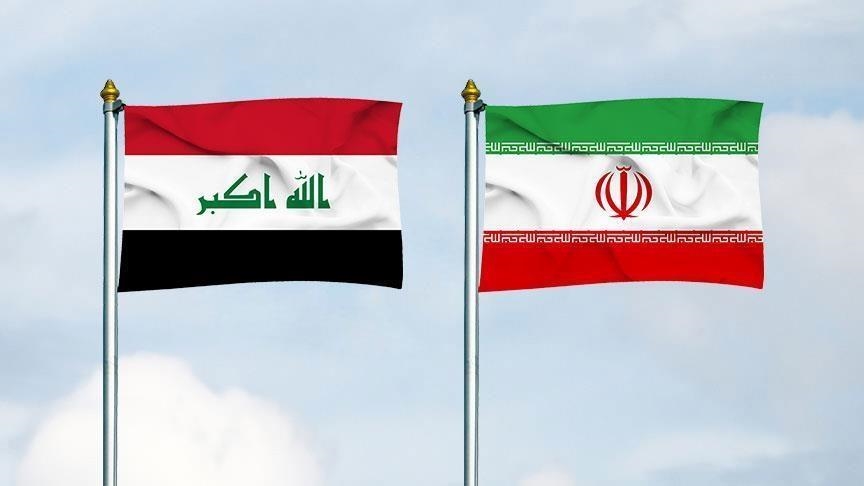
Understanding the South’s strong ties to Iran requires historical context. Since the 16th century, Najaf and Karbala have played central roles in shaping Shiite religious identity, hosting seminaries whose graduates exerted considerable influence in Iran. Many prominent Iranian leaders studied in Iraq’s religious centers, while southern cities maintained lasting connections with Shiite authorities in Qom.
These links deepened after the Iran-Iraq war (1980–1988), when southern Iraqis fought on the frontlines, fostering both grievances and alignment with Iranian interests. Following the fall of Saddam Hussein in 2003, Iran reasserted its role in the south through Shiite political parties and armed groups that had been based in Tehran.
Iranian influence today is not only exerted externally but embedded within local political structures. Major Shiite parties that rose to power after 2003 – including the Badr Organization led by Hadi al-Amiri – originated in Iran and maintain close ties.
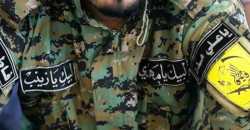
Security dynamics in the south are also shaped by Tehran. The Popular Mobilization Forces (PMF), created in 2014 under a fatwa from Grand Ayatollah Ali al-Sistani to fight ISIS, includes units such as Asaib Ahl al-Haq and Kataib Hezbollah, which retain direct Iranian links through funding, training, and command. These armed groups remain active after ISIS, controlling some border crossings and economic networks, leaving the south a de facto political stronghold influenced by Iran.
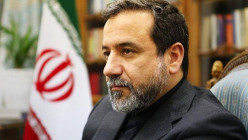
Despite these strong ties, political researcher Ramadan al-Badran rejected any notion of Iraqi provinces being merged with Iran. “Even with the shared Shiite identity, trade, and religious visits, there is no political thought or plan for annexation,” he explained, noting that Iranian influence in central and southern Iraq was tied to economic and religious factors rather than territorial ambitions.
“Such rumors are purely political, aimed at unsettling the public and undermining confidence in national cohesion,” he added.
Read more: The US exits Iraq: A withdrawal heralds a sovereign future
No, Not Now
If Iraq pursued partition, the south would have the resources to survive as a semi-independent entity: immense oil wealth, a strategic port, and a demographically cohesive population.
But major challenges remain: deep divisions among Shiite political factions, weak infrastructure, overreliance on oil, and opposition from Gulf countries and Turkiye, which would resist the emergence of a wealthy, Iran-aligned Shiite region on their borders.
From Iran’s perspective, partition is a double-edged sword. It could provide strategic depth through a friendly region, but risk driving Sunni and Kurdish populations toward US alliances, creating new geopolitical complications.
Political analyst Salam Adel dismissed the partition claims, arguing that such ideas lack any political or social foundation. Speaking to Shafaq News, he underlined that these narratives are being used for political and media purposes to fuel internal tensions ahead of Iraq’s parliamentary elections scheduled for November 11, 2025.
At the same time, he cautioned that Iran’s Revolutionary Guard and allied Shiite armed groups are “ready to swallow 11 Iraqi provinces at any moment if there were reckless attempts to topple the political system or cause chaos.”
Warning against threats aimed at redrawing regional maps by force, Adel stressed that the region will not unfold according to plans envisioned by US President Donald Trump and Israeli Prime Minister Benjamin Netanyahu.
“If new equations are imposed, people of the region also have their own strategies to counter them,” he continued, noting that if division were forced, “it will be shaped by our vision, not theirs.”
He further argued that Iraq’s sectarian and ethnic composition allows it to remain united, though he did not rule out alignment with Iran if the regional map changed drastically.
“If the Kurds separate and Sunni areas find their own alternative, Shiites may have no geopolitical choice other than the Islamic Republic of Iran,” he remarked, describing the current borders as “not sacred but products of colonial deals like Sykes-Picot.”
Elections Talk
The remarks come weeks before Iraq holds its next parliamentary elections. Analysts view the rhetoric as an election tool aimed at weakening rivals, testing public opinion, or heightening sectarian polarization to serve partisan agendas.
Political researcher Atheer al-Sharaa noted that the comments were intended to stir public sentiment or undermine Shiite factions by floating the idea of southern provinces joining Iran.
“Some parties may use this discourse as pressure against the government or specific rivals, to justify foreign intervention or strengthen their political standing before elections,” al-Sharaa explained.
He linked the rhetoric to the broader “New Middle East Plan,” a US-Israeli concept introduced in 2006 that called for breaking large states into sectarian or ethnic entities. One of its best-known proposals was dividing Iraq into Shiite, Sunni, and Kurdish regions, including the so-called 2006 Biden Plan.
“But while many studies discussed this project, reality shows it is nearly impossible to implement in a country as complex as Iraq,” he added, stressing that Iran had never, publicly or privately, proposed annexing southern Iraq.
“That would trigger direct confrontation with the international community. Iran prefers a unified but politically weak Iraq, ensuring influence through its local allies without risking reckless border adventures,” al-Sharaa emphasized.
Read more: Iraq’s Developement Road: Geopolitics, rentierism, and broader connectivity
Political analyst Imad al-Musafir shared the same assessment, pointing out that calls for Iraq’s division or for linking its south to Iran are not new but part of broader US-Israeli projects to create a “new Middle East serving the idea of Greater Israel.”
“What is happening in Syria, Palestine, and Lebanon fits within this scheme,” he observed, underlining that Iraq’s religious and political leaders reject division and remain committed to unity.
“These recent calls are testing the waters or mobilizing rhetoric, nothing more,” he concluded.
Written and edited by Shafaq News staff.