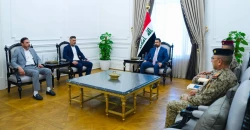
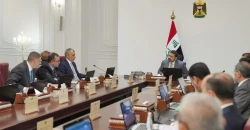
Ali Al-Zaidi sworn in as Iraq's prime minister with a program already failed


Shafaq News
Every Iraqi government since 2003 has arrived with a program containing the same commitments: weapons under state control, anti-corruption measures, electricity reform, banking restructuring, agricultural development, reduced oil dependence, improved education, and neutrality between regional axes. Every program has produced the same outcome, not failure exactly, but continuation, with the files remaining open, the crises recurring, and the next government inheriting the same document with updated formatting.
Ali al-Zaidi was chosen because he was a political outsider with no bloc, no constituency, and no independent power base. That is the first reason his program will struggle: the forces most capable of blocking reform are the forces that selected him, and they did not select him to confront them.
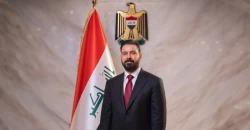
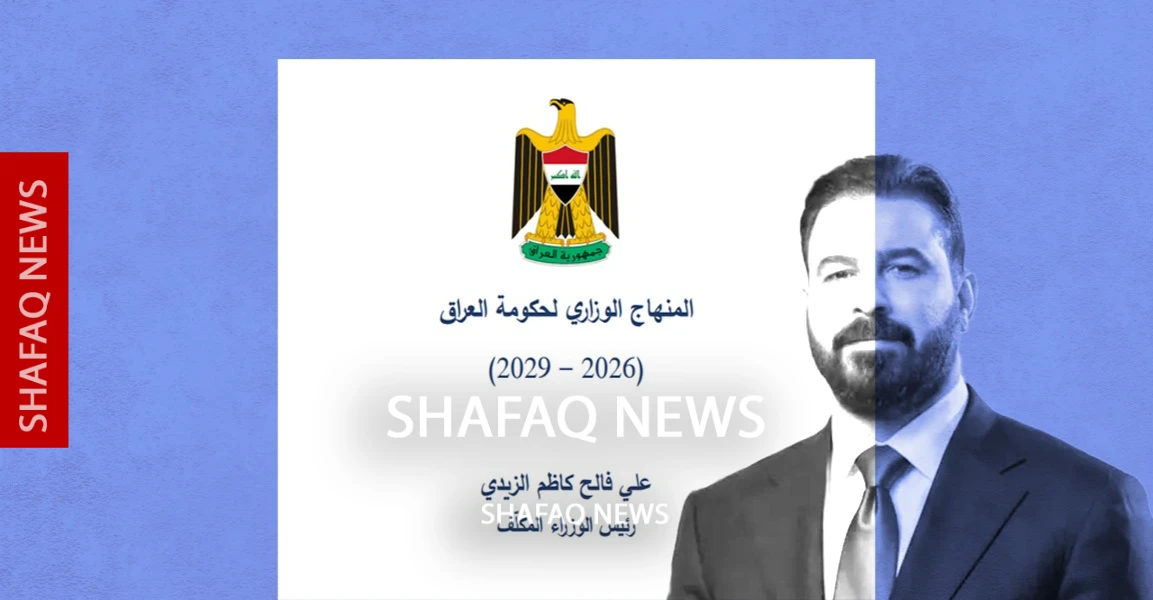
Al-Zaidi, sworn in on May 14, 2026, submitted his ministerial program built around "a stable state, a productive economy, and balanced partnerships." A comparison of his 14-point platform with those of his two predecessors —Mohammed Shia al-Sudani and Mustafa al-Kadhimi— found that the vast majority of its core commitments appeared verbatim in one or both previous programs without having been resolved.
The problem now is whether the conditions under which he operates give him any more room than the men who wrote the same sentences before him.
Read more: Ali al-Zaidi named Iraq's prime minister: Easy nomination, harder road ahead
Built to Be Managed
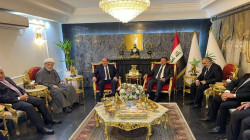
Al-Zaidi built his career almost entirely outside elected government, born in Dhi Qar province in 1986, holding degrees in law and finance, with his professional life unfolding overwhelmingly in the private sector. His designation came after a meeting at the residence of Popular Mobilization Forces (PMF) leader Falih al-Fayyad, agreed upon by both former prime minister Nouri al-Maliki and caretaker Prime Minister Mohammed Shia al-Sudani to break a deadlock after Washington threatened to withhold Iraq's access to the petrodollar over al-Maliki's candidacy.
He was selected, according to sources familiar with the negotiations, because he had no political bloc, meaning none of the eight leading Shiite Coordination Framework chiefs needed to fear he would use the premiership to eclipse them.
A political source told Shafaq News that the system chose al-Zaidi for the same reason it chose his predecessors: because a man with no independent power base "is easier to manage than one who arrives with a mandate."
Read more: Who is Ali Al-Zaidi? The businessman tapped for Iraq's premiership
That calculation carries a precedent the Coordination Framework may not have fully priced in. Three of those same chiefs —al-Maliki, Haidar al-Abadi, and al-Sudani— were also once chosen as manageable outsiders and used the premiership to build parliamentary blocs they still deploy today. Whether al-Zaidi follows that pattern or is genuinely contained by it is the question his government cannot yet answer.
His business background introduces a more immediate complication. Al-Zaidi previously served as chairman of Al-Janoob Islamic Bank, which was sanctioned by the United States in 2024 over alleged money laundering on behalf of Iran and Iranian-backed Iraqi Shiite armed groups. While al-Zaidi is not himself under sanctions, the designation placed an institution he once led at the center of the precise tension he must now navigate as head of government: Washington demands banking compliance and PMF reform; the PMF-aligned coalition that selected him depends on the financial architecture those demands are designed to dismantle. That is a structural contradiction at its core.
Guns Nobody Will Hand Over
No commitment is more central or more predictably contested than the monopoly of arms, and every government since 2003 has made it without achieving it, because the armed factions that would need to disarm are participants in the political system, not adversaries of it.
Read more: Iraq’s PMF Law: A battle for state control
A source who requested anonymity told Shafaq News that Iraq has 34 armed groups, most already part of the PMF, whose members largely answer to Iran rather than the prime minister, with the leader of one group stating he would overthrow the Iraqi government if Iran's supreme leader requested it.
Al-Maliki, one of al-Zaidi's kingmakers, described talk of dissolving or merging the PMF as "rumor," insisting any development should preserve its strength. The Stimson Center has argued the opposite, that ambiguities around command hierarchy, budgetary oversight, and integration into the national security framework have become persistent sources of tension, and that without reform, the PMF risks accruing excessive independent power.
Factions insist any handover would be to the PMF itself, arguing it is a state institution because parliament legalized it. But the PMF is an umbrella dominated by the same groups claiming compliance, many of which retain their own chains of command, intelligence units, economic networks, and external loyalties. "Moving weapons from factions to an institution they themselves control is not disarmament. It is rebranding."
Al-Zaidi enters this debate with no independent security constituency, no parliamentary bloc, and a cabinet that could not agree on a defense minister.
Read more: Iraq’s armed factions, state authority, and the battle over disarmament
Washington, Tehran, and the Squeeze
The geopolitical pressure on al-Zaidi's government is also structural, and its two poles pull in opposite directions.
Washington's demands are specific: PMF reform, banking compliance, and continued cooperation on dollar-transfer mechanisms to prevent currency from reaching sanctioned entities in Tehran. The US-Iran war and the closure of the Strait of Hormuz have sharpened that agenda considerably. For Washington, al-Zaidi's Al-Janoob Bank history is a data point in an active sanctions enforcement posture, and his government will need to demonstrate credible separation from that history to access the financial cooperation Iraq's dollar-dependent economy requires.
Tehran's interests point in the opposite direction. The PMF's financial and operational independence is part of Iran's regional influence framework, and any prime minister who genuinely reforms the PMF or the banking channels that sustain it threatens a network Iran has spent two decades building in Iraq.
The coalition that selected al-Zaidi is substantially composed of forces that answer, at varying degrees of remove, to Tehran. He cannot reform that coalition without confronting its external patron, and he cannot confront its external patron without losing the political ground he was given.
That triangle —Washington demanding compliance, Tehran requiring preservation, and al-Zaidi holding office at the intersection— is the operative constraint beneath every commitment in his program.
Read more: Two powers, one grid: The geopolitical siege of Iraq’s economy
Washington's Blacklist
Thirty-five Iraqi banks were effectively cut off from international dollar transactions in February 2024 following a Central Bank decision prohibiting them from opening dollar accounts or conducting international transfers, after a visit from a senior US Treasury official aimed at cutting currency smuggling to Tehran. Iraq's private banking sector grew rapidly after 2003 by exploiting the Central Bank's currency auction system, where access to official exchange rate dollars created profit opportunities that some banks channeled toward sanctioned entities, particularly in Iran.
Al-Sudani's government cooperated with American institutions to restructure state banks, but the project froze under sanctions pressure and inadequate capital. Al-Zaidi inherits a sector where a significant fraction of private institutions cannot conduct international transactions, and where his prior chairmanship of a sanctioned bank makes his credibility as a reformer directly vulnerable to the institutions he most needs to reform.
Read more: Sovereignty strain: US sanctions trigger Iraq's liquidity nightmare
Anti-Corruption, Again
Iraq ranked 140th globally in the 2024 Corruption Perceptions Index with a score of 26 out of 100. The 2025 index showed marginal improvement: 136th out of 182 countries with a score of 28, still well below the global average of 43. The trajectory is real but narrow. Iraq moved 32 places in seven years, while President Barham Salih estimated in 2021 that $150 billion in oil revenues had been stolen and smuggled since the 2003 invasion, in an economy that remains predominantly cash-based and makes money flows almost impossible to trace.
Al-Zaidi's program names anti-corruption as a priority without specifying what makes this iteration different. The structural reason previous efforts produced limited results is the political economy: the patronage networks that sustain the Shiite Coordination Framework, the National Sunni Council, and the Kurdish forces are the same networks any credible investigation would need to penetrate. A government assembled by those networks cannot simultaneously dismantle them without dismantling the coalition that sustains it.
Read more: Failure or feat? A bold assessment of PM Al-Sudani's tenure
Where the Money Runs Out
The electricity crisis has been declared solvable by every Iraqi prime minister since 2003. The US-Iran war made a chronic problem acute: strikes on Iran's South Pars gas field in early 2026 knocked more than 3,000 megawatts off the national grid almost overnight.
Iraq now faces peak summer demand of roughly 40 gigawatts against its current production of approximately 29 gigawatts. The more revealing figure is fiscal: the federal government recovers only 0.17% of total electricity revenue —approximately $763,000 per month —covering almost none of its operational costs. A ministry that cannot recover its running costs cannot invest in the grid. A grid that cannot be invested in cannot close a gap that two decades of deferred commitment have widened to the point where blackouts of up to 12 hours a day were already triggering street protests before the war began.
Read more: Iraq power 2026: war on Iran collapses the grid's last defenses ahead of peak summer
The same fiscal logic runs through agriculture and education. Provincial cultivation quotas have been cut by more than 60% in recent seasons due to drought, while the modern irrigation technology that previous programs promised remains largely unimplemented in a country bisected by the Tigris and Euphrates that continues to rely on flood irrigation.
Read more: Iraq’s water crisis: A structural rewrite of agricultural governance
Education faces a documented deficit of approximately 7,000 school buildings, a number that has appeared in government briefings for years without being closed, despite al-Sudani's Chinese-funded thousand-schools project. Both sectors require capital investment. The capital is currently paying salaries.
The Inheritance
Al-Sudani delivered measurable results —Iraq's corruption ranking improved 14 places in 2024 alone— and maintained domestic stability through a regional war. He also left nine cabinet posts unfilled, withdrew the PMF law under US pressure, and accumulated a fiscal deficit of 8.81 trillion dinars (approximately $6.7 billion) in the first three quarters of 2025, while the oil price required to balance the budget rose to $84 per barrel against a market trading well below it.
Al-Zaidi's potential advantages are real but narrow. His business background gives him financial literacy that his predecessors lacked. His absence from a political bloc means he carries none of the factional debts that constrained al-Sudani. His cross-communal endorsement reflects a genuine opening in Iraq's post-war political atmosphere. But the IMF's 2025 Article IV mission found that Iraq's vulnerabilities have increased due to large fiscal expansion, that public employment costs are unsustainable, and that non-oil GDP is projected to slow to just 1% in 2025, meaning every promise in his program requires money that is currently paying salaries for a public sector the Washington Institute estimates generates minimal productive output per employee per day.
The system that produced al-Zaidi is the same system that will determine what his government can deliver —designed to distribute oil revenues rather than build a productive economy, to manage factional balance rather than enforce institutional accountability, and to defer the hard decisions that reform requires onto the next cycle. Previous premiers chosen on the same terms eventually used the office to build independent standing.
What he has inherited in the meantime is not a mandate for change but an invitation to manage continuity, and the distance between those two things is the distance between every program Iraq has written since 2003 and the country those programs promised to build.
Read more: Deficit soars, projects freeze: Iraq heads into 2026 with NO BUDGET
Written and edited by Shafaq News staff.