Experts doubt Baghdad can stop Kurdistan Region attacks


Shafaq News- Baghdad/ Erbil
A surge in drone and missile attacks on the Kurdistan Region of Iraq (KRI) has exposed Baghdad's inability to identify or halt the strikes weeks before a Sept. 30 deadline to bring weapons under state control, Iraqi security experts and analysts told Shafaq News, saying that determining who is launching the attacks is the problem at the center of the government's disarmament effort.
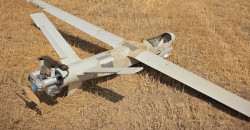
Early Friday, the US-led Coalition intercepted three explosive-laden drones over Erbil between 2:17 and 2:25 a.m., according to the KRI’s Counter-Terrorism Service. No casualties were reported. The attack came a day after a drone crashed into a residential property in Erbil. On Aug. 12, drones struck four locations across three bases belonging to Iranian Kurdish opposition groups near the regional capital, also without casualties.
According to incidents documented by Shafaq News, the Kurdistan Region was targeted by 16 drones and three missiles from Aug. 1 to 14. Eight drones and all three missiles targeted Erbil, while eight drones struck Al-Sulaymaniyah.
Read more: Nearly four weeks of attacks on the Kurdistan Region of Iraq
The attacks coincide with preparations to enforce the deadline for weapons outside state institutions to be brought under government control, as the US-led Coalition’s military mission in Iraq enters its final phase.
Where Are the Attacks Coming From?
Responsibility for several of the recent attacks remains unresolved, complicating efforts to determine whether the threat originates inside Iraq, across its borders, or from a combination of both.
Security expert Adnan al-Kinani urged investigators to establish launch points before assigning responsibility. “A committee is working to determine whether the drones and missiles originated inside or outside Iraq,” he told Shafaq News, describing attribution as the first step toward preventing further attacks.
Read more: Who is striking Iraqi Kurdistan?
Al-Kinani urged Iraqi Prime Minister Ali Faleh al-Zaidi to address any shortcomings or failures in the country’s security and intelligence systems, “if any are found,” to prevent similar attacks from recurring and safeguard Iraqi territory.
Limits of State Control
Political analyst Mohammed Zangana blamed the repeated attacks on Baghdad’s inability to control armed groups operating outside effective state authority.
Security cooperation between Baghdad and Erbil has helped uncover terrorist cells and produced results in counterterrorism operations, Zangana told Shafaq News. Preventing missile and drone attacks, however, “has proved more difficult.”
He accused armed groups of operating through areas “controlled by the Iraqi military” or within formations formally incorporated into the country’s security apparatus, arguing that continued attacks leave Baghdad responsible regardless of the level of coordination with Erbil. “All of Iraq will feel the danger as the security implications extend beyond the Kurdistan Region.”
Read more: Days to disarm Iraq's factions: deadline or negotiable ceiling?
Can Baghdad Enforce Disarmament?
Security analyst Saif Raad described implementation as the weakest point in the government’s plan.
“The government needs more than statements and deadlines,” Raad told Shafaq News, pointing to intelligence and field control, technical surveillance, and the ability to identify armed groups and missile and drone launch sites as essential to enforcing the policy. “Without those capabilities, a formal transfer of weapons would not necessarily give the government effective control over the actors capable of carrying out attacks.”
Raad linked some strikes on the Kurdistan Region to attempts to target US interests and military positions, alleging that Iran’s Islamic Revolutionary Guard Corps (IRGC) “uses Iraq, alongside other regional arenas, to pressure Washington without openly claiming responsibility.”
Regardless of who carried them out, Raad described attacks on the Kurdistan Region as an assault on “Iraq, its sovereignty, constitution, laws and institutions.”
A Wider Struggle Over Stability
Iraqi politician Mithal al-Alusi blamed domestic and regional actors for the attacks, describing drone and missile strikes on Erbil as part of a longstanding effort to destabilize the Kurdistan Region.
He linked the pressure on Erbil to wider political and economic competition, arguing that the KRI’s relative stability and development have “made it a target for actors seeking to undermine it.”
Al-Alusi called for stronger support for the KRI and Baghdad’s efforts to bring faction weapons under state control.
Read more: What happens to Iraq's armed factions after September 30?