Days to disarm Iraq's factions: deadline or negotiable ceiling?


Shafaq News
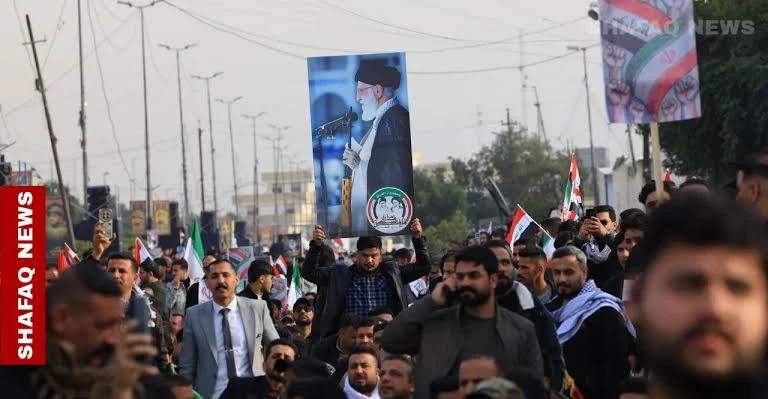
Fifty-four days remain before the deadline set by the Iraqi Government for advancing steps to restrict weapons to the state, with some Iran-aligned armed factions still refusing to give up their arms, maintaining that their weapons are tied to "resistance" against regional threats.
Rising domestic and regional tension frames these developments, after Iraqi security and military forces raised their readiness level and canceled leave for many commanders and officers in anticipation of any emergency. The move coincided with the expiration of a deadline armed factions had given the government to take a position on the US and Saudi strikes that hit Popular Mobilization Forces (PMF) sites on July 29.
Read more: Iraq under regional pressure as neighbors threaten to strike Iran-aligned factions
The September Deadline
Following its latest meeting, the State Administration Coalition (SAC), which brings together the country's main Shiite, Sunni and Kurdish blocs, affirmed the need to restrict weapons to official state institutions, warning that any armed activity outside the state framework after September 30, 2026 would be handled under Iraq's anti-terrorism law.
Read more: What happens to Iraq's armed factions after September 30?
PM Ali Al-Zaidi is "determined to bring the management and movement of weapons in the country under control," political analyst Ziad al-Arrar told Shafaq News, describing the SAC's meeting as fresh political backing for the government on this file. The presence of the three presidencies alongside the Kurdistan Region president, Nechirvan Barzani, al-Arrar noted, “reflects shared conviction over the danger of weapons remaining outside government control, particularly given Iraq's difficult economic conditions.”
He added that consultations with factions refusing to surrender their arms are expected to intensify in the coming period, and understandings could be reached before the deadline expires, potentially through a "transitional phase" to manage the complex file rather than direct confrontation.
Broad Political Cover Needed
Success in restricting weapons to the state depends on more than a government decision alone, according to security expert Sarmad al-Bayati, who pointed to a mix of factors.
"Domestic support, particularly from the SAC and the Supreme Judicial Council, represents the first factor," al-Bayati told Shafaq News, since the file requires broad political and legal cover. He also pointed to support from neighboring states seeking to help Iraq secure itself, arguing this support reflects regional concern over Iraqi territory being used in conflicts beyond its borders rather than interference in internal affairs.
Factions are not uniformly opposed to restricting weapons, al-Bayati explained, “some link the issue to the withdrawal of the Global Coalition.” The period following the coalition's departure, he said, will more clearly reveal which groups are prepared to fully integrate into state institutions and which will remain committed to independent military structures.
Government protection and guarantees for these factions remain necessary in return, al-Bayati stressed, noting that their members "remain Iraqis," and that handling the file "must account for both security and social dimensions."
Multiple political and government sources also disclosed to Shafaq News details of a turbulent night in Baghdad spanning Thursday into Friday dawn, which ended in an understanding between al-Zaidi and Badr Organization leader Hadi al-Amiri calling for mutual de-escalation between the government and armed factions, opening space for Iraqi diplomatic efforts to address the crisis with Saudi Arabia.
Al-Amiri held a dawn meeting with al-Zaidi at the height of the security alert in Baghdad and other provinces, the sources told Shafaq News, during which threats by armed factions to respond against Saudi Arabia were discussed alongside measures the government had been preparing against groups accused of carrying out cross-border attacks.
Weapons and Foreign Withdrawal
Forces close to the armed factions view the issue as inseparable from the presence of foreign troops in Iraq.
Emad al-Musafer, a political analyst close to the Shiite Coordination Framework, said the factions’ weapons emerged, in their own view, from the need to confront the American occupation of Iraq, and that the agreed withdrawal of US forces by September 30 marks a turning point on this file. “Dialogue between the government and factions is likely to continue toward arrangements that preserve the Iraqi state's ability to manage its internal affairs while maintaining a role for forces that fought against ISIS,” al-Musafer said in an interview with Shafaq News.
Neither side wants confrontation, he explained: the government does not seek one with the factions, nor do the factions seek to "incapacitate" the government. He stressed that the relationship remains complicated by political and social entanglement, and that "dialogue remains the most likely path forward given the government's recognition that these factions are part of Iraq's social fabric."
Read more: Iraq's September deadline undercuts armed factions' case for weapons
Factions Reject Disarmament
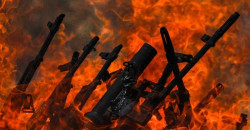
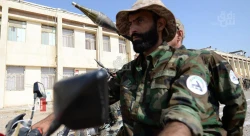
Kataib Hezbollah Secretary-General Abu Hussein al-Hamidawi had earlier rejected surrendering weapons, affirming a move toward developing and expanding military capabilities, and describing recent regional developments and the US-Saudi strikes as additional grounds for retaining arms.
Other factions, including Harakat al-Nujaba and Kataib Sayyid al-Shuhada, similarly rejected relinquishing their military capabilities. They argued that any discussion of disarmament must be tied to the withdrawal of foreign forces and guarantees protecting Iraq from external attacks.
Some factions, meanwhile, have signaled willingness to reorganize their relationship with the state, as the government speaks of a gradual path built on integrating security decision-making within state institutions.
Read more: Iraq's September 30 weapons deadline leaves terms of disarmament unresolved
Despite the firm tone accompanying the SAC's decision, a Coordination Framework source suggested the September 30 date "may not necessarily be a fixed, non-negotiable point." The Framework may view the deadline as a "flexible, negotiable ceiling"; the al-Zaidi government's ability to advance the file, the source said, depends not only on military or legal tools but on its capacity to balance American pressure against factional reservations.
Washington holds significant economic and political leverage, the source added, while the factions retain security and military influence on the ground, meaning any resolution requires understandings broader than a single government decision. Success on this file ultimately requires a security and regional understanding that makes the withdrawal of US forces a tangible reality; otherwise, the September 30 deadline risks becoming a political declaration followed by an implicit extension or new arrangements.
Written and edited by Shafaq News staff.