Wild boars spotted near homes in Al-Anbar


Shafaq News- Al-Anbar
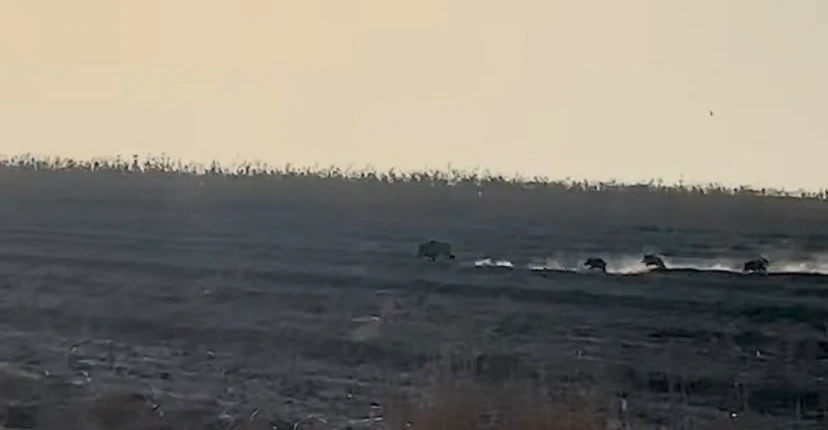
Residents of Al-Habbaniyah district in western Iraq have recorded wild boars roaming near homes, raising concerns about people’s safety and crop damage, while local officials and environmental specialists say changes in water levels, drought and expanding settlements have altered where the animals roam.
Qais Najih, Al-Anbar’s environment director, told Shafaq News that large numbers of boars had gathered around Al-Rahaliyah in the Razzaza basin in earlier years, when water levels were low, prompting authorities to launch campaigns to control their numbers.
In Najih’s account, low water drove the animals toward Al-Ankur and Al-Tash in Ramadi and parts of Al-Habbaniyah. When water levels rose again, the routes back to the Razzaza basin were cut off, and boars began appearing on farmland and near settlements.
Boars can damage crops and may attack if chased or threatened, Najih said. Authorities killed large numbers in Al-Ankur and Al-Tash, but dense vegetation makes the animals difficult to spot. Some likely remain around Al-Habbaniyah and Al-Ankur, where authorities continue to respond to sightings.
Wathiq Al-Dulaimi, a resident, told Shafaq News he worried about children’s safety, damage to property and the possibility that the animals could carry diseases. He urged local authorities and security forces to monitor their movements and keep them away from homes.
Old Routes Between the Lakes
Environmental expert Samim Salam told Shafaq News that wild boars have lived around Lake Al-Habbaniyah for decades, finding shelter in the western and northern parts of the basin, away from settlements. Their longstanding routes cross farmland and open country between lakes Al-Habbaniyah and Tharthar.
Read more: Lake Al-Habbaniyah water plan targets 1.5B cubic meter increase
As towns expanded and farmland shrank, homes began to surround fields the animals had long crossed. In Salam’s assessment, drought and water shortages from 2023 to 2025 also changed their movements as they sought food, water and shelter.
During the drought, sightings of foxes, wolves and boars moving toward wetlands and orchards pointed to deteriorating conditions in the lake basin, according to Salam. He estimated that some animals may have traveled more than 20 kilometers.
Lake Al-Habbaniyah held about 2.5 billion cubic meters of water out of a capacity of 3.4 billion, according to Moayad Al-Mashouh, director of Al-Habbaniyah Tourist City. Salam said improved water levels and recovering vegetation could help restore habitat for wildlife and migratory birds, reducing the need for animals to approach settlements.
Alternatives to Killing
Salam said indiscriminate killing would do little to address the conditions driving boars from their habitat. Environmental activist Laith Al-Obaidi pointed to favorable breeding conditions and the absence of some predators as factors behind the animals’ spread. In his view, shortages of food and water and the expansion of settlements pushed them into new areas.
With groups of boars capable of causing extensive crop damage, Al-Obaidi suggested fencing and deterrents to keep them away from towns. The choice would depend on local terrain, the number of animals and the damage reported.
Al-Obaidi also called for measures to curb indiscriminate hunting and illegal wildlife trade and for health oversight of any meat sold or traded. He described protection of water sources, vegetation and wildlife habitat as essential to keeping animals away from towns.