Iraq reports 30K casualties from unexploded ordnance


Shafaq News- Al-Muthanna
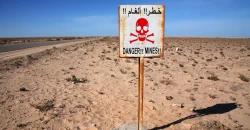
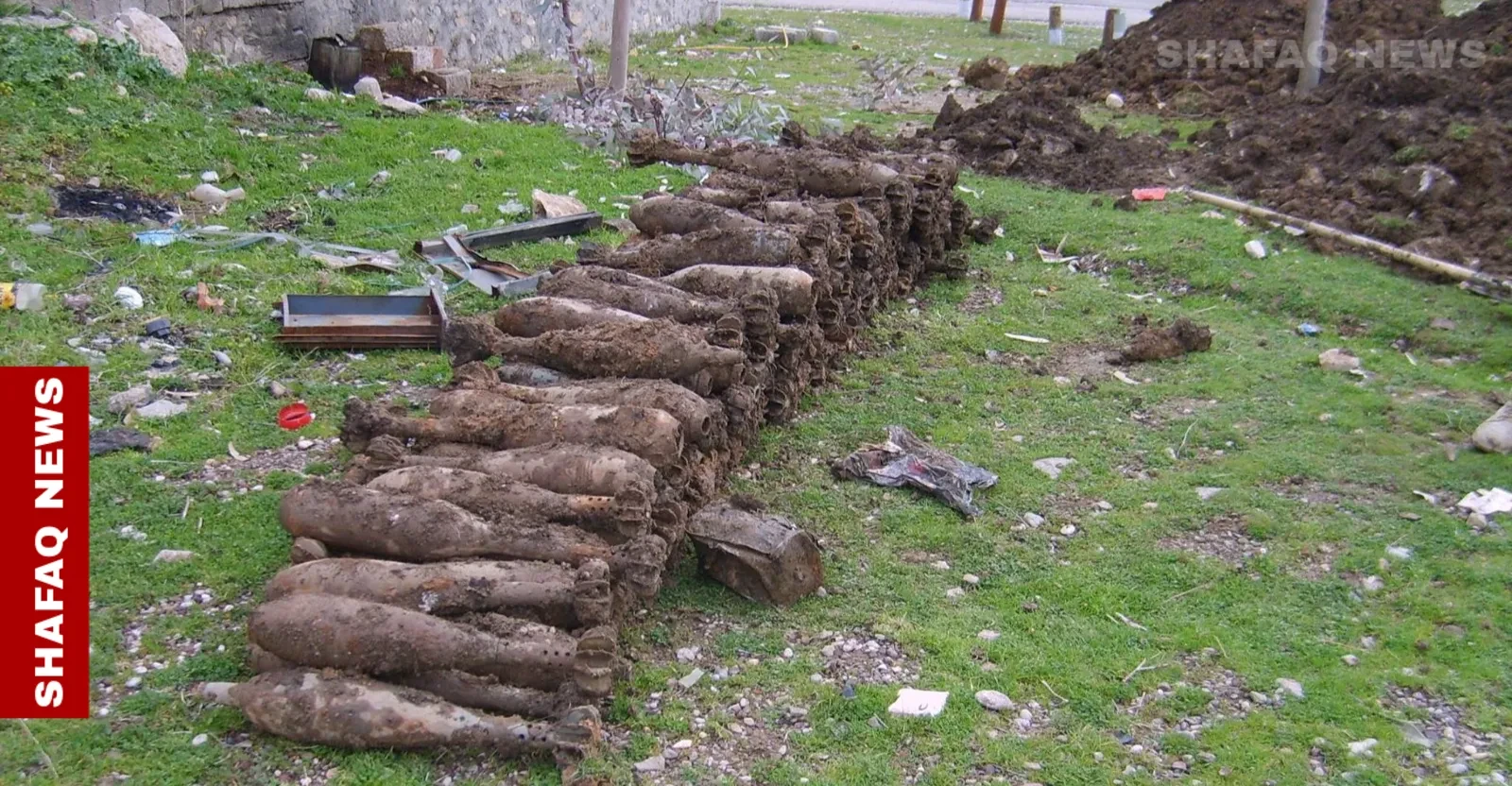
Landmines and unexploded ordnance continue to kill and maim in Iraq, where thousands of victims over decades underscore one of the country’s most persistent post-war dangers.
The threat has lingered for years despite international awareness campaigns and clearance efforts, with the United Nations marking April 4 as the International Day for Mine Awareness and Assistance in Mine Action, a reminder of the risks still scattered across Iraq’s landscape.
In Al-Muthanna, the toll remains severe. More than 4,000 people have been killed, injured, or left with disabilities since 1991, according to Ahmed Hamdan, head of the Environmental Protection and Biodiversity Association in the province. Speaking to Shafaq News, he described cluster munitions as among the most dangerous remnants, noting that they can remain active for years and continue to threaten both people and the environment.
Across Iraq, about 1,500 square kilometers are still contaminated, along with more than 175 kilometers affected by unexploded ordnance and cluster bombs. Despite the scale, clearance work has made some headway. The Norwegian People’s Aid (NPA) has operated in Al-Muthanna since 2017, clearing tens of square kilometers through surveying, training, public awareness, and mine removal operations, even amid security challenges in recent years.
Thousands of camels, sheep, goats, and wild animals have also been lost to mines left behind since the 1991 Gulf War, adding an environmental and economic burden to already affected communities.
Government agencies, including Civil Defense teams and the Directorate of Mine Action, have joined forces with international organizations to raise awareness and carry out clearance operations. Hamdan reported that millions of mines have been removed in recent years, though large swaths of land remain hazardous, urging faster clearance, wider surveys, and stronger support for victims to reduce ongoing risks.
At the national level, the scale of the problem remains significant. Fadel Al-Gharawi, head of the Strategic Center for Human Rights, outlined that official figures record more than 30,000 victims of landmines and unexploded ordnance since 2003, including men, women, and children.
In 2022 alone, more than 150 casualties were recorded. In the Kurdistan region, 13,500 people have been affected by landmines. In 2023, 14 people were killed or injured in Basra due to mine explosions.
Eastern Diyala province, along the border with Iran, also continues to face risks tied to remnants of the 1980s war. The area contains multiple minefields, including 10 in Qazaniya and three in Mandali, where clearance has remained limited for decades due to technical, financial, and security constraints.
In the Kurdistan region, authorities reported in October 2025 that more than 3,000 minefields and around 10,000 pieces of unexploded ordnance still exist. Clearance teams have managed to remove contamination from 576 square kilometers out of 776 square kilometers of affected land. Officials have also warned that heavy rainfall and flooding in Duhok may have shifted landmines from their original locations, raising the level of risk for civilians.
Read more: Spoiled by the coil: Iraq's mines battles take their toll