Trust gap, wars, instability: Why Iraq’s passport ranks among weakest


Shafaq News- Baghdad
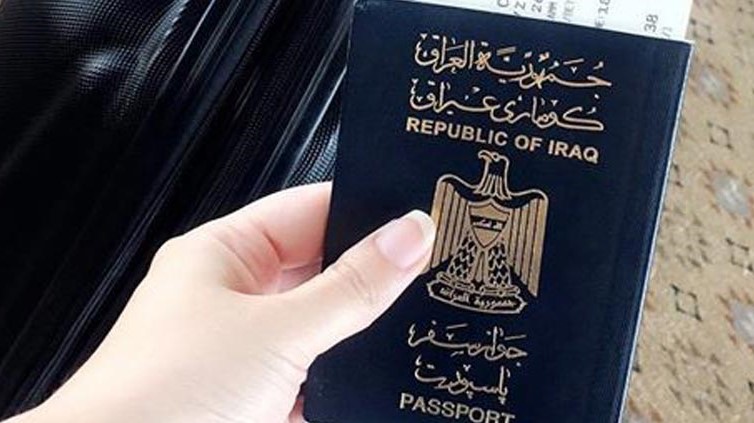
The Iraqi passport continues to rank among the world’s weakest travel documents, placing 99th out of 101 in the 2026 Henley Passport Index, with visa-free access to just 29 destinations.
Regionally, Iraq ranks 20th among Arab states, second from last, ahead of Syria only. The index, which ranks 199 passports by the number of destinations accessible without a prior visa, placed Afghanistan last at 101st, Syria at 100th, and Iraq at 99th. The 2026 edition marks a record mobility gap.
Firas Ilyas, a professor of international relations at the University of Mosul, told Shafaq News that passport strength is not merely procedural, but reflects a state’s standing in the international system and the level of trust it commands. He attributed Iraq’s low ranking to a compound trust deficit built over decades of successive wars, the post-2003 political and security upheaval, and the campaign against ISIS, all of which entrenched a negative perception among foreign governments and drove stricter visa policies.
“The problem is not with individuals, but with the general perception of the state they belong to,” Ilyas clarified, adding that institutional weaknesses, particularly in border management, documentation systems, and governance, reinforce that perception. Advanced countries assess whether a state can control its citizens’ movement, prevent document fraud, and guarantee returns, while Iraq’s fragile economy raises concerns over irregular migration, and the presence of armed groups outside formal state structures further “undermines perceptions of sovereignty.”
According to former Transport Minister Salam Al-Maliki, the international community also links passport strength to economic and security stability, noting that high unemployment and difficult living conditions drive migration and asylum-seeking, prompting stricter entry policies. He also cited the lack of bilateral agreements, limited diplomatic efforts to activate reciprocity with key countries, and currency instability and modest economic growth as factors weighing on Iraq’s passport ranking.
Ambassador Falah Abd Al-Hassan, head of the consular department at Iraq’s Foreign Ministry, pushed back on this characterization of the passport. “The Iraqi passport is not the weakest; it is unsupported,” he told Shafaq News, pointing to the need for stronger media and logistical backing and for new bilateral visa-exemption agreements with countries willing to receive Iraqi travelers.
Abd Al-Hassan acknowledged that Iraq’s trajectory since the 1980s, through wars, economic blockade, and prolonged instability, has made it a “push state,” leading foreign governments to view Iraqi passport holders as potential asylum seekers. “The relationship between internal conditions and passport ranking is direct and significant,” he said. “As security and the economy improve, the passport’s standing will rise and migration pressures will ease.” He confirmed that the Foreign Ministry is working to accelerate new bilateral agreements.
Read more: Twenty-three years on: Iraq got what the 2003 invasion produced