Rhetoric becomes battlefield: Trump’s media escalation is shaping Iran confrontation


Shafaq News
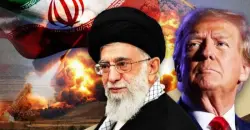
Over the past two weeks, the confrontation between the United States and Iran has moved into a more dangerous and complex phase, one defined by military deployments and diplomatic warnings, as well as an increasingly deliberate use of rhetoric as a strategic tool. Statements from Washington, amplified across global media, are no longer functioning as routine deterrent messaging. Instead, they appear to form part of a broader effort to shape the political, psychological, and operational conditions of any potential confrontation before it begins.
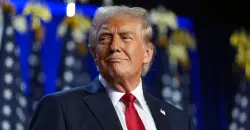
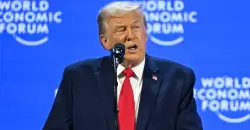
President Donald Trump’s recent remarks about a “huge fleet” moving toward Iran, coupled with senior US officials openly acknowledging that tens of thousands of American troops in the region are within range of Iranian missiles and drones, signal a calculated shift. The message is not simply directed at Tehran. It is aimed simultaneously at allies, rivals, and domestic audiences, conditioning expectations, testing reactions, and defining the narrative space in which escalation may unfold.
This convergence of media escalation, military signaling, and diplomatic maneuvering suggests that the current phase is not about announcing war, but about managing the possibility of it.
From Deterrence to Narrative Pressure
For much of the past year, US–Iran tensions followed a familiar pattern: indirect confrontations, proxy signaling, and calibrated deterrence. What has changed recently is the public nature of the escalation. Military readiness is now being discussed openly, almost performatively, while diplomatic channels —some visible, others discreet— continue in parallel.
This dual-track approach reflects a shift from quiet deterrence to what can be described as narrative pressure. By elevating the confrontation into the public domain, Washington increases the psychological cost of inaction for Tehran while also narrowing its own room for retreat without reputational damage. The confrontation, in other words, is being fought in advance over perception, credibility, and resolve.
It is within this context that media rhetoric becomes operational.
Read more: Escalation without Collapse: Washington’s options against Tehran
Media as Strategic Pressure
According to Iraqi academic Haider Shalal Mutaib, Trump’s approach represents a form of “discursive warfare with tangible effects.” In comments to Shafaq News, he argues that the US president’s media strategy “is neither a purely media campaign nor a conventional military conflict.” “It is strategic pressure that has already affected political and field realities, whether through destabilization, alliance reshaping, or tension escalation.”
The key point is that rhetoric itself has become embedded in decision-making. Words are no longer merely signaling intent; they are actively shaping the strategic environment in which choices are made. This form of escalation begins with language, but it does not end there. It conditions alliances, affects markets, influences domestic opinion inside Iran, and frames the legitimacy of future actions.
Read more: Washington holds back: Calculated pressure, not war, shapes US policy toward Iran
Psychological Warfare— and Risk of Being Cornered
From Tehran’s perspective, this escalation is often interpreted as psychological warfare designed to force concessions without paying the price of war. Iranian political analyst Saeed Al-Sharoudi views the intensity of Trump’s rhetoric as an attempt to intimidate rather than to immediately strike. Yet, he cautions against dismissing the risk entirely, as sustained pressure can trap Washington in its own narrative. “America may be forced into war to preserve its image, credibility, and claimed power, even if that war turns out to be a losing one,” he said.
This assessment highlights a central danger of media-driven escalation: miscalculation. When threats are amplified publicly, backing down becomes politically costly, and the psychological pressure can evolve into action, not because it was planned, but because credibility has been placed on the line.
At the same time, Al-Sharoudi notes that large segments of Iranian society are not easily swayed by media intimidation, particularly amid confidence in Iran’s military preparedness. This creates a feedback loop in which pressure fails to produce compliance, encouraging further escalation instead.
Pressure Has Limits
A more detached assessment from the director of the Moscow-based JSM Center for Research and Studies introduces a critical constraint. Assef Malham pointed out that while media and psychological pressure are natural companions to military mobilization, Washington lacks the capacity —or appetite— for a prolonged war with Iran.
The objective, Malham suggests, is not sustained conflict but political transformation under pressure: “weakening public confidence in Iran’s leadership, restricting its regional role, and forcing strategic retreat without full-scale war.”
This perspective places a ceiling on the confrontation. It does not rule out military action, but it frames it as limited, instrumental, and tightly bounded, intended to shock rather than to exhaust.
A Confrontation Built on Ambiguity
Taken together, these readings point to a confrontation engineered to remain ambiguous. Media escalation allows Washington to keep multiple options open: deterrence, negotiation, limited strikes, or prolonged pressure, without committing publicly to any single path.
Iran, for its part, responds with its own signaling —military drills, warnings of all-out war, and direct messages to US forces— aimed at raising the cost of misjudgment while avoiding a first move.
The result is a fragile balance in which ambiguity itself becomes a strategic asset.
The War Narrative Comes Before the War
What is unfolding now is that the confrontation has entered a phase where the story of war —who is threatening whom, who appears resolute, who seems isolated— is being written in real time. In this phase, media escalation is the terrain on which legitimacy, deterrence, and escalation thresholds are being negotiated. What is clear is that the narrative battle has already begun, and its outcome may shape whatever comes next.
Read more: Iraqi factions raise alert levels: Messages to Iran and US
Written and edited by Shafaq News staff.