On ISIS defeat anniversary, Iraq confronts a reawakening insurgency


Shafaq News
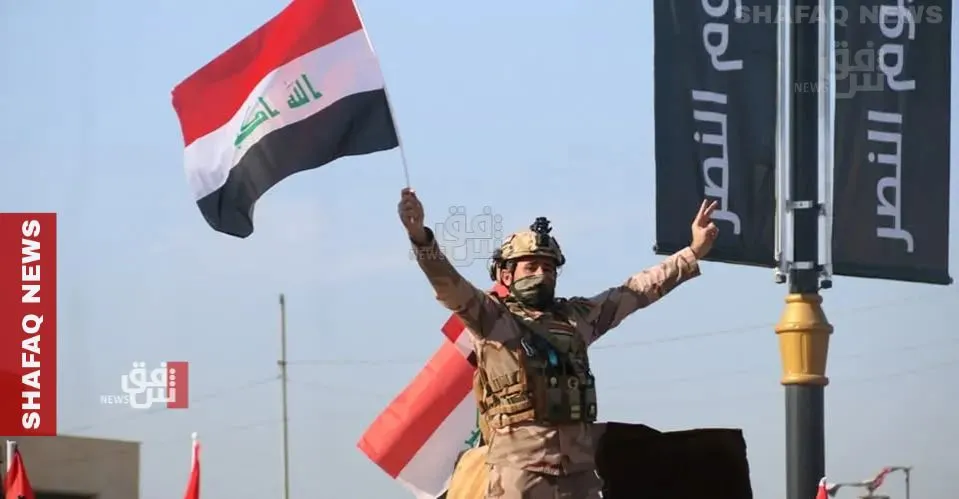
Eight years after Iraqi forces expelled the last ISIS fighters from the desert borderlands, Iraq marks the anniversary of the group’s territorial defeat amid a landscape that looks markedly different from the celebrations of December 2017.
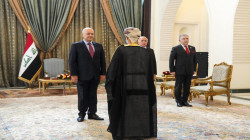
Then, Prime Minister Haider al-Abadi declared victory as Mosul and Ramadi lay in ruins but liberated, and the country sought to rebuild after three years of existential war. This year, caretaker Prime Minister Mohammed Shia al-Sudani has institutionalized the date as an official holiday, continuing a tradition born in the first months of national recovery.
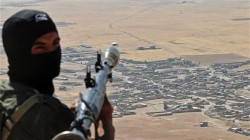
Yet the anniversary arrives in a context that underscores a sobering truth: ISIS was stripped of the geography that made it a state, but not of the networks that allow it to function as an insurgency. The group’s evolution from territorial ruler to clandestine actor now defines Iraq’s security environment more than any battlefield victory.
From Caliphate Collapse to Fragmented Cells
After 2017, surviving ISIS members retreated into rural belts stretching from Diyala to Al-Anbar. The collapse of fixed defenses forced them into a new mode of operation. Fighters splintered into small mobile units, relying on ambushes rather than front-line engagements, placing roadside bombs instead of defending towns, and assassinating local leaders to erode state authority. Counterterrorism operations dismantled many cells and disrupted supply lines, but the movement’s core strategy—survival through dispersion—allowed it to persist.
By mid-2024, the United States Central Command warned that ISIS attacks in Iraq and Syria appeared on track to more than double the number claimed in 2023. CENTCOM argued that the uptick reflected an attempt to reconstitute after several years of reduced capability. Its commander, Gen. Michael E. Kurilla, stressed that an “enduring defeat” still relies on coordinated pressure from the Global Coalition and Iraqi partners, a message directed as much to Washington and Baghdad as it is to the militants themselves.
Inside Iraq, ISIS claimed 122 attacks in 2023. The figure fell to 35 in the first half of 2024, yet the geography of the threat shows remarkable continuity. Diyala, Nineveh, Kirkuk, Saladin, and Al-Anbar remain the organization’s primary operating spaces, shaped by difficult terrain, sparse populations, and gaps in state services.
Read more: EXPLAINER: From the fight against ISIS to US withdrawal talks
A Security Machine That Does Not Rest
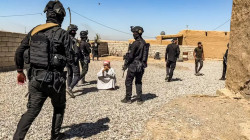
In 2025, Iraqi forces maintained pressure on the group’s scattered cells. The army, the Popular Mobilization Forces, and the Peshmerga, often backed by intelligence from Coalition partners, have conducted a steady rhythm of raids across the northern and western provinces.
Shafaq News data compiled from official and field sources indicates that in the first quarter of the year alone, security forces killed around fifty militants and arrested more than forty others during operations spanning nine provinces. Kirkuk recorded the largest concentration of activity, followed by Saladin, Al-Anbar, Diyala, Baghdad, Maysan, Nineveh, and the Kurdistan Region’s Al-Sulaymaniyah.
The most notable breakthrough occurred on March 14, 2025, when Iraqi intelligence units, supported by Coalition air assets, killed Abdullah Makki Muslih al-Rafiei, known as Abu Khadijah. Al-Sudani described him as one of the most dangerous militants in the world and ISIS’s so-called “Deputy Caliph,” responsible for foreign operations and coordinating between Syria and Iraq.
His removal was followed by the deaths of several other figures, including Maher Hamad Salbi (Abu Obaida), deputy governor of Kirkuk (Deputy Wali of Kirkuk); Daham Mohammed al-Alawi (Abu Saeed al-Dandoushi), the group’s “governor/ Wali” of Kirkuk; Shahadha Alawi Saleh (Abu Issa), commander of the Hamrin sector; and Adnan Khalil Jadan (Haji Awad), believed to be behind attacks in western Iraq. The death of Layla al-Hamdani, known as Umm al-Qeera, added another layer of complexity, as she played a quiet but influential role by mobilizing ISIS women’s networks and inciting unrest.
Al-Sudani has repeatedly said that the past three years mark the most stable security period since 2003. His assessment reflects reality in the major cities, where attacks have dropped sharply. But the persistence of ISIS cells in remote districts highlights a parallel truth: stability in urban Iraq does not necessarily translate into strategic defeat for insurgent actors.
The Syrian Dimension: A Rear Base That Refuses to Collapse
Any attempt to understand ISIS activity inside Iraq must account for developments across the border. Northeast Syria remains the group’s most reliable sanctuary and operational depth. The Syrian Observatory for Human Rights recorded 192 attacks there so far in 2025, killing 91 people, including 65 members of the Syrian Democratic Forces. Other monitoring organizations, including the Rojava Information Center, observed a steady tempo of operations, with attacks rising in the spring and easing only under intense pressure.
The geography of Deir Ez-Zor, which connects directly to Iraq’s western deserts, serves as the axis through which ISIS fighters infiltrate toward Nineveh and Al-Anbar before returning to Syrian territory when security sweeps intensify. Across this corridor, militants move along riverbanks, oilfields, and desert tracks that remain difficult to monitor despite expanded surveillance.
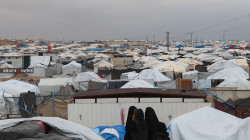
The challenge deepens inside detention facilities and camps. More than 8,500 suspected ISIS fighters—nearly a fifth of them Iraqis—remain in SDF-run prisons. Al-Hol and Roj, holding around 38,400 individuals, including thousands of Iraqis, continue to function simultaneously as humanitarian crises and security liabilities. ISIS propaganda presents them as reservoirs of grievance and future mobilization, while periodic attacks on SDF prisons attempt to break militants out. Iraq’s repatriation program, centered on the Al-Jada’a rehabilitation site, remains politically sensitive; many communities fear that returnees could accelerate ISIS’s regeneration, even as Baghdad argues that leaving Iraqis in camps near the border exposes the country to greater long-term risk.
Small ISIS elements have also found openings in northeastern Lebanon’s mountainous terrain, where smuggling corridors complicate counterterrorism operations. Iraqi officials told Shafaq News that the combination of fragmented authority in eastern Syria and porous borderlands enables ISIS to maintain mobility and sanctuary regardless of the losses it suffers.
Read more: ISIS regroups in Iraq, Syria, and Lebanon: a new strategy?
An Evolving Threat in a Shifting Strategic Environment
As the Global Coalition gradually reduces its presence, Iraqi forces have assumed greater responsibility for containing ISIS. Units from the Counter Terrorism Service, Federal Police, and army battalions conduct frequent sweeps across deserts from Rutba to the Hamrin and Makhmour ranges. These missions have removed several cell leaders and disrupted supply lines, but militants have adapted their behavior. They avoid prolonged engagements, move primarily at night, and rely on local familiarity with terrain that has historically constrained state visibility.
The United Nations Security Council captured this dynamic in an August briefing, noting that ISIS remains active in both Iraq and Syria and continues efforts to restore operational capacity. The insurgency persists not because it is strong but because the spaces it exploits—under-governed rural districts, neglected border regions, and communities with limited services—create security vacuums that outlast military campaigns.
At its peak, ISIS mobilized nearly 80,000 fighters, including more than 42,000 foreign recruits. Today, estimates suggest only 1,500 to 3,000 militants remain active in Syria and Iraq, and an even smaller number on Iraqi soil. The organization no longer holds territory or imposes governance; its relevance now derives from its ability to survive, regenerate, and strike opportunistically.
Read more: After US withdrawal: Why experts warn of an ISIS resurgence in Iraq
A Dual Reality at the Heart of the Anniversary
This year’s commemoration reflects the duality that has defined Iraq’s security environment since 2017. The territorial defeat of ISIS remains a decisive event that prevented state collapse and restored sovereignty over thousands of square kilometers. But the geography that sustained the insurgency before the rise of the caliphate—remote districts, borderlands, and areas underserved by state institutions—continues to shape the conflict today.
Iraq celebrates the end of ISIS’s rule, yet remains engaged in a quieter, longer struggle against the remnants of the organization. The challenge now is not defeating a state-like enemy but securing the peripheries where the state is weakest. That struggle will shape the next phase of Iraq’s counterterrorism trajectory, well beyond the symbolic anniversaries that recall how the last war ended.
Written and edited by Shafaq News staff.