Nechirvan Barzani as Iraq’s President: How could this scenario reshape the country’s future?


Shafaq News
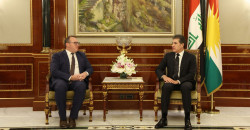
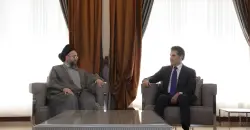
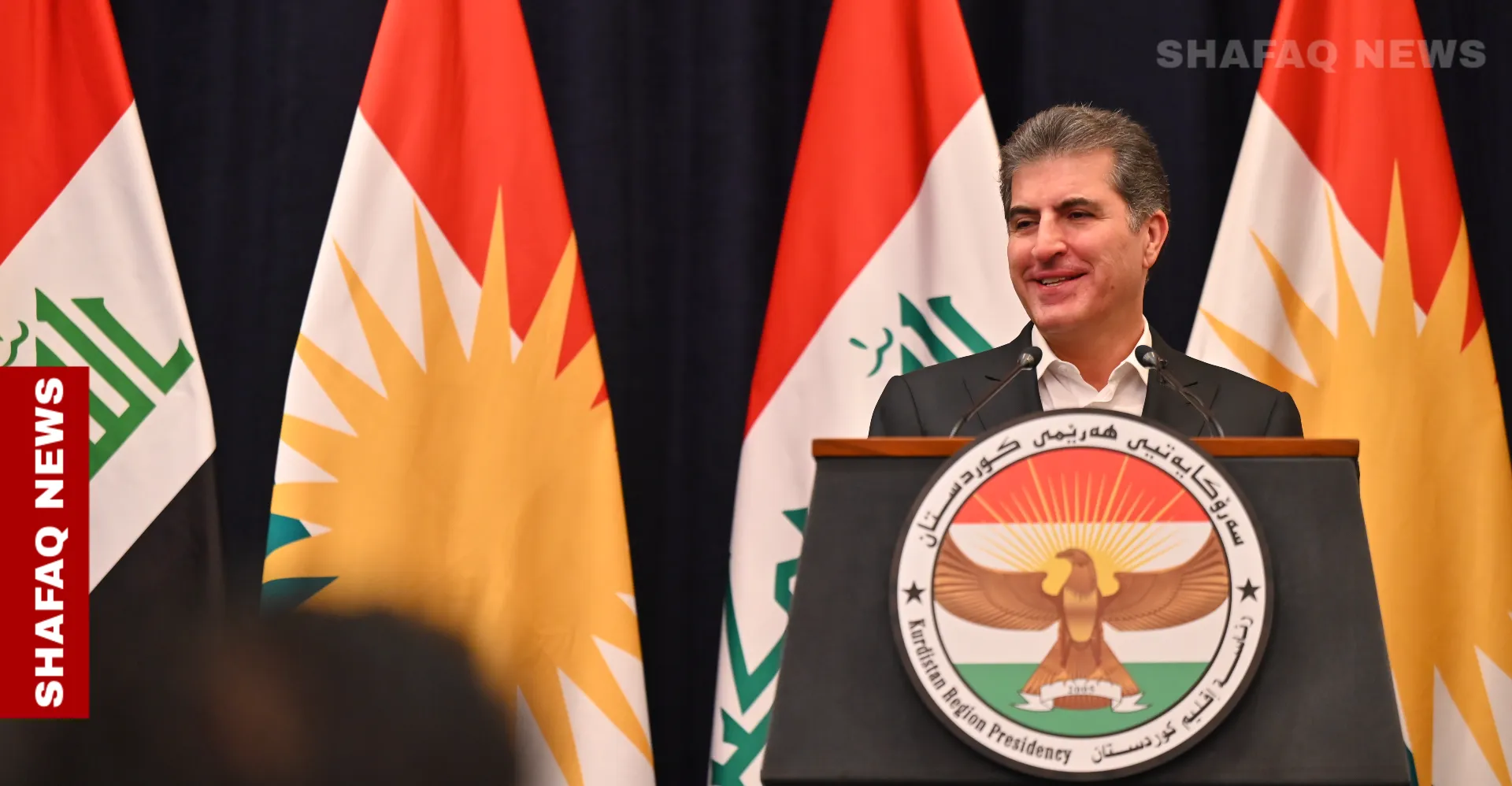
In the crowded landscape of Iraqi politics, dominated by competing and often clashing personalities, the name of Nechirvan Barzani stands out as a calm exception. Known in Baghdad primarily as the “Kurdish negotiator” and the President of the Kurdistan Region, he has in recent weeks been mentioned in an entirely different context—not as a mediator between Erbil and the capital, but as a potential candidate for the presidency of Iraq itself.
This shift in how his name is discussed within debates over Iraq’s political future points to a deeper conversation: whether the post-2003 system is still capable of producing the same faces and rules, or whether the moment for rethinking who occupies the Peace Palace has come sooner than official statements acknowledge.
Since 2003, Iraqis have grown accustomed to a fixed formula for dividing top positions based on sectarian and ethnic balances rather than the ballot box alone. Within the Kurdish political sphere, the Peace Palace in Baghdad (the Presidential Palace) traditionally falls to the Patriotic Union of Kurdistan (PUK), while the Kurdistan Democratic Party (KDP) retains the presidency of the Region and its executive weight in Erbil. Breaking this arrangement would not merely replace names—it would redistribute long-established balances between al-Sulaymaniyah and Erbil, and among Baghdad partners, at a time when the old alignments appear less solid than they were two decades ago.
Read more: Nechirvan Barzani: The Man with the Map
Meanwhile, voices from outside the Kurdistan Region—some from southern Shia communities, others from Sunni-majority cities—have begun openly discussing Nechirvan Barzani as a potential presidential candidate.
Some politicians view his network of relationships as an opportunity to ease tensions with neighboring states and give the ostensibly “ceremonial” position a new dimension. Observers see his name as embodying a different model of governance from what Baghdad has known. Conversely, the PUK clings to what it considers a historical entitlement, closely monitoring any indication that the office could shift toward its rival party.
Ihsan Al-Shammari, head of the Iraqi Center for Political Thought, argues that any forthcoming change is unlikely to alter the power-sharing equation between Iraq’s communities; rather, it would unfold within the Kurdish house itself, potentially transferring the presidency from the PUK to the KDP.
From this perspective, Barzani appears the most likely candidate. As the face of the Region’s strongest party and a figure who enjoys broad, cross-communal acceptance, he is known for managing balances and resolving crises between Baghdad and Erbil, while also untangling complex issues in Iraq’s foreign relations. These qualities position him as a candidate capable of uniting a wide spectrum of political forces.
Questions of Shifting
Amid these debates, one question emerges not as a hypothetical, but as a real political test of post-2003 norms: does the balance of power in Baghdad, Erbil, and al-Sulaymaniyah permit Nechirvan Barzani to move from mediator in disputes with Baghdad to President of Iraq? Or will discussions of his candidacy remain merely a tool in reciprocal political pressure games?
One autumn evening in Baghdad, this question moved beyond analysis to the public statements of a key political player. In a televised interview, Basra Governor Asaad Al-Eidani declared that, if he became Prime Minister, he would include in his program the selection of Nechirvan Barzani as President and Mohammed Al-Halbousi as Parliament Speaker, stressing that this was his personal wish, announced openly.
In a country accustomed to resolving top posts behind closed doors among party leaders, it was striking that this proposal came from a southern Shia politician asserting Basra’s growing influence and claiming the right to nominate its partners for both the presidency and parliamentary leadership.
The scenario remains part of ongoing negotiations, but its public circulation revives a longstanding discussion in research centers and negotiation rooms: the possibility of Nechirvan Barzani moving from the presidency of the Kurdistan Region to the Iraqi presidency, and the potential reshaping of political rules this could entail.
Read more: Nechirvan Barzani: A quiet architect of Kurdish statecraft
Post-2003 Power-Sharing
Since Saddam Hussein’s regime fell, an unwritten formula for sharing power emerged: the Prime Minister from the Shia community, the Parliament Speaker from the Sunni community, and the President from the Kurdish community. Since the 2005 constitution, all Iraqi presidents have come from the PUK—beginning with Jalal Talabani, followed by Fuad Masum, Barham Salih, and Abdul Latif Rashid.
This arrangement was not cost-free but guaranteed Kurdish parties a permanent seat at Baghdad’s negotiating table, allowing leverage over oil, budget, and federalism. Today, with the KDP’s rising influence in both regional and federal elections, this formula faces a new test.
From Barzan to the Peace Palace?
Nechirvan Idris Barzani, born in 1966 in Barzan, has sustained a political career spanning more than 25 years in the Kurdish executive sphere. He served as Deputy Prime Minister of the region in the 1990s, led the regional government in multiple cabinets between 1999 and 2009, returned from 2012 to 2019, and was elected President of the Kurdistan Region by the Kurdistan Parliament in June 2019.
During these years, he built a reputation as a calm politician favoring negotiation over escalation, managing complex relations with Baghdad, Ankara, Tehran, and Washington during the rise of ISIS, the 2017 independence referendum, and its aftermath.
For many Kurds, parts of his tenure corresponded to a “golden decade,” marked by urban growth and economic openness, creating an image of relative stability compared to Baghdad’s turmoil.
Talk of Barzani as Iraq’s president predates Al-Eidani’s statement. In May 2020, Shafaq News published an analytical report titled “Nechirvan Barzani as President of Iraq,” examining the scenario from legal and political perspectives. The report noted his fluency in Arabic and cited legal opinions confirming that the constitution does not require the president to speak Arabic—eligibility rests on citizenship, age, competence, and a clean criminal record. Constitutionally, no barrier exists; political hurdles revolve around Baghdad-Erbil-al-Sulaymaniyah power balances.
In April 2021, the question followed him into a lengthy interview with Al-Sharqiya TV. Asked if Iraqis might see him as a future president, Barzani replied, “Why not? I am also Iraqi, and the Iraqi constitution and law allow this,” though he clarified that he had not considered it at the time, emphasizing that the presidency is a great honor and he is ready to serve the country wherever he can contribute.
This answer, principled yet cautious, opens the door in theory but closes it in timing—neither outright refusal nor early campaign, reflecting his signature avoidance of confrontation.
The novelty now is that political and popular circles outside the Region are supporting this prospect, not merely Kurdish writers or analysts close to the KDP.
The legitimacy of the arbiter: While limited in executive powers, the President can assign the Prime Minister, sign laws, and refer matters to the constitutional court—powers amplified in Iraq’s system of extreme checks and balances.
Networks of influence: Over the years, Barzani has built extensive ties with regional and international capitals—from Tehran to Ankara, across Arab and European cities, and within the US administration, where Donald Trump publicly praised him. He regularly participates in regional dialogues and research forums, presenting himself as a partner committed to the constitution, federalism, and dialogue to overcome Iraq’s crises.
Experience managing a semi-autonomous entity: Leading the Kurdistan Region government and then the presidency, Barzani navigated daily negotiations with Baghdad over oil, budgets, borders, and disputed territories, consistently advocating that Iraq belongs to all its communities and that every citizen deserves dignity and welfare.
In the Peace Palace, these experiences could translate into an unwritten agenda for bridging the gap between constitutional text and implementation, reducing the distance between Erbil and Baghdad—provided he retains sufficient political maneuvering room and is not confined to representing only Kurdistan.
Kurdish Politics as the First Hurdle
Any realistic scenario for Barzani’s presidency faces an internal Kurdish wall. The PUK, despite losing significant regional influence, still sees the presidency as its symbolic stronghold, guarding a delicate balance against KDP encroachment on Kurdish power.
Conversely, the KDP leverages its electoral strength and alliances with Shia and Sunni forces in Baghdad to argue that the time has come to modernize norms and claim the presidency, as it does in the Region—especially after 2022 disputes over its candidate delayed government formation for months.
From Baghdad’s perspective, Barzani as President could help reconnect with the Region, particularly as the central government seeks solutions for the oil export crisis under pressure from both Washington and Tehran. A Kurdish leader maintaining balanced relations with the US and Iran could provide crucial flexibility for a Prime Minister navigating these challenges.
In Erbil and al-Sulaymaniyah, his potential move raises questions about succession in the Kurdistan Region and redistribution of power within the KDP.
Does Barzani Truly Want the Post?
Barzani’s discourse on the Iraqi presidency is inextricably linked to the KDP's strategy. He rarely acts outside the framework defined by Kurdish interests and, more broadly, Iraqi national interests. In the coming weeks, the central question is less about his personal ambition and more about whether Kurdish leadership deems the moment right to break tradition with the PUK, and whether it has sufficient partners in Baghdad to enact this shift without internal rupture.
The significance of this scenario lies not only in Barzani’s prospects and capabilities, but also in the questions it raises about Iraq’s political system. The mere serious discussion of a Kurdish President ascending to the federal presidency signals that internal Kurdish norms are no longer untouchable, and that Shia and Sunni forces are willing to view the office as a broader negotiating card beyond the PUK.
Ultimately, the contemplation of a President for Iraq emerging from Erbil with these qualifications indicates that the country is testing the limits of norms that have constrained it for two decades. It transforms the presidency into a genuine negotiating tool, revealing that the post-2003 formula is no longer invulnerable, and that introducing a new experience to Iraq’s highest office could fundamentally rewrite the rules of the game.
Written and edited by Shafaq News staff.