Iraqi experts divided on reviving the oil-reliant economy


Shafaq News
Slowing growth, rising unemployment, and shrinking investment have pushed Iraq's economic debate past the familiar quarrel over budgets and oil prices toward a more basic question: Is the country held back by the absence of modern economic legislation, or by the way its economy is run? Officials, lawmakers, and economists gave Shafaq News sharply different answers.
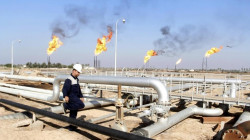
The question carries weight because Iraq remains a rentier economy, drawing most government revenue from oil exports (about 90%), while non-oil production— agriculture, manufacturing, and industry— stays weak, according to the World Bank.
Read more: 2026 budget: Iraq confronts unprecedented fiscal strain
For Mudhhir Muhammad Salih, economic adviser to Iraq's prime minister, the fix begins with the legal framework rather than fiscal or monetary adjustment; reform, in his framing, "does not begin with numbers, but with law." He wants the investment regime rebuilt around simpler procedures, less bureaucracy, and firm legal guarantees for local and foreign investors, and treats a public-private partnership law as the central piece, a framework letting the state share long projects, often running 30 to 35 years, with private capital to relieve the budget.
Because such contracts blend public and private law and must divide risk and return precisely, they need a dedicated economic judiciary to settle disputes and tighter oversight to block corruption, in his view, or “they turn into a source of conflict rather than a tool for development.”
Kadhim al-Shammari, a member of the Parliamentary Committee on Economy, Industry and Trade, wants the state to retreat and private business to lead, arguing that “years of bureaucratic interference drained the private sector's productivity.” His remedy is laws that shield private firms from public-sector encroachment, with an industrial investment law and a partnership law at the top of the list; the public sector itself he dismissed as "backward and cannot be relied upon to lead development."
Read more: Iraq's energy vulnerability: When a petro-state has no buffer
Ahmed al-Janabi, an economic researcher, casts the crisis as “a deep structural problem,” not a matter of liquidity or budgeting, pointing out that an economy "built on oil rent and weak real production" needs the state-market relationship redrawn outright. His prescription bundles a modernized investment law, a working partnership framework, tax reform, food-security legislation, and faster digitization with a sovereign wealth fund for future generations, financed by oil revenue to channel part of that wealth into long-term investment, though none of it, he cautioned, “works without real political will and an executive that applies laws in practice rather than on paper.”
Mahmoud Dagher, a financial and economic expert, traced Iraq's troubles to "the largest collapse in public revenues since 2004," which has slowed growth, drained reserves, and deepened domestic debt, and located the deeper fault in how public money is spent rather than in any missing statute. Iraq, by his account, needs to reorganize spending, diversify revenue away from oil, tighten collection of electricity, water, tax, and customs receipts, and cut operational waste; laws alone will not fix a crisis rooted in resource mismanagement, and the present course may not hold to year's end.
Those domestic arguments track warnings from the World Bank and IMF. The Bank recorded Iraqi GDP falling 2.4 percent in the first nine months of 2025, driven by a 5.7 percent contraction in oil output under OPEC+ limits, while non-oil growth slowed to 1.5 percent amid water and electricity shortages and a liquidity crunch from falling oil revenues.
The IMF's April 2026 outlook projects a steeper contraction of 6.8 percent for the year. The factors both flag mirror the experts' own: Near-total reliance on oil, weak non-oil sectors, heavy operating spending, and regional tension, and any recovery, by these assessments, will depend on the government delivering legislation, management, and investment reforms together rather than any one alone.
Read more: Iraq’s economic “perfect storm”: Experts warn the crisis is structural and social