Iraq's energy vulnerability: When a petro-state has no buffer



Shafaq News
When the Israel-US-Iran conflict erupted in late February 2026 and Hormuz tightened, Iraq's oil production collapsed from 4.3 million barrels per day to 1.3 million, within weeks. Exports fell below 800,000 barrels. The country began losing $128 million daily, not because the oil ceased to exist, but because there was no alternative route to move it.
A state deriving 93% of its budget from a single commodity found itself simultaneously unable to export that commodity, unable to generate electricity without Iranian supply, and without a strategic reserve to draw from. Three structural failures converged at the same moment, and Iraq had no instrument to offset any of them.
The conflict is the trigger. The vulnerabilities predate it by years.
One Exit, No Contingency
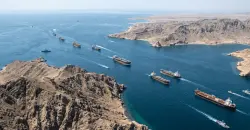
Iraq's southern terminals at Basra are wholly dependent on Hormuz passage. That dependence is not a discovery of this crisis, it has been a feature of Iraqi export infrastructure for decades. The Kirkuk-Ceyhan pipeline running north through Turkiye exists as a theoretical alternative, but it has a long history of operating well below its design capacity of 1.6 million barrels per day. It was largely idle from 2014 following militant attacks, shut again by an arbitration dispute in March 2023, and partially restarted in September 2025 at only 38,000 barrels per day. As of mid-March 2026, Iraq's Oil Minister Hayan Abdul Ghani confirmed that hydrostatic testing on the rehabilitated line's final 100 kilometers was still ongoing, with projected initial throughput of 200,000 to 250,000 barrels per day once operational. No southern bypass was ever developed. No route with Red Sea access was brought to scale.
When Hormuz became a contested waterway, Iraq's entire export architecture had a single functional exit, and that exit was the problem. The Eco Iraq economic monitor places the daily revenue loss at $128 million. These figures do not reflect geopolitical shock alone. They reflect an infrastructure deficit that left Iraq with no contingency.
"Iraq cannot be considered an absolute beneficiary of rising prices," says international economics professor Nawar Al-Saadi. "Its exports pass through the Gulf, any threat to navigation in the Strait of Hormuz disrupts exports and dramatically raises their cost. Iraq loses even as prices rise."
One Third of the Grid, Imported
Economic analyst Safwan Qusay puts it plainly, "A third of Iraq's energy supply is tied to Iran. Any disruption will create a major crisis, especially with summer approaching and demand rising."
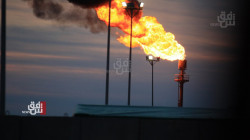
In 2024, Iraq flared 18.2 billion cubic meters of gas, 12% of the world's total, ranking third globally behind Russia and Iran. That same year, it consumed 19.7 billion cubic meters of gas, of which 7.8 billion were imported from Iran. Iraq is, in other words, burning a volume of gas roughly equivalent to what it imports from a foreign grid. According to the Baker Institute, the 18 billion cubic meters flared in 2023 alone was sufficient to generate approximately 33 gigawatts of electricity, far exceeding Iraq's current generation deficit. Caretaker Prime Minister Mohammed Shia al-Sudani acknowledged publicly that Iraq flares 1,200 million standard cubic feet of gas per day while importing 1,000 million from Iran, at a cost of at least $4 billion per year.
Iraq has received substantial oil revenues continuously since 2005. In two decades, it did not build sufficient domestic generation capacity to supply its own population. The electricity shortage has driven public protests, prompted parliamentary investigations, and featured in IMF and World Bank assessments for over a decade. What the current crisis has done is transform a chronic governance failure into an acute national security liability, one now fully exposed weeks before peak summer demand.
Qusay warns of a compounding risk: if Iranian energy infrastructure is struck, demand for Iraqi petroleum derivatives could surge to feed Iran's domestic market, triggering shortages and price spikes inside Iraq itself.
The Price Rise That Bypasses Iraq
Brent crude was trading above $101 per barrel in late March 2026. Under normal conditions, that would give Iraq a direct fiscal buffer against regional instability. Instead, the price signal and the export channel have broken down in parallel, eliminating the one dynamic that would ordinarily absorb the impact of a Hormuz disruption.
"This isn't just about oil prices, it's about global supply security," says Al-Saadi. "Any threat to the Strait means an immediate shock to markets: rising shipping and insurance costs, slower global growth, and a wave of instability that could extend far beyond the Gulf." Markets analyst Tony Sycamore, quoted by Reuters, described Trump's ultimatum as "a ticking time bomb" that could trigger free-falling stock markets and sharp oil price spikes.
Iraq's oil revenues accounted for 92% of total budget revenue in the first half of 2025. At that level of fiscal concentration, an export contraction of this magnitude does not produce a contained economic problem, it generates pressure across the full range of state expenditure, from civil service salaries to infrastructure financing to essential commodity imports. The daily loss is a measure of fiscal stress in a state with no alternative revenue base and no buffer to draw down while the disruption persists.
Emergency Proposals
The interventions now being advanced by Iraqi analysts are technically sound: establishing strategic petroleum reserves, diversifying electricity imports from Turkiye and Jordan, building local generation capacity, distributing stockpiles across dispersed sites. They are also, without exception, proposals that have appeared in Iraqi government planning documents, international financial institution reports, and parliamentary committee recommendations over the past fifteen years. Iraq's oil minister pledged in late 2022 to end all gas flaring within four years. Senior officials affirmed in May 2024 that Baghdad aimed to eliminate flaring by 2028, a goal preceded by a series of missed deadlines stretching back years.
The infrastructure these proposals describe was not built during a sustained period in which Iraq held the revenues, the institutional frameworks, and the documented international guidance to build it. Iraq collected more than $87 billion in federal budget revenues in the first eleven months of 2025 alone, with oil accounting for nearly 88% of the total. Cumulative oil revenues since 2005 run conservatively into the hundreds of billions. The structural deficiencies now costing the country millions every day were each identified, and in several cases specifically budgeted for during that period. They were not addressed.
Reckoning That Outlasts the Crisis
This conflict will reach some form of resolution, through negotiation, military conclusion, or exhaustion of one or both parties. Qusay's preferred scenario is a de-escalation initiative: a pause on strikes against Iranian energy infrastructure in exchange for reopening Hormuz, at minimum during a ceasefire window, "to prevent the region from becoming a global energy blackout zone where prices skyrocket and Middle East supply stops entirely."
But when the guns fall quiet, the structural condition this crisis has laid bare will not disappear with them. A single regional disruption simultaneously halted Iraq's export capacity, severed a third of its electricity supply, and exposed a fiscal architecture with no shock absorbers. That did not happen because the crisis was unusually severe. It happened because Iraq was unusually exposed.
The data required to understand how Iraq arrived at this position -two decades of oil revenues, incomplete infrastructure investment, and deferred reform across multiple governments- exists and is on the public record. The operative question, once the immediate emergency recedes, is whether Iraq's institutions will finally subject that record to the scrutiny this moment demands, or file the emergency proposals away until the next crisis makes their absence measurable again.
Written and edited by Shafaq News staff.