Iraqi dinar devaluation sparks backlash from blocs inside the cabinet


Shafaq News- Baghdad
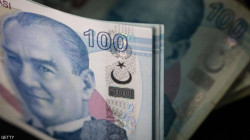
Iraq's new official exchange rate of 1,520 dinars per US dollar took effect on Wednesday, the country's first devaluation since 2020 and a fiscal response to oil revenues squeezed by the resumption of the US war with Iran. Within hours, the dollar's street price jumped. Two of Baghdad's main wholesale markets shut, and lawmakers began organizing to overturn a decision taken by a cabinet in which nearly every major political bloc holds a seat.
The Council of Ministers approved the move on Tuesday night on an emergency recommendation from the finance minister and the governor of the Central Bank of Iraq (CBI), Nizar Hussein. It gives the treasury more dinars for every dollar of oil sold. It also raises the local cost of almost everything Iraq imports, in an economy where salaries, pensions and savings are held in dinars. The government calls the step a precaution. Critics see it as shifting the war's cost from the state's books to household budgets. The political backlash suggests the dispute is as much about Iraq's unfinished government as about its currency.
A New Rate, An Old Gap
Under the new structure, the CBI buys dollars from the Finance Ministry at 1,500 dinars, sells them to banks at 1,510 and to end users at 1,520, up from 1,320. Every $100 now costs 20,000 dinars more at the official window. The Finance Ministry paired the decision with a suspension of the advance collection of customs duties and tax deposits on imports.
Iraq runs two exchange rates: the official one, at which the CBI supplies dollars through banks for trade, travel and other approved uses, and a parallel street rate set by supply and demand. The parallel market responded first. In Baghdad, the dollar climbed to around 168,500 dinars per $100 on Wednesday morning, from 159,800 the day before, then eased to about 167,000 by evening. In Erbil, capital of the Kurdistan Region, it traded near 166,700.
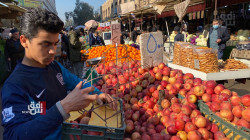
The disruption reached beyond the exchange counters. Shops and warehouses in Baghdad's Shorja market and the Alwat Jameela wholesale market closed temporarily, as did several exchange and money-transfer firms, because traders could not reprice goods and outstanding commitments.
Gold followed the dollar. A mithqal of 21-carat gold, the roughly five-gram unit Iraqi jewelers trade in, rose in Baghdad from 930,000 dinars on Tuesday to 978,000 on Wednesday morning.
Before the decision, the parallel market sat about 21% above the official rate. On Wednesday, the distance narrowed in percentage terms, but only because the official rate jumped. The street price rose as well.
A Revolt From Inside The Tent
The backlash in parliament came quickly. Lawmaker Uday al-Zamili of the Khadamat bloc told Shafaq News that parliament had decided to host the finance minister and the CBI governor on Thursday to examine the feasibility of the decision. He said it would hit citizens already facing a wave of price rises, and that MPs want to expose files linked to the exchange rate and corruption.
Lawmaker Suzan al-Saad of al-Nahj Al-Watani bloc said she had gathered more than 50 signatures for a dedicated session on the decision's consequences.
At a press conference in parliament, lawmaker Saba al-Saadi of the Reconstruction and Development bloc warned that raising the exchange rate to cover the deficit is a "red line."
The Kurdistan Democratic Party stopped short of demanding a reversal. Shakhawan Abdullah, head of the KDP bloc in the federal parliament, told local outlets that the government's aim in adjusting the rate was to recover the 20,000-dinar increase and turn it into revenue for the treasury. It should have taken concrete steps to control markets and contain rising prices first, he said, rather than leaving citizens to face "this economic spiral" alone.
The Iraqi Contractors Union asked Prime Minister Ali al-Zaidi to delay implementation. It warned that the costs of materials, transport and services would rise and erode companies' margins, and said dues linked to the 2020–21 adjustment rate had still not been fully paid.
After turning Wednesday's sitting into a general debate on the decision, parliament scheduled a special session for Thursday to question the finance minister and the CBI governor. The presidency then cancelled it, moving the hearing to the Finance Committee instead. KDP lawmaker Siban Shirwani said the committee would meet both officials at noon to discuss the reasons for the change, and might also take up the draft federal budget.
Former lawmaker Amir al-Maamouri challenged the outrage itself. He alleged that "most of the objectors knew the dollar would be raised and bought dollars from the market before the vote and the announcement of the 152 rate and made large gains." He asked why they were pretending not to know.
The cabinet, he noted, includes representatives of all political blocs, and they voted for the adjustment: "Did the representatives of the political blocs work in complete secrecy and hide the information?"
Al-Maamouri offered no evidence for the allegation of profiteering. The broader point, that the decision was no surprise inside the political class, finds support in the record.
The composition of the cabinet sharpens the contradiction. Al-Zaidi, a businessman with no party of his own, was sworn in in May as the nominee of the Coordination Framework, the alliance of Shia parties that won the most seats in the November 2025 election; since then, only 14 of 23 ministers have been approved. Finance Minister Falih al-Sari, who carried the recommendation to cabinet, belongs to al-Hikma, the movement led by Ammar al-Hakim, and is a longtime senior figure on parliament's Finance Committee. Other approved ministers come from the Islamic Dawa, Badr, Reconstruction and Development, and Sadiqoon, Taqadum, the Kurdistan Democratic Party (KDP), the Patriotic Union of Kurdistan (PUK), and the New Generation movement, among others.
The opposition to the devaluation appeared to have two strands: blocs inside the cabinet distancing themselves from a decision they share, and blocs outside it using the exchange rate as leverage in a government formation that remains incomplete, with nine portfolios still vacant.
Read more: Can Iraq’s economy weather a wider regional shock? Experts differ
The War Behind The Figures
Iraq's budget runs on oil, and the war has squeezed it. Exports through the Strait of Hormuz, the route for most of Iraq's crude before the conflict, have continued, but under disruption. Baghdad has added alternative routes, including overland shipments through Syria, which cost more and carry less. Those alternatives have not offset the shortfall.
The strain showed in the central bank's balance sheet well before Tuesday. CBI data show foreign reserves fell from $97.4 billion at the end of 2025 to $80.6 billion at the end of July 2026, a decline of about 17% in seven months. Finance Ministry figures showed a gap of more than 29 trillion dinars ($19.08 billion) between revenue and total spending during the first seven months of 2026.
Spending commitments made in Baghdad's political bargaining compounded the revenue shock. The Finance Ministry warned parliament that it could not fund the 2026 budget without an adjustment. That budget includes 100,000 new public-sector jobs demanded by political blocs during government formation. The draft 2027 budget is built around the new 1,500-dinar rate.
The draft sets spending at 217 trillion dinars ($142.76 billion) with a projected deficit of 50 trillion, assumes oil at $58 a barrel and exports of four million barrels a day, and fixes the exchange rate at 1,500 dinars per dollar, Finance Committee member Abbas Hayal told Shafaq News. The draft is due in parliament by October 15.
The Official Case
Mudhir Mohammed Saleh, the prime minister's financial adviser, framed the decision as insurance rather than rescue. He told the state-run Iraqi News Agency (INA) that the measures do not reflect an imbalance in the economy. “They are pre-emptive hedging against a war that threatens oil exports through Hormuz, and with them public revenue, the budget and foreign-currency inflows.”
Saleh presented the exchange rate, customs, taxes, spending and subsidies as one integrated protective system. He said monetary policy would keep foreign currency flowing so that trade finance continues on a regular, stable basis.
Fiscal policy would absorb part of the external shock. Customs and tax measures, in his account, are meant to regulate imports, strengthen revenue, and ration foreign currency, not to burden citizens or produce unjustified price rises, and to avoid passing their full cost to consumers.
Continued state spending on food, medicine, fuel and basic services, he said, would serve as the line of defense for living standards. "These measures do not aim at a sudden change in the exchange rate or at making society bear the cost of the crisis," he told INA, "but at hedging and building a financial and monetary safety margin."
The CBI called the move a strategic step to strengthen financial stability. It said its foreign reserves are sufficient to meet all requests to finance trade, settle bank-card payments and sell cash dollars to travelers. It also described the change as a positive adjustment that would make Iraqi products more competitive against imports, encourage factories to expand, draw investment into non-oil sectors and create jobs for young Iraqis. The state-owned Trade Bank of Iraq (TBI) began supplying foreign currency through official channels on Wednesday to support the market.
Who Pays
Economists who spoke to Shafaq News accept the fiscal logic but dispute who carries the bill.
Economist Ahmed Abd Rabbo said the decision should be read as part of a broader economic package, estimating that the higher rate could bring the treasury between 17 and 20 trillion dinars a year, depending on oil revenues and how they are counted in the budget. That gain, he warned, would not be enough if import costs pass quickly into the prices of goods and services.
“A weaker dinar could give Iraqi industry and agriculture more room to compete with imports, but that does not happen automatically," he said, adding that it would require energy, financing, infrastructure, protection against dumping and simpler production procedures.
He proposed judging the decision against three indicators in the months ahead: the spread between the official and parallel rates, inflation and commodity prices, and whether productive sectors actually benefit from improved competitiveness.
Nawar al-Saadi, a professor of international economics, put the question more bluntly: who will bear the cost? By his estimate, the move cuts the dinar's value by about 14.5%. The government will collect more dinars for its oil, he said, but import costs will rise, pressing on purchasing power, especially for people on fixed incomes. He identified inflation and a widening gap with the parallel market as the greatest risks, while cautioning that prices will not necessarily rise in step with the dollar.
The effect will vary with each product's dependence on imports, traders' margins, competition and monetary policy. Local industry may gain from a weaker dinar, he said, but Iraqi factories also depend on imported raw materials and equipment, which will push their own costs up.
Al-Saadi’s sharpest warning was against turning the exchange rate into a permanent tool for financing the budget deficit. Instead, he called for controlling current spending, limiting expansion of public hiring, raising non-oil revenue, and stimulating investment and production.
Manar al-Obaidi, head of the Iraq Future Foundation for economic studies and consultancy, said the state has already secured significant fiscal space.
Applying Iraq's high customs tariffs at the same time, he argued, hits imported goods twice, through a dearer dollar and steeper duties. The combined effect passes, to varying degrees, into the cost of food, medicine, factory inputs, machinery, spare parts and transport, and finally to the consumer.
Al-Obaidi called on the cabinet and parliament to freeze the 2010 Customs Tariff Law No. 22 for one year. In its place, he would revive the mechanism of Coalition Provisional Authority Order 38 of 2003, the occupation-era mechanism that imposed a 5% Reconstruction Levy on most covered imports.
The finance ministry and customs authority would issue unified instructions for all border crossings, and a review would follow after six months to measure the effect on inflation, prices, imports, revenue and industry. Protecting domestic producers, he said, does not require high tariffs on thousands of goods; the Iraqi Products Protection Law can target dumping and harmful import surges directly.
“The state should not use the exchange rate and customs tariffs at the same time as twin tools to raise revenue, loading the cost of both onto citizens and the market.”
Al-Obaidi describes the combination of exchange rate and customs as the problem, while Saleh describes the same combination as the protective design.
Third Reset In Six Years
Iraq has been here before, and each reset has followed fiscal need and political bargaining. In December 2020, as the COVID-19 oil crash opened a crippling deficit, the central bank moved the rate from 1,182 to 1,450 dinars per dollar. The Fatah Alliance and State of Law, both aligned with Tehran, rejected that devaluation and delayed the national budget. In February 2023, al-Sudani's government reversed course and revalued the dinar to 1,300. Tighter US controls on dollar transfers through Iraq's banking system had pushed the street price toward 1,690.
The latest move also follows repeated official denials. In February, the then-governor Ali al-Alaq said there were no plans to change the rate. In June, the bank again denied reports of a planned increase. The parallel market did not believe them.
The Eco Iraq economic observatory counted six waves of increases in 2026, taking the street rate from about 150,400 dinars per $100 in January to a peak of 168,000 in October.
The Tests Ahead
The decision will be judged on terms its defenders and critics broadly share. The first is whether the parallel rate settles near 1,520 or keeps drifting away from it. The second is whether prices rise in step with the dollar or, as al-Saadi and Saleh both suggest, by less. The third is whether domestic producers capture any of the promised competitiveness.
The draft 2027 budget, due within a week, will show if the government treats 1,500 as a one-time adjustment or as the basis for a larger spending plan.
Hours before the decision, Jabar Goran, spokesman for al-Sulaymaniyah's currency market, warned that setting the rate at 1,500 would provoke a very negative reaction from citizens and the market. He did not expect the government to do it.
The government did it the next day.
This time, unlike in 2020 or 2023, the oil shock comes from a war Baghdad does not control and cannot end. The exchange rate has become the quickest tool the state has, and the blocs that share the cabinet now must decide whether to defend that tool or protest against it.
Read more: Why Iraq's dinar keeps sliding despite fresh US cash
Written and edited by Shafaq News staff.