ISIS hits Iraqi night surveillance twice in 24 hours in Kirkuk's Hawija


Shafaq News- Kirkuk/ Saladin/ Nineveh
ISIS militants struck the same village in Kirkuk's Hawija district twice in less than 24 hours, and both times they went after the cameras. The attacks disabled thermal imaging equipment that Iraqi forces use to watch open farmland and valleys at night. They have also renewed attention on stretches of northern Iraq that local commanders concede are not fully covered.
Hawija, southwest of Kirkuk city, was one of the last urban areas ISIS held in Iraq before government forces retook it in October 2017. The latest attacks came less than a week after the US-led Global Coalition to Defeat ISIS ended its military mission in Iraq on September 30. None of the Iraqi officials who spoke to Shafaq News linked the two.
Two Attacks, One Village
On the evening of October 5, militants attacked a position held by the 3rd Battalion of the Federal Police's 9th Brigade in al-Bargliya, in Hawija's al-Danadish sector. One officer was killed, and four were wounded, and several thermal cameras at the site were destroyed.
Federal Police units, under Iraq's Interior Ministry, later surrounded a group of ISIS militants inside a school in nearby al-Uraysha, in the same sector. Authorities had not disclosed the outcome of the standoff by the time of publication.
The following day, militants hit the 2nd Battalion of the 61st Brigade of the Popular Mobilization Forces (PMF) in al-Bargliya. A sniper shot out a thermal camera, and no casualties were reported.
The choice of target is telling. Thermal cameras let small garrisons monitor wide, empty terrain after dark, when ISIS cells usually move. Without them, those positions need far more manpower to see the same ground.
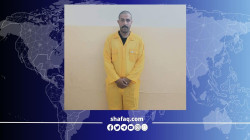
Kirkuk Operations Commander Maj. Gen. Maad Badai told Shafaq News that his forces had arrested a senior ISIS figure in Hawija after tracking his movements. Badai described the man as one of the group's most wanted targets in the province.
The October attacks follow a run of incidents in Kirkuk this year. On September 27, ISIS mortar fire on al-Malha village killed a woman and wounded several civilians. In August, Iraqi F-16s destroyed an ISIS hideout in Wadi Zghaitoun, killing those inside, and in July the Counter-Terrorism Service killed an ISIS member north of Kirkuk.
Seven-Kilometer Gaps
Badai acknowledged gaps of up to about 7 kilometers in his area of responsibility. In his view, closing them does not require troops from other provinces. Redeploying existing units and adding posts where coverage is thin would remove the empty stretches between Iraqi forces and the Peshmerga, the armed forces of the Kurdistan Region.
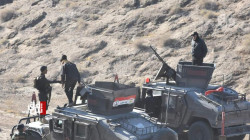
He said the forces under his command were sufficient for the sector. Those forces include more than four army divisions, along with Federal Police and special forces brigades.
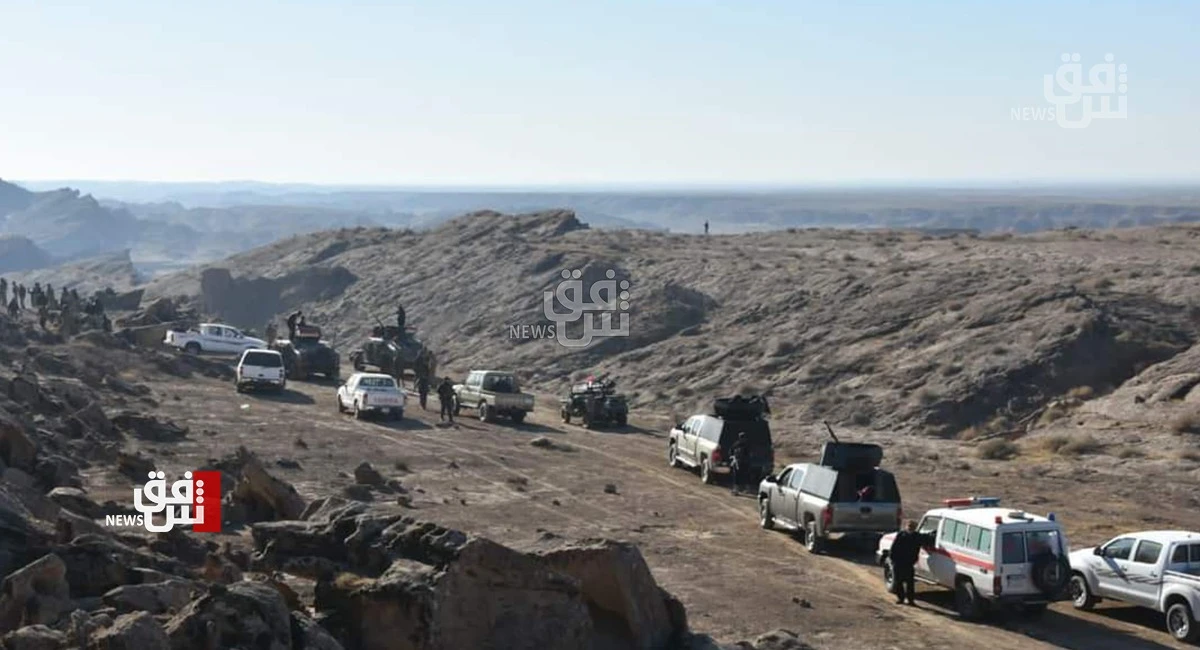
The areas east of Altun Kupri and around Qara Salem are the most exposed, according to Badai, because their mountains and valleys offer cover. In a joint Iraqi-Peshmerga operation there more than a month ago, one ISIS member and one member of the security forces were killed.
Villages Without Forces
Abdul Muttalib Najm al-Din, head of the Altun Kupri subdistrict, said about four villages along the strip between Altun Kupri and the Shwan subdistrict have no security presence at all. He called for an army force to be stationed there.
"About 12 farmers have been kidnapped from their land over the past two years," he said.
Read more: Iraq’s western desert from ISIS hideouts to new security challenges
A Belt Across Three Provinces
Security expert Ali al-Bayati said the problem extends well beyond one sector. The gaps run along the areas linking Kirkuk and Nineveh, from Altun Kupri toward the outskirts of al-Dibis and on to the edges of Makhmur. They also follow the boundary between Kirkuk and Saladin, from Wadi al-Shay and Wadi Zghaitoun to al-Zarga in Tuz Khurmatu district.
"Mountains, valleys and wide farmland in these areas let ISIS cells move away from population centers," al-Bayati said. He urged authorities to redeploy existing forces, step up surveillance and reconnaissance, and secure the corridors cells use to move between the three provinces.
The belt has a long history of armed activity. Groups linked to al-Qaeda operated there before ISIS emerged. In 2014, ISIS absorbed many of them and turned the terrain between Kirkuk, Nineveh and Saladin into a base of operations. The group lost its hold on territory after the 2017 offensive, but the landscape still favors small cells.
Much of the belt lies within the territories disputed between Baghdad and the Kurdistan Regional Government (KRG). Article 140 of Iraq's 2005 constitution set out a process, ending in a referendum, to settle their status, but it has never been completed. Federal forces and the Peshmerga hold neighboring sectors there, and Badai's own account places the weak points in the gaps between them.
The Kirkuk Operations Command maintains that redeployment can close those gaps. Najm al-Din, whose subdistrict has lost a dozen farmers to kidnappers, wants a force that stays.
Read more: Discover Iraq: Kirkuk, a city of oil, culture, and conflict