Iraq's weapons debate ensnares the Peshmerga and exposes a constitutional fault line


Shafaq News
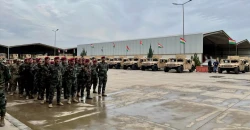
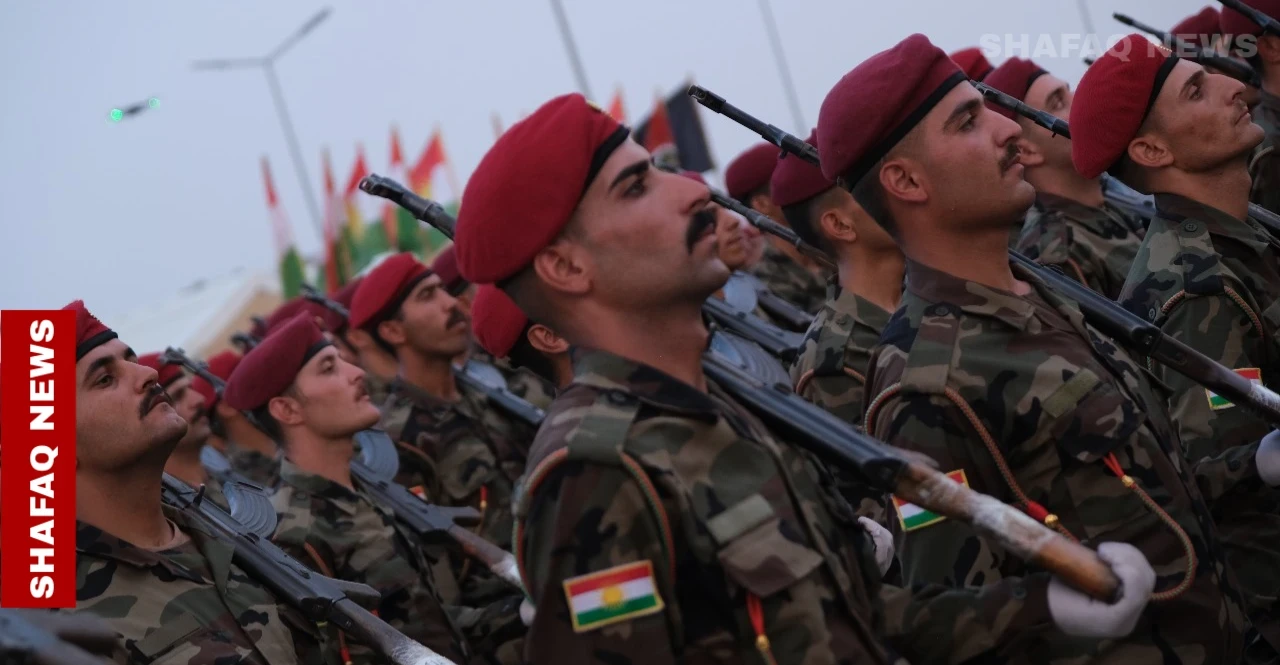
The Peshmerga occupied a unique place in the Kurdistan Region's political consciousness long before becoming part of Iraq’s federal framework after 2005. For the vast majority of Kurds, the force represents far more than a military institution. Its name, commonly translated as “those who face death”, emerged from decades of struggle between the Kurdish national movement and central governments in Iraq and the wider region.
Today, that historical legacy stands at the center of a growing political dispute. As Iraq revisits the issue of restricting weapons to state control, concerns have surfaced over whether the Peshmerga should also fall within the scope of those discussions. The debate has exposed deeper disagreements over federalism, constitutional authority, and the balance of power between Baghdad and Erbil.
A Force Rooted in History
The origins of the modern Peshmerga trace back to the early twentieth century, before taking shape as a more organized force through successive Kurdish uprisings and political movements that intensified during the 1950s and 1960s.
Following the Kurdish uprising of 1991 and the fall of Saddam Hussein’s regime in 2003, the Peshmerga gradually evolved into the Kurdistan Region’s official security institution. Their position gained further recognition with the adoption of Iraq’s Constitution in 2005, which established a broader framework acknowledging the Region and its governing institutions, including its security apparatus.
For this reason, Kurdish leaders maintain that the Peshmerga cannot be treated as a military force subject to political bargaining. In Kurdish collective memory, the force embodies experiences ranging from the Anfal genocide, chemical attacks, displacement, and internal conflicts to the fight against ISIS, when large sections of Iraq’s defense lines collapsed while the Kurdistan Region remained largely under the protection of its own forces.
That symbolism featured prominently in recent remarks by the head of the Kurdistan Democratic Party (KDP) leader Masoud Barzani. Widely regarded by many Kurds as a continuation of the Peshmerga’s political and military legacy, Barzani portrayed the force’s weapons as more than a conventional arsenal, underscoring their role as a symbol of sacrifice, dignity, and historical security guarantees.
Read more: Kurdistan’s 10th cabinet: Interlocking alliances and persistent political differences
How the Peshmerga Entered the Disarmament Discussion?
The backdrop to the current controversy lies in renewed efforts to address the issue of weapons outside direct state control. The debate returned to the forefront as the United States and regional actors intensified pressure on Shiite armed factions allied with Iran.
Initially centered on the future of groups operating beyond state institutions, the discussion gradually expanded in some political circles to encompass the position of the Peshmerga.
Political figures in Iraq have circulated reports of a proposal attributed to Tom Barrack, the US ambassador to Turkiye and presidential envoy for Iraq and Syria, suggesting that all armed formations, including certain Shiite factions and the Peshmerga, should be brought under the umbrella of Iraq’s armed forces and the authority of Baghdad. The proposal, however, has yet to emerge as an officially declared US position.
Nevertheless, the concept gained traction in domestic political discussions. According to official statements and experts interviewed by Shafaq News, some Shiite factions opposed to disarmament, or reluctant to place their military capabilities entirely under Baghdad’s control, have sought to include the Peshmerga in the same framework.
Their argument centers on a seemingly straightforward question: if all weapons are to be placed under state authority, why should the Kurdistan Region’s forces be exempt?
Kurdish officials, legal specialists, and security experts reject that comparison. They argue that it overlooks the distinction between a regional force whose legitimacy derives from constitutional provisions within a federal system and armed factions that emerged or expanded under exceptional political and security circumstances after 2003 and during the campaign against ISIS. Many of those groups, they note, continue to face scrutiny regarding political loyalties, military chains of command, and links to regional conflicts extending beyond Iraq’s official decision-making structures.
Statements issued by some factions have reinforced perceptions that efforts are underway to shift the debate from the dilemma of armed groups to a broader comparison involving both the Popular Mobilization Forces (PMF) and the Peshmerga.
Nazem Al-Saidi, head of the executive council of the US-sanctioned Harakat Al-Nujaba, told Shafaq News that the Iraqi “resistance” does not impose red lines regarding discussions on surrendering weapons. He nonetheless tied any such process to the withdrawal of foreign military bases from Iraq, an end to “financial and economic dependency, and distancing the country from political decisions dictated by the US Embassy.”
Al-Saidi further stated that factions which had relinquished their weapons may have chosen to move from the “resistance project” toward participation in the political process, stressing that Harakat Al-Nujaba believes weapons should not be surrendered “except to Imam Mahdi,”* given what he characterized as the dangers and challenges surrounding Iraq.
He also questioned why pressure remains concentrated on factional and PMF weapons while, in his view, no equivalent attention is directed toward “the weapons of extremist groups or the Peshmerga forces.”
Kurdistan’s Constitutional Position
For Kurdish officials, this is precisely where the Peshmerga became part of a debate not initiated by Erbil. They interpret references to the force as an attempt either to broaden the discussion or to portray American and governmental pressure as selective. In Erbil’s view, the comparison deliberately conflates two fundamentally different issues in law, politics, and history.
Security expert Jabar Yawar, a former senior official in the Ministry of Peshmerga Affairs and a prominent observer of security relations between Baghdad and Erbil, dismissed discussions about dissolving or disarming the Peshmerga as lacking any legal or practical basis.
Speaking to Shafaq News, Yawar stated that neither Iraqi nor international officials have issued formal or informal calls for such measures, emphasizing that current discussions focus on specific factions, including Asaib Ahl Al-Haq, Kataib Hezbollah Iraq, Harakat Al-Nujaba, Kataib Sayyid Al-Shuhada, and Kataib Imam Ali— not the Peshmerga.
Yawar pointed to Article 121 of the Iraqi Constitution, which grants regions the right to establish and organize internal security forces, including police, security services, and regional guards. On that basis, he argued that the Peshmerga constitute the Kurdistan Region Guard, operating within a constitutional framework rather than outside state authority.
Consequently, any attempt to alter the force’s status could not be accomplished through political agreements, external pressure, or arrangements between Baghdad and armed factions. Such a move, according to this interpretation, would require a complex constitutional and legislative process because the Peshmerga are not governed by an ordinary federal law that can be amended in the same manner as legislation regulating other formations.
At the legislative level, Iraqi lawmaker Sarwa Mohammed likewise asserted that any effort to dissolve the Peshmerga would violate the Constitution and contradict the principles of Iraq’s federal system, which guarantees the Kurdistan Region the right to maintain its own security institutions.
She described the Peshmerga as a constitutional and professional force responsible for protecting the Kurdistan Region’s borders, security, and stability, affirming that it should not be included in debates concerning weapons outside state institutions.
“Confusing the Peshmerga with armed factions does not resolve the weapons issue,” Mohammed said, “It opens the door to a constitutional crisis between Baghdad and Erbil.”
At the same time, she disclosed the existence of an initiative proposed by the State of Law Coalition, led by Nouri al-Maliki, aimed at addressing the status of certain armed factions through integration into Iraq’s official military and security institutions. Noting the ongoing discussions between the Iraqi government and several factions regarding mechanisms for surrendering weapons or incorporating fighters into formal structures, she stressed concern that armed groups operating outside official institutions do not involve the Peshmerga.
Read more: Opinion: KDP, PUK, and the fracturing of Kurdish political partnership in Iraq
Washington’s Perspective
From Washington, Kurdish affairs and US foreign policy researcher Delovan Barwari said the Peshmerga cannot be viewed as a temporary force or an armed group established outside the state. Instead, he described it as a recognized regional guard force fulfilling an acknowledged security role.
In remarks to Shafaq News, Barwari characterized proposals advocating the dissolution of the Peshmerga as both unconstitutional and irrational because they conflict with the constitutional framework through which Iraq recognized the Kurdistan Region and its right to maintain regional security forces within a federal system.
He recalled the period following the fall of Saddam Hussein, when the Kurdistan Region preserved a degree of stability while much of Iraq experienced violence and institutional breakdown. Barwari also highlighted the Peshmerga’s role in confronting extremist organizations ranging from Al-Qaeda to ISIS and cooperating with international coalition partners to safeguard Iraq and the broader region.
Regarding the American position, Barwari dismissed the notion that decision-makers in Washington are pursuing a serious effort to dismantle the Peshmerga.
“I do not see credible evidence of a US effort in that direction,” he said, describing such proposals as political messaging linked to internal Iraqi dynamics that tend to surface during periods of tension between Baghdad and Erbil.
Similar assessments have come from American military figures who worked alongside the Peshmerga during the campaign against ISIS. Retired US Army Colonel Myles Caggins, former spokesman for the Global Coalition to Defeat ISIS, went beyond rejecting calls to dissolve the force, portraying it as a valuable security partner whose capabilities should be strengthened rather than reduced.
Caggins, now founder & CEO of Words Warriors, a consulting and government relations firm, described the Peshmerga as “a long-standing security force fully authorized under the Iraqi Constitution.” He emphasized its role in maintaining internal security in the Kurdistan Region and its record as a dependable US partner during key military campaigns, from the period following Saddam Hussein’s fall to the fight against ISIS.
He argued that locally established security forces recognized by the federal system reflect Iraq’s geography, history, language, and social realities. Caggins also called on the United States and allied countries to deepen cooperation with the Peshmerga and expand support in areas such as technology, training, and counter-drone capabilities.
Political Balancing or State Consolidation?
Lahib Higel, Senior Iraq Analyst at the International Crisis Group, rejected suggestions that Washington is actively pressing for the dissolution of the Peshmerga or its integration into federal forces. Instead, she viewed the discussion as a domestic political maneuver linked to Baghdad’s internal balance of power.
Speaking to Shafaq News, Higel observed that the proposal may represent an attempt by federal authorities to reassure Iran-aligned factions facing pressure over their weapons by presenting the issue as one affecting all forces operating outside Baghdad’s direct control.
She cautioned, however, that such an approach could have significant repercussions for relations between Baghdad and Erbil while also intensifying divisions within Kurdish politics, particularly between the Kurdistan Democratic Party and the Patriotic Union of Kurdistan, given existing disputes over Peshmerga reform and unification.
That internal dimension introduces another layer of sensitivity. Some researchers contend that divisions within the Peshmerga’s military structure provide political opponents in Baghdad with additional opportunities to use the issue as leverage.
Yasser Kuoti, a Middle East analyst and doctoral student in political science at Boston University, pointed to signs of a broader US inclination toward strengthening the authority of the federal government. At the same time, he stated that the Peshmerga’s organizational structure remains partially influenced by the historic division between the Kurdistan Democratic Party and the Patriotic Union of Kurdistan (PUK).
Although Erbil and its western partners have spent years pursuing reforms aimed at unifying forces under the Ministry of Peshmerga Affairs, Kuoti noted that “the issue continues to supply some actors with arguments for bringing the force under federal authority.”
He also suggested that calls for integration may stem from pressure exerted by Iraqi political groups seeking a parallel arrangement. In that context, factions facing demands to submit to state authority may insist that any effort to regulate weapons should apply equally to all armed forces.
Regional Dynamics and the Weapons
Iraqi strategic affairs researcher Kazem Yawar noted that restricting weapons to state control remains one of the key objectives included in the government’s program. While the issue is not new, he said, recent regional developments and the ongoing confrontation involving the United States, Israel, and Iran have pushed it back to the forefront of political and media discourse.
According to Yawar, Washington has publicly advocated implementation of the principle that weapons should remain under state authority, prompting extensive discussion across official, media, and public spheres. The issue has also attracted attention from both the United States and Gulf states because of concerns over armed faction activity and its potential impact on American and Gulf interests.
Yawar noted that the Kurdistan Parliament enacted the Ministry of Peshmerga Law No. 19 of 2007, and provided a clear legal framework for the Region Guard. He also contrasted the Peshmerga’s legal status with that of the PMF. The PMF emerged under exceptional circumstances and was later regulated through legislation adopted in 2016, a law that can be revised through federal constitutional mechanisms. The Peshmerga, by contrast, derive their status from constitutional provisions and regional authorities, making dissolution or full integration impossible without constitutional amendments or legislation issued by the Kurdistan Parliament.
Kurdish Syrian political analyst Shvan Ibrahim remarked that attempts to include the Peshmerga in disarmament initiatives reflect a perception among some actors of Kurds as a permanent adversary or threat to the state.
Speaking to Shafaq News, Ibrahim described comparisons between the Peshmerga and factions that he said “spread corruption, destruction, and devastation in Iraq and neighboring countries” as historically and politically unjust.
“The Peshmerga did not threaten neighboring states, did not attack Gulf countries, and did not harm civilians or politicians,” he said, adding that “Instead, they protected Kurdistan and millions of displaced people and refugees, including Iraqi and Syrian Arabs who fled ISIS, armed factions, and militias.”
He further indicated that the Peshmerga protected Iraqi political leaders during the early stages of the Iraqi Governing Council, the provisional government of Iraq from 13 July 2003 to 1 June 2004, and parliament, contributed to the defense of Mosul and other areas, and played a major role in the war against ISIS. Any effort to dissolve the force, he warned, “would trigger one of Iraq’s most serious national crises by reviving a centralized model of governance that concentrates power in federal institutions and risks reproducing authoritarian practices.”
Ibrahim also addressed comparisons with Syria, where debates continue over the future integration of the Syrian Democratic Forces (SDF) into state institutions. In his view, “the parallel is flawed.” The SDF emerged during a civil war and amid the collapse of central authority, whereas the Kurdistan Region of Iraq is a constitutionally recognized federal entity with elected institutions, local legislation, and security forces whose existence is explicitly protected under Iraqi law.
Read more: Iraq to place armed factions' weapons under state control: What we know so far
A Test of Iraq’s Post-2003 Order
The dispute over the Peshmerga’s place in Iraq’s weapons debate extends far beyond technical discussions about security arrangements. It has become a political and constitutional test of the state established after 2003.
Efforts to include the Kurdistan Region’s forces in disarmament discussions may appear, on the surface, to be attempts to distribute pressure more evenly or create negotiating balance. Yet such efforts collide with a fundamental distinction between a regional force grounded in constitutional authority and historical experience, and armed formations whose relationship with the state remains contested.
As Baghdad seeks to reinforce centralized security decision-making under both domestic and international pressure, Erbil regards any challenge to the Peshmerga as a challenge to the foundations of federal partnership itself.
In that sense, many observers believe that any approach failing to recognize this distinction may not advance the goal of regulating weapons. Instead, it could open the door to a new constitutional confrontation between Baghdad and the Kurdistan Region—an outcome few actors appear willing to risk.
*In Twelver Shiite doctrine, Imam Al-Mahdi is the hidden twelfth Imam who is believed to remain in occultation until his return at the end of times. His reappearance is expected to usher in an era of justice and righteousness after a period of turmoil and oppression.
Written and edited by Shafaq News staff.