Iraq Parliament finalizes speakership, heads toward presidential vote


Shafaq News
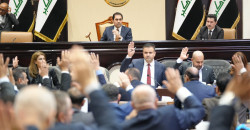
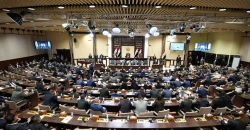
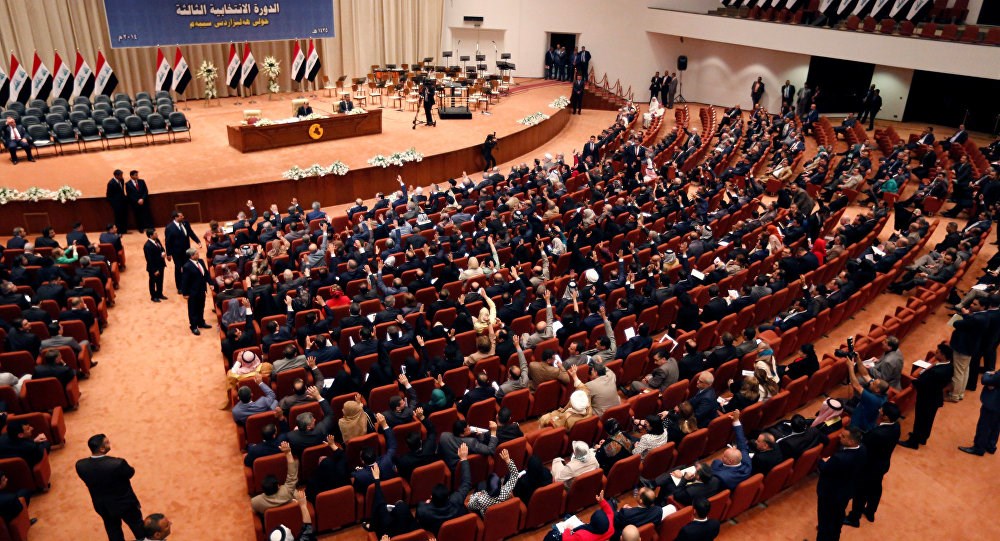
Iraq’s Council of Representatives completed the election of its parliamentary leadership on December 29–30, concluding the chamber’s internal posts and starting the constitutional timeline for electing a new president and forming a government.
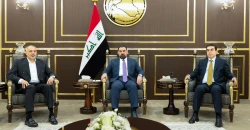
On December 29, parliament elected Haibet al-Halbousi as Speaker with 208 votes out of 329. Al-Halbousi, who represents Al-Anbar province, entered parliament in 2018 and has led the Taqaddum (Progress) bloc.
In the same session, lawmakers chose Adnan Fayhan as First Deputy Speaker with 177 votes. Fayhan, from Babil province, has served multiple parliamentary terms and previously chaired committees related to defense and security.
The Second Deputy Speaker post went, in another session voting, to Farhad Amin Salim Atrushi, a senior member of the Kurdistan Democratic Party and head of its parliamentary bloc (178 votes). Atrushi previously served as governor of Duhok province and held seats in earlier parliamentary terms.
Since 2003, Iraq’s parliamentary leadership has followed an unwritten power-sharing arrangement in which the Speaker is a Sunni Arab, the First Deputy Speaker a Shiite Arab, and the Second Deputy Speaker a Kurd.
With the leadership posts filled, parliament now enters a constitutional phase beginning in January 2026. Under the constitution, lawmakers must elect a president within 30 days of the first session. The presidency, traditionally held by a Kurdish figure, requires a two-thirds majority of parliament.
Once elected, the president has 15 days to task the nominee of the largest parliamentary bloc with forming a government. The prime minister-designate is then granted 30 days to form a cabinet and present a government program to parliament for a confidence vote.
The presidential post has historically been among the most difficult to fill, largely due to divisions between Kurdish parties—particularly the Kurdistan Democratic Party and the Patriotic Union of Kurdistan—which have repeatedly delayed sessions by preventing the two-thirds quorum required for a vote.
Following the October 2021 elections, parliament failed for months to elect a president, with repeated sessions collapsing amid Kurdish rivalry and broader Shiite political deadlock. The impasse ended in October 2022 with the election of Abdul Latif Rashid, who secured the presidency in a second round of voting with 162 votes, followed by parliamentary approval of a cabinet led by Mohammad Shia al-Sudani. The process lasted nearly a year, making it one of the longest government formation delays in Iraq’s post-2003 history.
In 2020, after Mustafa al-Kadhimi was nominated as prime minister, parliament approved only part of his cabinet on the day of his swearing-in, with the remaining ministers confirmed weeks later.
Under prevailing political custom, the prime minister is a Shiite Muslim. The Shiite Coordination Framework currently holds the largest number of seats in parliament, positioning it to nominate the next prime minister. Caretaker Prime Minister al-Sudani, whose bloc emerged as the largest single list in the 2025 elections, is seeking a second term but faces competition from other Coordination Framework factions, including the State of Law Coalition led by former prime minister Nouri al-Maliki.
Read more: Iraq’s speakership: Two decades of constitutional rules and backroom deals