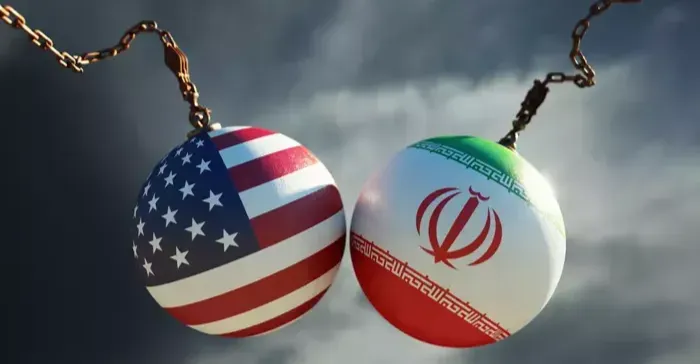
Iran–US nuclear talks 2026: Diplomatic breakthrough or imminent military confrontation?


Shafaq News
Indirect nuclear negotiations between Tehran and Washington have entered a decisive phase, unfolding alongside an unprecedented US military buildup in the Middle East. While Iranian officials describe recent talks as “positive,” parallel signals from Washington and Tel Aviv suggest preparations for a confrontation that could surpass previous escalations. Analysts remain split: some see a diplomatic breakthrough within reach, others warn that the countdown to military action may already be underway.
Two rounds of indirect talks —first in Muscat on February 6, followed by Geneva on February 17, 2026— attempted to revive dialogue after months of tension shaped by earlier US and Israeli strikes. Despite renewed engagement, the core dispute persists: uranium enrichment, ballistic missiles, and Iran’s regional influence.
Diplomatic Momentum Under Pressure
The Muscat meeting helped reopen communication channels after a prolonged freeze. Geneva carried greater strategic weight. It included International Atomic Energy Agency (IAEA) Director-General Rafael Grossi and indirect engagement from US President Donald Trump’s administration.
Iranian political analyst Ali Akbar Barzouni argues that “all options remain on the table, but the probability of reaching an agreement is still higher than that of war.” According to him, Tehran proposed sanctions relief in exchange for nuclear commitments, alongside investment opportunities for US companies in Iran’s oil and gas sectors.
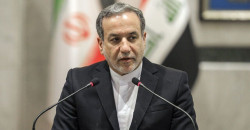
Foreign Minister Abbas Araghchi reiterated to Grossi that Iran’s nuclear program falls within its rights under the Non-Proliferation Treaty (NPT). Tehran firmly refused to include its missile program or regional alliances in the talks.
Washington’s response reportedly considers Iran’s proposals insufficient. President Trump has expanded his conditions to include a full halt to enrichment, removal of enriched uranium stockpiles, and broader negotiations covering missile development and regional activities.
Analysts who spoke to Shafaq News interpret this expansion as a shift from narrow arms control to structural containment —a move that significantly complicates prospects for a mutually acceptable formula.
Read more: Why US–Iran talks keep failing, and why tensions persist
The Strait of Hormuz: Calculated Signaling
Military messaging intensified as negotiations progressed. Tehran conducted naval drills in the Strait of Hormuz and temporarily restricted shipping traffic. Iranian Supreme Leader Ayatollah Ali Khamenei warned that while US warships are dangerous, “more dangerous is the weapon capable of sinking them.”
At the same time, US media reported the deployment of more than 50 advanced fighter jets —including F-35 and F-22 stealth aircraft —along with expanded naval assets featuring two aircraft carriers and dozens of warships.
Barzouni views these maneuvers as manifestations of deep mutual distrust rather than signs of imminent war. Regional actors, he argues, are working quietly to prevent escalation, aware that any confrontation would carry severe economic and security repercussions.
Others disagree.
“The Strike Is Approaching”
Asif Melhem, director of the Moscow-based JSM Research Center, believes the military dimension now outweighs diplomacy. “The timing of a US strike on Iran has drawn significantly closer,” he said, pointing to the scale and speed of recent deployments as evidence of operational readiness rather than symbolic deterrence.
In Melhem’s assessment, Tehran’s room for maneuver has narrowed due to domestic pressures and what he describes as the diminished effectiveness of the “Axis of Resistance,” once a critical regional pressure tool. He also points to intensified Israeli lobbying in Washington, which he believes could accelerate a decision for military action.
Melhem identifies early March 2026 as a potential escalation window, suggesting negotiations may function as political cover while military preparations continue.
A Broader Confrontation?
International relations expert Ashraf Al-Akka takes an even more alarming view, describing the region as standing “on the brink of an open war,” and arguing that Washington may now seek a strategic breakthrough rather than a limited nuclear arrangement.
“The objective may no longer be limited to nuclear constraints but could extend to weakening the Iranian system itself,” he warns.
Any confrontation, Al-Akka argues, would likely exceed regional boundaries. Iran’s strategic ties with Russia and China introduce global stakes, potentially transforming a bilateral clash into a wider geopolitical crisis. Such a scenario would immediately impact energy markets, maritime trade routes, and global security calculations.
Agreement or Escalation?
Two parallel tracks now define the crisis. The first remains diplomatic: Washington seeks a tougher agreement through sustained pressure, while Tehran aims to secure sanctions relief without broadening the negotiation agenda. The second track is military: visible US deployments, Israeli pressure, and Iranian maneuvers in the Strait of Hormuz.
Barzouni maintains that economic realities could ultimately favor compromise because the financial and political costs of war —particularly its effect on global energy markets— create strong incentives for a pragmatic, temporary arrangement.
A plausible outcome, analysts suggest, could involve freezing enrichment at specific levels in exchange for limited sanctions relief, buying time for more comprehensive negotiations.
Yet Melhem and Al-Akka warn that the diplomatic window is narrowing rapidly. Continued deadlock over enrichment thresholds and missile capabilities may turn the coming weeks into a strategic tipping point.
If conflict erupts, Iran holds leverage through the Strait of Hormuz and its regional network of allies. Both analysts anticipate that Russian and Chinese backing could be more visible than in previous crises, raising the stakes further.
For now, the Middle East remains suspended between fragile diplomacy and calibrated brinkmanship, and the coming weeks will depend on each side’s assessment of risk, cost, and strategic endurance.
Written and edited by Shafaq News staff.