Genocide survivors: Feyli Kurds seek true political representation


Shafaq News
The Feyli Kurds, a Shiite Kurdish community long marginalized and persecuted, are preparing to take part in Iraq’s parliamentary elections on November 11, 2025, with their political representation still under dispute.
Among Iraq’s oldest Kurdish groups, the Feylis have lived for centuries in Baghdad, Wasit, Diyala, Khanaqin, and Mandali. Once renowned for their contributions to trade, education, and culture, they endured decades of systematic exclusion, particularly under former presidents Ahmed Hassan al-Bakr (1968–1979) and Saddam Hussein (1979–2003).
During that period, an estimated half a million Feylis were forcibly deported to Iran, their properties confiscated, and citizenship revoked under allegations of “Iranian origin.” At least 15,000 young Feylis disappeared in prisons, their fate remaining unknown.
Iraq’s High Tribunal later recognized the persecution as an act of genocide. Yet more than twenty years after the fall of Saddam’s regime, crucial issues such as citizenship restoration, compensation, and property restitution remain unresolved, leaving many Feylis still seeking justice and acknowledgment.
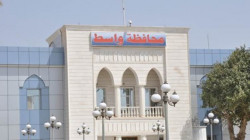
Although only one parliamentary quota seat has been allocated to the Feyli Kurds in Wasit province, Iraq’s new single-constituency electoral system allows voters nationwide to support the Feyli quota candidate, potentially expanding the community’s influence beyond its traditional strongholds.
Read more: Stateless in their homeland: The unending exile of Iraq’s Feyli Kurds
Limited Representation
Many Feylis question why their representation remains restricted and accuse political groups of exploiting the quota for partisan gain. These concerns emerge as political funding and party influence increasingly shape Iraq’s elections.
Jumana al-Ghalai, spokesperson for Iraq’s Independent High Electoral Commission (IHEC), explained to Shafaq News that the quota system permits any voter in Iraq to vote for the Feyli quota candidate, not only those in Wasit, ‘’potentially strengthening candidates from within the community.’’
Some Feyli figures view opportunity in the system. Candidate Haidar Hisham described the quota as a strong card, highlighting that “for the first time, a young Feyli candidate is supported by the prime minister, not by political parties — a significant sign of change.”
“This could benefit the Iraqi people in general and the Feylis in particular, by correcting long-standing injustices,” he added.
Yet others remain cautious. Candidate Haidar Ali (Abu Tara) highlighted intense competition in Wasit, warning that political funding is skewing the process, with some candidates backed by parties using money and influence to secure votes.
Eight candidates are contesting the Feyli quota seat in Wasit, including seven from the province and one from Baghdad. “Those backed by powerful political forces hold an unfair advantage,” Ali emphasized.
Quota Crisis
Iraq is home to an estimated 1.5 to 2 million Feyli Kurds, yet they consider their one parliamentary seat as “institutional discrimination.”
Feylis argue the system does not reflect the community’s demographic weight or historical role in Iraqi society, pointing out that other minorities, including Christians and Yazidis, hold five or more seats. Calls are growing to revise quota allocations based on updated demographic data rather than political arrangements from decades ago.
Maher Rashid al-Feyli, secretary-general of the Feyli Kurdish Front, said his group, founded eight years ago, is fielding 15 Feyli candidates in Baghdad. He criticized moving the quota seat from Baghdad to Wasit, arguing it “disenfranchised the largest Feyli population center.”
Meanwhile, Fouad Ali Akbar, adviser on Feyli affairs in Iraq’s parliament, described the community’s representation as unequal, noting that there is only one quota seat in parliament while Wasit’s provincial council has two and Baghdad has one — ‘’a mismatch.’’
Highlighting the Federal Court’s earlier ruling that Feylis should receive equal treatment alongside other minorities, he warned that parliament has not yet implemented those decisions.
“Instead, parties exploit the quota to place candidates who do not genuinely represent the Feyli community.”
Read more: Honoring or ignoring? Feyli Kurds divided over Martyrs' Day designation
Past Influence
Since 2003, Feyli Kurds have struggled to turn their numbers into political influence. In the 2005 and 2010 elections, most Feyli candidates joined large Shiite or Kurdish coalitions, including the then United Iraqi Alliance (Watani List) or the Patriotic Union of Kurdistan (PUK). Their presence often went unnoticed, folded into broader sectarian agendas.
Issam al-Feyli, a political science professor at al-Mustansiriyah University, highlighted the community’s challenge of maintaining a distinct identity, observing that Feyli representatives in parliament “frequently became partisan tools rather than advocates for the community’s rights.”
He argued the group deserves at least five parliamentary seats, on par with Christians, further proposing a “High Commission for Feyli Affairs” to protect the community’s rights and identity within the Kurdish nation.
Disillusionment grew through the 2014 and 2018 elections. Many young Feylis abstained, convinced that quota seats were dominated by larger parties. By 2021, turnout in districts such as Baghdad’s al-Karrada and Wasit’s al-Aziziya fell below 35 percent, lagging behind the national average of 41 percent, a sign of the community’s estrangement from the political process.
For 2025, leaders hope for a shift. Independent candidates are seeking to give Feylis a distinct voice, aiming to turn renewed interest into tangible representation.
Groups like the Coordination Committee of Feyli Kurds, the Feyli Kurdish Front, and independent youth networks have intensified outreach across Baghdad, Wasit, and Diyala, hosting forums and events to engage voters. Grassroots movements such as Feyli Voice and Our Identity Movement are encouraging younger voters to “transform identity into representation.”
Moreover, social media, particularly Facebook and Telegram, has emerged as a hub for discussion and organization among Feyli youth, while women candidates and first-time voters are also taking a more active role than in previous elections.
Candidate Sara Abdullah Feyli framed her campaign as “a call to reclaim belonging — through ballots, not slogans,” focusing on women’s rights and restoring the community’s place within Iraq’s legal and political framework.
Despite this renewed energy, challenges linger. Many Feylis still face hurdles in updating citizenship records and property documents, remnants of decades-long displacement that erased much of the community’s civil status from official archives.
The Balancing Vote
Ali Hussein Quli Khan al-Feyli, a member of the Kurdistan Democratic Party (KDP), characterized the Feylis as “the balancing vote in Iraqi politics,” underlining their dual identity as both Kurdish and Shiite.
“In the past, Feylis often supported major parties and movements,” he observed, stressing that “Today, it is our community that needs support.”
For many Feylis, the upcoming election carries significance beyond simply casting a vote. It presents a symbolic chance to reclaim recognition and reaffirm their role in Iraq’s political landscape. While most have regained citizenship, the community maintains that genuine participation begins with authentic representation in parliament.
Read more: Mass graves, missing thousands: Feyli Kurd families still seek answers
Written and edited by Shafaq News staff.