From Dollar to Dinar: Conversion policy threatens stability of Iraq’s oil sector



Shafaq News
The Iraqi Central Bank’s decision to process US dollar transfers owed to oil-sector contractors by converting them into Iraqi dinars has sparked widespread debate in economic circles over the potential consequences for companies operating in the country’s oil industry, particularly regarding foreign obligations and operating costs.
Economic specialists interviewed by Shafaq News believe the continued application of this mechanism could impose additional financial burdens on companies that conduct their transactions in dollars, especially amid exchange-rate fluctuations and the requirements of the oil market. Some warn that similar conditions have previously led to company bankruptcies due to disparities between official and parallel exchange rates.
In a post on Facebook, economist Nabil Al-Marsoumi said that more than 200 Iraqi companies contracted with oil licensing firms, employing over 50,000 Iraqi workers, are facing the risk of significant financial losses and layoffs, adding that the Central Bank’s directive to convert dollar transfers into dinars at the official rate threatens these companies, as their contracts and expenses are denominated in dollars, while losses stem from the wide gap between the official and parallel exchange rates.
Mahmoud Hassan, a representative of an oil company who spoke to our agency during a demonstration organized by several Iraqi subcontractors working with a global oil firm, pointed out that Iraqi oil companies have been facing an ongoing crisis for more than a year without reaching solutions.
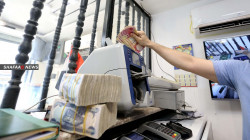
Hassan said companies employing more than 40,000 Iraqi workers have come under severe financial pressure after the state began settling their dues at the official rate of 131,000 dinars per 100 dollars, while the parallel market rate stands at around 155,000 dinars. “This causes direct losses for companies.”
He criticized the authorities for pushing companies to scale back operations instead of supporting them, warning that the continuation of this situation would force firms to lay off workers and could lead to a complete shutdown. “Most companies contracted with international oil firms are Iraqi, and many are already unable to pay workers’ salaries,” he added.
Hassan called on the Central Bank to intervene urgently and find a solution that takes into account the nature of these companies’ operations and obligations, cautioning that the continuation of the crisis would negatively affect the oil sector and the labor market.
Iraq’s oil sector relies on numerous secondary companies that vary from project to project and carry out services, supplies, maintenance, construction, and transport under contracts with oil companies or international firms linked to oil agreements.
From a legal perspective, economist Hamza Al-Jawahiri said that as long as contracts stipulate payment in dollars, payments must be made in that currency. He said settling dues in any other currency constitutes a violation of contractual terms, and that affected companies have the right to file complaints with competent courts, as “contracts are binding on the contracting parties.”
Energy expert Ahmed Sabah said the Central Bank’s policy could lead to the gradual exclusion of some foreign companies, in favor of local firms or those willing to deal in dinars. He explained that many Western and foreign companies rely on external supply chains that require dollar payments to secure equipment and services.
Sabah added that the measure is not sustainable in the long term, particularly given that Iraq’s current government is operating in a caretaker capacity, limiting its ability to cement strategic decisions with long term implications for the oil sector, suggesting that major foreign companies may refrain from expanding or entering new contracts if the policy continues.
The decision, according to him, could be temporary and subject to change in the coming period, especially if negative effects emerge on the investment environment or the pace of work in oil fields. “The measure does not represent a political reaction as much as it is a transitional regulatory step.”
Read more: Dinar slides: Why Iraq’s oil billions aren’t buying currency stability
The economists warned that the loss or collapse of secondary oil companies contracted with international and local oil firms would disrupt operational activities in oil fields, particularly maintenance, logistics, and supply operations. They cautioned that this could negatively affect production stability and lead to the loss of tens of thousands of jobs, given these companies’ heavy reliance on Iraqi labor.
Within the Central Bank’s broader effort to curb the parallel dollar market, economists say the burden of these measures has fallen unevenly across sectors.
Economist Dhargham Mohammed Ali said efforts to prevent the emergence of a parallel dollar market have driven the Central Bank to adopt several measures aimed at strengthening confidence in the dinar, but argued that these steps have not been fair in light of the continued gap between the official and parallel exchange rates.
He also called on the Central Bank to reconsider its mandatory currency conversion policy, citing the losses incurred by market participants and the loss of a legitimate channel for injecting dollars into the market away from illegal currency trading. “There is a need either to convert funds at a realistic and fair rate or to establish a different mechanism for dealing with foreign companies.”
Written and edited by Shafaq News Staff.