Dinar slides: Why Iraq’s oil billions aren’t buying currency stability


Shafaq News
Iraq’s currency markets came under renewed pressure on Monday as the dollar climbed sharply against the dinar, intensifying debate over the limits of the government’s current approach.
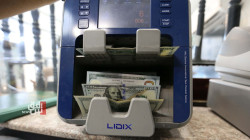
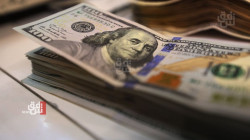
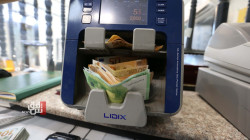
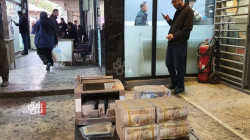
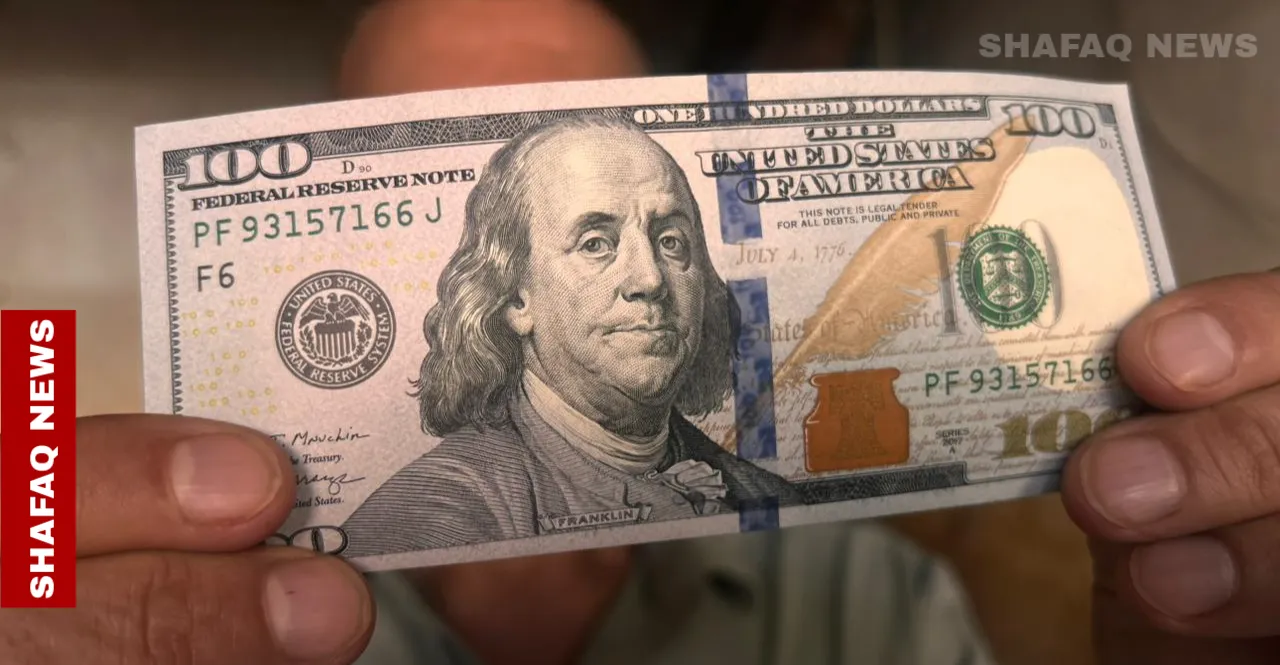
By midday, Baghdad’s main exchanges recorded 144,000 dinars per 100 dollars, up from 142,250 in the morning. In Erbil, the capital of the Kurdistan Region, the dollar sold for 143,050 dinars and bought for 142,900.
Market Jolt
Economic expert Hilal al-Taan told Shafaq News that the dinar remains exposed because the state’s main revenue source, oil, has weakened alongside falling tax and customs income. Widespread financial and administrative corruption, coupled with a lack of deterrent measures, adds further pressure, he said.
Oil continues to dominate Iraq’s economy, with crude exports representing more than 42 percent of GDP, according to the World Bank. During the first eight months of 2025 alone, Iraq generated about $56.4 billion from oil, accounting for roughly 90 percent of all state revenues, official data showed.
Al-Taan recalled that similar conditions in 2021 pushed the dollar from 120,000 to 145,000 dinars, driving up food and consumer prices and tightening pressure on low- and middle-income families.
Read more: Without oil: Iraq's economic future hanging in the balance
Government Signals Stability
Financial adviser to the Prime Minister Mudhhir Mohammed Saleh, however, told our agency that liquidity remains stable and that coordination between the fiscal and monetary authorities ensures sufficient financing.
Banks, he explained, can stabilize their liquidity by purchasing government bonds through discount operations, which in turn secure short-term needs for public finances.
“Salaries, pensions, and government obligations remain in a very safe position in the near and medium term,” Saleh said.
Reform Still Required
Meanwhile, former Central Bank of Iraq (CBI) official Mahmoud Dagher viewed exchange-rate adjustments as limited tools. Iraq, he told Shafaq News, has repeatedly relied on changing the dinar’s value — devaluing in 2020, then raising the official rate in 2023 — without the structural reforms needed to stabilize the economy.
Dagher argued that the country must address corruption, improve tax collection, strengthen electricity and water infrastructure, and organize border outlets and customs before any “meaningful reform” can take hold.
Despite differing assessments, the experts agreed that currency stability depends on comprehensive financial and administrative reform, not a single policy tool.
Written and edited by Shafaq News staff.