Demolition faster than reconstruction: A political norm shaping Iraq’s new governments


Shafaq News
With each change of government in Iraq, a recurring pattern resurfaces: the incoming administration seeks to erase the policy footprint of its predecessor. Decisions adopted by the state are often withdrawn, frozen, or subjected to broad review, not necessarily because they violate the law, but because the political mood has shifted and a new name now occupies the prime minister’s office.
This dynamic has returned to the forefront as discussions intensify within the Shiite Coordination Framework (CF), the largest parliamentary bloc, over the phase following Prime Minister Mohammed Shia Al-Sudani.
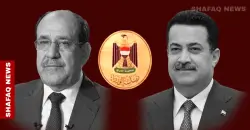
Statements from figures inside the State of Law Coalition led by Nouri Al-Maliki have openly pointed to the possibility of a sweeping reversal of the current government’s decisions should Al-Maliki return to the premiership. A similar course unfolded in 2022, when Al-Sudani’s cabinet reviewed and annulled several decisions taken by Mustafa Al-Kadhimi’s caretaker government.
Between what is framed as “correction” and what critics describe as institutional dismantling, a new reality has taken hold within the Iraqi state: no decision appears guaranteed to endure beyond the lifespan of the government that issued it. The consequences extend beyond politics, affecting public projects, administrative performance, and financial and job stability.
Analysts and observers of Iraqi governance interviewed by Shafaq News, warn that this cycle, in a country where crises accumulate faster than solutions, has become a formula for producing administrative disorder. Governance, they argue, is driven by a mindset of negation rather than institutional accumulation, undermining long-term planning and continuity.
They agreed that successive waves of decision cancellations have often served narrow political objectives. By overturning previous measures, prime ministers send messages to public opinion that earlier policies were flawed or illegitimate, despite the broader disruption such reversals cause to state institutions.
The result, they say, is a system in which every government starts from scratch, adopting a “demolish and rebuild” approach instead of building on prior frameworks —an approach that systematically delays national development.
Read more: Iraq begins 90-day countdown to formgovernment as political fault lines re-emerge
Administrative Chaos
“Dangerous behavior and a state of political and administrative chaos across successive Iraqi governments,” Political analyst and former diplomat Ghazi Faisal described the phenomenon.
Faisal explained that cabinet decisions, under any government, are supposed to align with the constitution and with the political, economic, and social program approved by Parliament and the governing political blocs, stressing that decisions taken during Al-Sudani’s tenure were made with the knowledge and coordination of the State Administration Alliance that formed the government. If such decisions had conflicted with the constitution or the approved government program, Faisal argued, Parliament should have objected at the time and moved to block or suspend their implementation.
“If there was no objection from Parliament, no objection from the State Administration Alliance, and no objection from the CF, and the measures were implemented within the constitutional powers of the prime minister, then there is no legal problem, and later objections are unfounded.”
Faisal warned that the repeated pattern of objection, dismantling, and reversal undermines any genuine opportunity for initiative or development. “Canceling or suspending projects, starting new ones, and then ending parliamentary terms leaves the country trapped in poverty, hunger, illiteracy, and the spread of informal settlements.”
He questioned the logic of such confrontations, noting that successive prime ministers have emerged from the same political camp and ideological school. “The government is not shifting from a socialist party to a liberal one,” he said. “The prime minister comes from the same CF and the same political orientation. So who is objecting to whom?”
Drawing a comparison with other political systems, Faisal pointed to the United States, where policy reversals typically reflect “clear ideological shifts.” He noted that Republican administrations often challenge Democratic positions on issues such as abortion and healthcare, while Democratic governments may move to reverse Republican policies on immigration and related matters. “Such ideological alternation,” he said, “is absent in Iraq.”
Read more: A Lost Term: Iraq’s weakest parliament since 2003
State of Law stance
For her part, State of Law bloc MP Ibtisam Al-Hilali confirmed that Al-Maliki, if tasked with forming the next government, would move to cancel all decisions issued by the caretaker government, including what she described as improper tax and customs measures, as well as decisions related to suspending leave, scholarships, and employee transfers.
“Measures taken by the outgoing cabinet and its prime minister lack constitutional legitimacy,” she argued.
Recent precedent reinforces the controversy. After assuming office in 2022, Al-Sudani reviewed and canceled a range of decisions taken by Al-Kadhimi’s caretaker government, particularly senior-level appointments. At the time, Al-Sudani held a press conference affirming his commitment to a Federal Supreme Court ruling that limited the powers of caretaker administrations.
Days ago, Al-Sudani himself sparked widespread criticism and public backlash after issuing several decisions while his government was transitioning into caretaker status. These included imposing taxes on thousands of imported goods, approving senior appointments, among them positions within the Communications and Media Commission, and issuing decisions affecting civil servants, such as study leave and the sale of state-owned vehicles.
Decisions without Guarantees
Political analyst Mujashaa Al-Tamimi argued that this emerging norm does not constitute reform but instead exposes the absence of strategic planning and the weakness of the state as an institution independent of individuals and parties.
Al-Tamimi said Al-Hilali’s remarks about revisiting all of Al-Sudani’s decisions if Al-Maliki returns to power “are not an exception, but an extension of a recurring approach, one that Al-Sudani himself followed.”
“The result is one outcome,” he said, adding that “decisions taken without any guarantee of continuity, public policies without institutional memory, and a state managed through demolition and rebuilding rather than accumulation.”
Al-Tamimi also rejected the notion that this reflects normal political competition, describing it instead as “a systematic obstruction of the idea of the state.” As long as there is no cross-government commitment to public policy, he warned, chaos will remain the rule rather than the exception.
Legal perspective
From a legal standpoint, expert Aqeel Ouki pointed out that canceling previous government decisions is a flawed approach rooted in political targeting rather than public interest, noting that institutional systems worldwide rely on legal frameworks that ensure decisions serving the public and the state remain effective and binding, something he said is absent in Iraq.
Ouki said that some decisions issued by the dissolved Revolutionary Command Council during Saddam Hussein’s era remain in force because they addressed legal gaps and administrative deficiencies. “The state still suffers from legislative shortcomings that force it to rely on decisions to address urgent needs.”
While the practice is legally unsound, according to Ouki, there are currently no constitutional or legal remedies to prevent it. Under Iraq’s existing framework, governments retain the authority to cancel, amend, or uphold previous decisions, as there is no explicit legal or constitutional text prohibiting such actions.
Read more: Iraq’s Presidential Race: Kurdish candidates competing for the post
Written and edited by Shafaq News staff.