City defaced: November elections bury Baghdad’s beautification efforts


Shafaq News
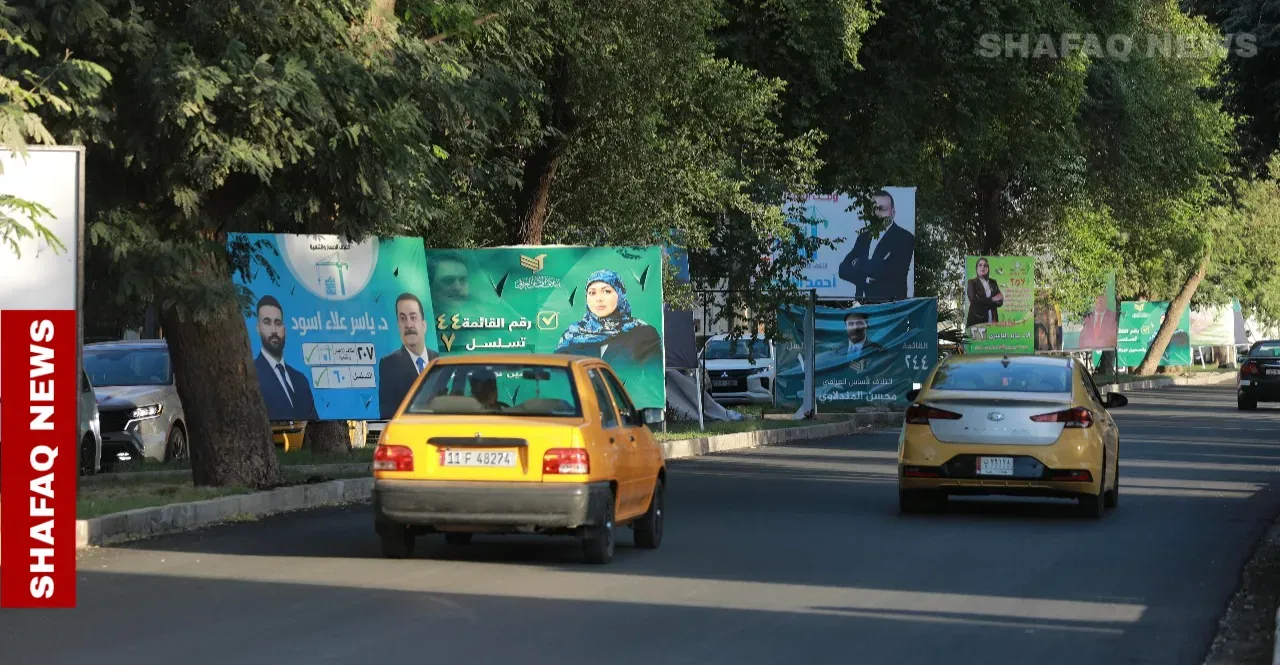
Iraq’s election campaign season has transformed Baghdad and its streets into a patchwork of political banners and billboards, stirring frustration among residents who argue the visual clutter is undoing years of costly beautification efforts.
Street Beauty Lost
University student Ruba al-Janabi, 22, feels irritated by what she describes as “provocation and distortion” every time she walks through Abu Nuwas Street in Baghdad’s central al-Karrada district, where a “chaotic” wave of campaign posters now covers the street’s newly restored landscape.
“It’s every candidate’s right to promote themselves and present their platform within the law,” al-Janabi remarked to Shafaq News. “But what’s happening now is a real distortion and damage to the streets and intersections, sometimes even provoking citizens.”
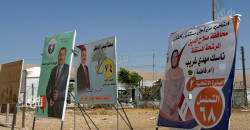
Large numbers of banners, posters, and candidate photos line both sides of the street, its gardens, and the central divider — upsetting many visitors who view the area as a popular family destination now marred by visual pollution.
Resident Mahdi Abd al-Sada observed that election advertising has become a waste of large sums of money with no real benefit, and needless damage to streets and parks, adding that campaign materials “have spread densely across public roads, bridges, squares, and intersections, causing visual annoyance.”
Arguing that people need real reform programs, not endless posters, Abd al-Sada urged stricter enforcement of campaign regulations instead of what he described as “the chaos and randomness that have swept Baghdad’s streets since campaigning began.”
Since October 3rd, when the parliamentary campaign season officially opened, Baghdad has witnessed multiple violations of municipal rules on advertising, including damage to roads and bridges, despite clear guidelines set by the Baghdad Municipality.
Abd al-Sada noted that excessive advertising often backfires, pointing out that one candidate covered an entire apartment building with banners — more than 50 signs in one area.
“That raises serious questions about the source of their campaign funding and makes voters wary.”
Baghdad’s local authorities have been working on large-scale reconstruction and beautification projects, including the rehabilitation of Abu Nuwas Street, known for its gardens and river views. Campaign materials have undercut these efforts, with posters and billboards installed in violation of Independent High Electoral Commission (IHEC) regulations.
Sidewalks and green spaces along Abu Nuwas have also been damaged by the heavy iron frames used to support large banners, further frustrating residents and undermining recent restoration work.
Political science professor Faisal Abd al-Qudus explained that the government and its institutions have made major efforts to make Baghdad cleaner and more attractive through broad reconstruction campaigns, urging “parliamentary hopefuls to respect the electoral advertising rules set by the election commission, rather than violate the law and deface the very city they aspire to represent.”
He also observed that many bridges, streets, and public squares have been similarly disfigured by campaign materials, including Abu Nuwas Street, which had recently been rehabilitated to serve as a social and cultural hub for families.
“There are no effective legal measures to hold violators accountable apart from fines, which are too small to deter further violations,” he added.
Fines Fall Short
Under the Iraqi Electoral Law, IHEC imposes financial penalties on candidates and coalitions that breach campaign regulations. Fines typically range from 250,000 to 1 million Iraqi dinars ($190 to $760), depending on the severity and recurrence of the violation. More serious breaches, such as defacement of public property or placement on restricted sites, can incur fines up to 5 million dinars ($3,800), while repeated violations may lead to the removal of campaign privileges or referral to judicial authorities.
Additional penalties include fines for misuse of official positions up to 10 million Iraqi dinars ($7,600), launching campaigns before the official start date, which can result in fines ranging from 2 to 5 million dinars ($1,500 to $3,500), and increased fines for repeat offenders, which may include doubled fines or even disqualification.
These fines are generally deducted from the campaign deposits submitted by candidates when registering with the IHEC. If a fine exceeds the deposit, candidates must pay the remaining balance before their candidacy is certified. Persistent violators may also face temporary suspension of campaign permits.
In recent developments, the IHEC has recorded 350 campaign violations, with fines ranging from 2 to 10 million Iraqi dinars ($1,500 to $7,600). Approximately 120 of these violations occurred before the official campaign period began on October 3.
The Baghdad Municipality has issued eight recommendations for campaign advertising, while the IHEC formed teams to monitor and penalize violators.
Municipality Spokesman Uday al-Jundil explained that the rules ban posters glued to walls or affixed with cement, and prohibit using traffic signs, public gardens, or medians for campaign materials. He mentioned that the regulations also forbid placing ads on government buildings, schools, universities, mosques, husseiniyas, holy sites, bridges, heritage landmarks, and public monuments.
‘’Campaign materials must use easily removable materials, such as cloth or light metal and wooden frames.’
Al-Jundil noted that municipal teams document and immediately remove violations, imposing fines on candidates or political coalitions, and referring cases to the municipality’s deputy office for follow-up with the IHEC, which can deduct fines from campaign deposits.
Read more: Vote-buying casts shadow over Iraq’s 2025 elections
Blame the System
Candidates, however, blame authorities for what they describe as disorganized campaign management, arguing that no suitable locations were provided for legal poster placement.
One female candidate, who asked not to be named, told Shafaq News that “the authorities put us in an awkward position’’ — they banned street and wall posters without designating proper alternatives.
“In Europe, such as France, each street has a shared public panel for candidates’ posters, which avoids defacing the city and saves money,” she added.
She explained that the restrictions have sparked disputes among campaign teams, stressing that “The few legal locations available are too small for thousands of posters, leading to arguments — even fights — between rival teams over space.”
She mentioned that using modern advertising methods, such as digital screens on buildings and malls, costs between 5 and 7 million dinars ($3,800 to $5,300) per candidate for each screen — “a steep price for newcomers whose total campaign budgets barely exceed 14 million dinars ($10,600).”
Read more: Iraq’s 2025 Parliamentary Elections — What You Need to Know
Written and edited by Shafaq News staff.