Al-Anbar: Iraq’s frontline province after Ain al-Asad military handover


Shafaq News
Iraq’s western province of Al-Anbar has moved to the center of the country’s security and defense strategy following the completion of a full military handover at Ain al-Asad Air Base, a development Iraqi officials describe as a turning point in securing the border with Syria and reinforcing national sovereignty.
Caretaker Prime Minister Mohammad Shia al-Sudani, who also serves as commander-in-chief of the armed forces, arrived on Wednesday at Ain al-Asad Air Base as part of a field tour to review the readiness of forces tasked with protecting Iraq’s western frontier. The visit came days after Iraqi forces assumed full control of the base following the withdrawal of US troops, ending the presence of the US-led Coalition at one of Iraq’s most strategically significant military installations.
The Iraqi Armed Forces completed the handover in mid-January under a bilateral agreement signed between Baghdad and Washington in 2024, within the framework of the Joint Higher Security Committee, which includes Iraqi, US, and Coalition representatives. Iraqi units have since finalized their deployment and repositioning across operational sectors in line with updated defense plans, according to defense officials.
Read more: From the fight against ISIS to US withdrawal talks
During the inspection, al-Sudani reviewed alert levels and field movements of deployed units and observed the takeoff of four Iraqi F-16 fighter jets during a scheduled drill focused on border surveillance, aerial patrols, and rapid-response missions. The aircraft are part of Iraq’s F-16 fleet, in service since 2015, and are regarded by military planners as a core asset for monitoring vast desert areas and responding quickly to emerging threats.
Located about 10 kilometers from the town of al-Baghdadi, Ain al-Asad is Iraq’s second-largest air base after Balad. For years, it served as a hub for US and Coalition operations against ISIS and previously functioned as the headquarters of the US Army’s 7th Division. Iraqi officials say regaining full control of the base restores sovereign command over critical air and ground capabilities in western Iraq.
According to the Ministry of Defense, Army Chief of Staff General Abdul Amir Rashid Yarallah oversaw the deployment of Iraqi units across the base, including the 65th Special Forces Brigade and its subordinate formations, alongside Air Force and Army Aviation command headquarters. He inspected infrastructure, service facilities, administrative buildings, and logistics sites to verify operational readiness and long-term sustainability.
The renewed focus on Ain al-Asad reflects the broader military weight of Al-Anbar Province, Iraq’s largest province by area and its primary buffer along the Syrian frontier. Al-Anbar shares the longest stretch of Iraq’s border with Syria, extending for approximately 325 kilometers. By comparison, the total length of the Iraqi-Syrian border ranges between 599 and 610 kilometers, according to official and geographical data, with about 285 kilometers running through Nineveh province.
Within Al-Anbar, the border passes through highly sensitive terrain, beginning at the tripoint linking Iraq, Syria, and Jordan and extending northeast toward the Al-Qaim area, where the Euphrates River enters Iraqi territory. This geography has long made the province a frontline zone for counterterrorism and border defense.
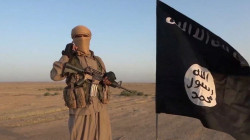
During the rise of ISIS, Al-Anbar’s vast deserts and direct access to eastern Syria enabled militants to move fighters, weapons, and supplies across the border, forcing Iraqi forces to treat western Al-Anbar as a primary theater of operations. Successive Iraqi governments have repeatedly described the Al-Anbar–Syria frontier as one of the most sensitive corridors exploited by ISIS at its peak, prompting sustained Iraqi and Global Coalition campaigns to dismantle cross-border networks and deny the group freedom of movement.
Even after the territorial defeat of ISIS in 2017, Iraqi security forces have continued large-scale operations, patrols, and surveillance missions across Al-Anbar’s border belt to prevent a resurgence. Military assessments cited by Western, regional, and Iraqi security institutions, including the US Central Command and Iraq’s Ministry of Defense, say ISIS remnants have sought to exploit gaps between Iraq and Syria by operating in remote desert zones, making persistent control of Al-Anbar essential to Iraq’s broader counterterrorism strategy.
Defense Minister al-Shammari said in a previous statement that this experience has shaped current defense planning, with the province now treated not as a rear area but as a permanent forward line in safeguarding Iraq from cross-border threats.
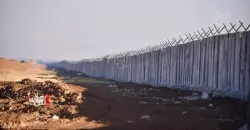
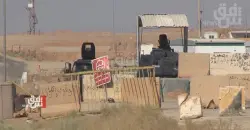
To secure this vast and exposed frontier, Iraq has invested heavily in physical and technological defenses. Authorities have constructed concrete walls, dug extensive trenches, and erected watchtowers along key stretches of the border to ensure control and prevent infiltration. These measures have recently been reinforced, amid the developments in Syria, by layered defensive belts that military sources say now include more than 105 thermal surveillance cameras covering known smuggling routes and infiltration corridors.
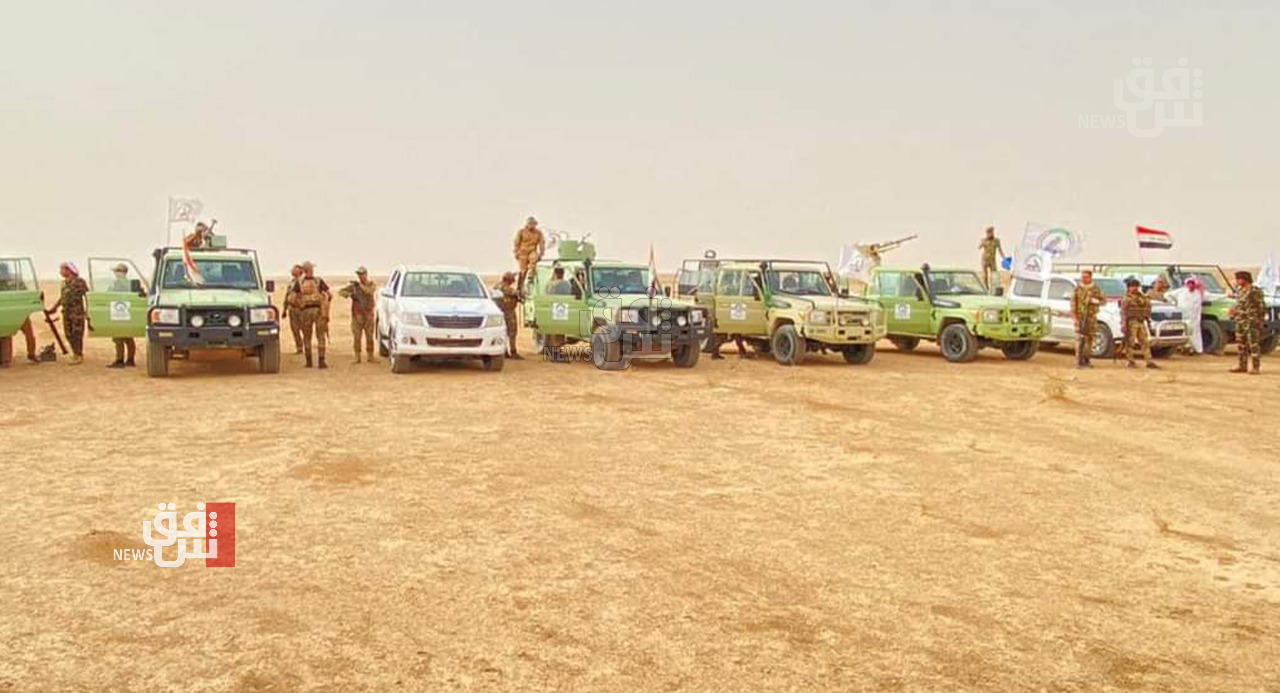
The entire border strip between Al-Anbar and Syria is secured by Iraqi forces, including the army and the Popular Mobilization Forces (PMF). Units from different formations are deployed across the sector, with continuous coordination and joint planning under the command of the Iraqi Armed Forces to respond to any security breaches and maintain the integrity of the frontier.
Addressing concerns over armed factions affiliated with the Iran-aligned Islamic Resistance in Iraq monitoring the Al-Anbar borders, Hussein Ali al-Sheihani of the Sadiqoun Movement —the political wing of Asaib Ahl al-Haq— told Shafaq News that all forces operating along the frontier are under state authority and the direct command of the commander-in-chief.
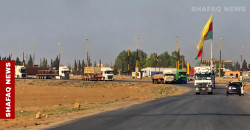
Al-Anbar also hosts two of the three official land crossings between Iraq and Syria, adding to its strategic and economic importance. Al-Qaim Border Crossing links the Iraqi town of Al-Qaim with Albu Kamal in eastern Syria and was reopened to trade and passenger movement in June 2025 after repeated closures during earlier periods of instability. The province also includes the Al-Waleed crossing, connecting Iraq’s Al-Rutba district with Syria’s Al-Tanf area, which lies near the largest US base in Syria.
Read more: Syria’s calm: An end to threat or a start of a complex security phase for Iraq?
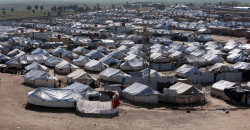
Following the security escalation inside Syria, including the recent and continued deadly clashes involving Syrian government forces and the Kurdish-led Syrian Democratic Forces (SDF), Iraqi security forces have further reinforced their presence along the border. The developments intensified after the SDF said it no longer controls Al-Hol camp in Hasakah, near the Iraqi border, which hosts ISIS members and their families, as well as Al-Shaddadi and Al-Aqtan prisons where ISIS detainees are held.
Al-Shammari said Iraqi security units are closely monitoring military developments inside Syria, including advances by government forces toward areas previously held by the SDF, some of which include oil facilities and detention sites holding ISIS militants.
Amid these security concerns, Iraqi Armed Forces spokesperson Sabah al-Numan confirmed to Shafaq News that Iraq’s borders with all neighboring countries remain “100 percent secure.”
Written and edited by Shafaq News staff.