“A Much Different Place”: Trump’s tone reshapes Iraq’s political calculus


Shafaq News
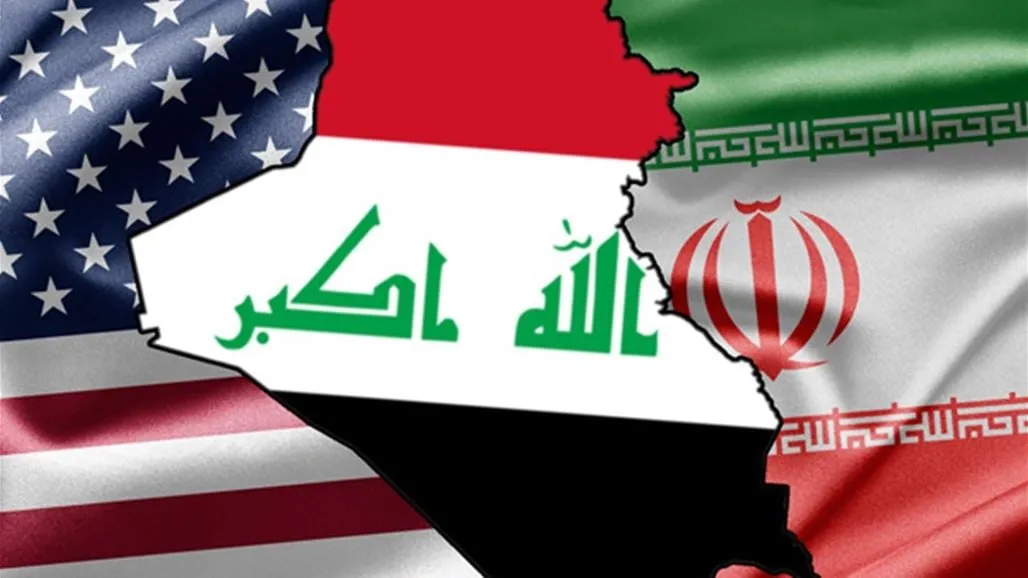
A series of signals from Washington—capped by President Donald Trump’s remarks portraying Iraq as “a much different place”—has injected new momentum into Baghdad’s political arena, sharpening internal rivalries and raising the stakes for caretaker Prime Minister Mohammed Shia al-Sudani as he navigates competing pressures at home and abroad.
The controversy surrounding Iraq’s brief terrorism listings for Hezbollah and Yemen’s Houthis further exposed how quickly US messaging now reverberates inside the Iraqi system, amplifying anxieties among factions aligned with Iran.
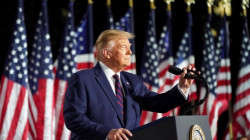
Trump’s comments, in which he linked Iraq’s improved standing with his claims about neutralizing Iran’s nuclear infrastructure, were interpreted in Baghdad as more than a rhetorical flourish. He noted that Al-Sudani nominated him for the Nobel Peace Prize and asserted that Tehran’s leverage over Iraq has weakened—statements that Iraqi actors read as a sign of Washington’s willingness to reopen political space for Baghdad.
Al-Sudani responded by emphasizing his pursuit of “friendships” that serve Iraq’s interests and stressed that international cooperation, not confrontation, will shape his foreign policy. The exchange highlighted a central tension: Iraq is attempting to stabilize its external ties at a moment when American and Iranian influence are moving in opposite directions.
The sensitivity of this moment became clear when Issue No. 4848 of the Official Gazette (Al-Waqai Al-Iraqiya) appeared to list Hezbollah and the Houthis under Iraq’s counterterrorism framework. Within hours, the Al-Sudani's government moved to contain the fallout.
The Central Bank clarified that the approvals applied only to ISIS- and al-Qaeda-linked entities. Al-Sudani ordered an urgent investigation. Iraqi factions tied to the Axis of Resistance—including armed groups aligned with Iran—denounced the listing as unacceptable.
Legal experts told Shafaq News that correcting a decision published in the Official Gazette is procedurally feasible, but the rapid retreat underscored a deeper point: Washington’s signals have become political leverage inside Iraq, and every actor is recalibrating around them.
The head of the Iraqi Ummah Party, former MP Mithal al-Alusi, told Shafaq News that Trump’s tone aligns with a longstanding US strategy that seeks to curb corruption and contain Iranian expansion. “It is misleading to treat these messages as personal endorsements,” he said. “Trump is signaling Iraq’s centrality to the equation of war and peace.”
Al-Alusi argued that the terrorism-listing episode may have reflected Baghdad’s attempt to draw American support and strengthen Al-Sudani’s position despite resistance from the Coordination Framework, the Iran-aligned coalition that emerged as the largest force in the 2025 elections and includes Al-Sudani’s Reconstruction and Development Coalition.
Political analyst Aed Al-Hilali said the timing of Trump’s remarks gives them strategic weight, pointing to a broader American move to rebuild its partnership with Baghdad after years of fluctuating engagement.
“Iraq’s polarized environment turns any US signal into political leverage,” he warned, noting that some political forces now use Washington’s tone to question Al-Sudani’s independence as domestic competition intensifies.
Al-Hilali argued that the government’s management of issues like the terrorism listings will become a test of political balance—whether Baghdad can prevent outside powers from turning administrative decisions into tools of internal pressure.
Political researcher Nawal Al-Moussawi told Shafaq News that Trump had not originally placed Iraq high on his agenda, but recent lobbying efforts “unsettled long-established networks and revived interest in Baghdad.” She pointed to the growing role of US Envoy Mark Savaya in shaping Washington’s conversations with Iraq’s Shiite political class, describing him as a conduit through which the administration’s comfort with Al-Sudani’s performance is increasingly signaled.
Al-Moussawi noted that American messaging repeatedly references the past three years—the duration of Al-Sudani’s tenure—a pattern she interprets as clear preference for continuity. She added that this shift coincides with what she described as a decline in Iranian influence. “The perception of an American-backed Al-Sudani, emerging as Tehran’s leverage recedes, is heightening concerns among traditional power centers,” she said.
US Special Envoy for Syria Tom Barrack assessed that Iran-aligned groups now exert significant influence over Iraq’s parliament. In an interview, he described Al-Sudani as “capable but constrained” by a legislature shaped by factions linked to the Popular Mobilization Forces (PMF), many of which also operate under the banner of the “Islamic Resistance in Iraq,” part of the broader Axis of Resistance.
This parliamentary configuration, Barrack suggested, limits Al-Sudani’s ability to translate any perceived American support into political advantage. Instead, it sharpens the pressures on him: a US tone that encourages reform and a domestic arena dominated by forces wary of Washington’s intentions.
The convergence of renewed American engagement, fluctuating regional dynamics, and intensifying competition among Iraqi power centers has placed Baghdad at a delicate crossroads. Trump’s remarks and the turbulence surrounding the terrorism listings revealed how external signals now carry amplified consequences inside Iraq, reshaping calculations for both allies and adversaries of Al-Sudani.
As Washington signals openness to deeper cooperation and Tehran’s influence faces new constraints, Iraq’s leaders are entering a period where every gesture—from diplomatic rhetoric to bureaucratic decisions—risks being interpreted as alignment with one axis or another.
For Al-Sudani, the challenge now is managing these cross-pressures without allowing external actors to become instruments in domestic political battles.
Written and edited by Shafaq News staff.