Israeli commanders call Lebanon mission purposeless; Hezbollah keeps killing


Shafaq News- Middle East
Senior Israeli military commanders have openly questioned the purpose of maintaining ground forces in southern Lebanon, warning that troops are being killed and wounded without clear military objectives, as a fragile ceasefire with Lebanon collapses in all but name.
The admissions, relayed by field commanders to Israel Hayom, represent some of the most candid internal criticism to emerge from the Israeli military since it re-entered Lebanese territory. "There is no purpose in staying like this in Lebanon," senior field commanders told the Israeli outlet. "Brigade commanders don't understand what is wanted from them; they don't understand whether there is a ceasefire, whether we even want the ceasefire, or whether we want it to fail."
Above the military bind sits a political ceiling —and it is American. "We have not been this embarrassed in a long time," a senior Israeli security official told Israel Hayom on May 2. "We are caught in a strategic trap. On the one hand, we cannot stop and withdraw from southern Lebanon, because that would be an admission of defeat. On the other hand, we cannot advance or take the initiative, because Trump is stopping us." The description echoes what other senior officers have called a "tangle," neither permitted to deploy full combat capabilities nor given the order to withdraw.
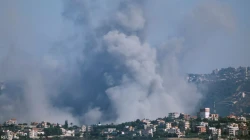
What the forces are doing in the meantime has drawn its own criticism. Buildings are being demolished across southern Lebanon at scale, yet by the commanders' own account, the campaign is not producing results. "The forces continue to demolish buildings in southern Lebanon, but truly, the IDF [army] is not achieving results in this fighting, as it is being conducted right now," senior field commanders told Israel Hayom.
NBC News and the Washington Post documented the scope independently, reporting through satellite imagery and on-record Lebanese officials that entire neighborhoods have been leveled since April 16, with the mayor of Bint Jbeil confirming approximately 1,500 residential buildings in his district alone completely demolished.
Read more: Southern Lebanon counts a second toll beyond the dead: LANDS
Drone Casualties and a Documented Unpreparedness
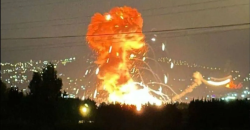
Central to the internal reckoning is a Hezbollah drone campaign that has exposed critical gaps in Israeli electronic warfare defenses. On Wednesday, the army confirmed that an explosive drone wounded four soldiers in southern Lebanon, one severely. Haaretz reported that in the week of May 17-18 alone, two soldiers and a Defense Ministry employee were killed by similar devices, at least some immune to electronic jamming, with the army conceding it had no adequate countermeasure.
The drone of particular concern is the fiber-optic guided variant, which operates without a radio signal and cannot be jammed through conventional systems. Hezbollah, senior officers told Israel Hayom, used the post-November 2024 ceasefire period following Operation Northern Arrows to rearm at a pace the army failed to fully grasp. "The rehabilitation rate was higher than the rate at which the IDF was degrading its capabilities," one senior officer said, adding that the true scale of Hezbollah's recovery only became clear when the current campaign began on March 2, 2026.
A Ceasefire That Exists Only on Paper
Brokered by Washington and effective at midnight between April 16 and 17, the ceasefire followed weeks of intensified cross-border fighting linked to the broader US-Israeli confrontation with Iran. It has since been extended twice, by three weeks on April 23, then by a further 45 days on May 15, following a third round of direct talks between Israeli and Lebanese officials in Washington. Neither party has observed it consistently. Israel has continued conducting strikes inside Lebanon; Hezbollah, in response, has continued launching attacks on Israeli military positions and northern communities. "There is no ceasefire," one senior Israeli army field commander told Israel Hayom flatly.
According to an AFP tally —the Israeli army does not publish cumulative figures— 21 soldiers have been killed and an estimated 910 wounded in combat operations inside southern Lebanon since March 2. The most recent fatality was confirmed on May 19, when a deputy company commander was killed during an exchange of fire with Hezbollah in the southern Lebanese village of Qawzah.
Read more: Beirut’s southern suburb empties overnight
A Manpower Crisis Compounding Strategic Drift
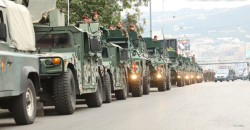
Approximately 90,000 reservists are currently serving in the Israeli army, more than twice the number originally planned for 2026, Israel Hayom reported, with the burden falling across conscripts, career personnel, and reservists alike. Addressing division commanders, Chief of Staff Eyal Zamir cautioned that the army would "collapse into itself" if the political echelon continues assigning missions across Lebanon, Gaza, Syria, the West Bank, and the eastern border without expanding the conscription base or providing adequate budget. Senior officers quoted by Israel Hayom said that reservists are losing confidence in the military leadership after two and a half years of fighting without a decisive outcome on any front.
Israeli outlet Walla, in late April, captured the civilian dimension, reporting that most of Israel had returned to routine, but northern communities remained exposed. "The mere fact that one must worry that an explosive drone might strike the school bus carrying children is enough to paralyze with fear," Walla said, adding that businesses have not recovered and populations have dwindled. Militarily, Walla assessed that the army could maneuver within the security strip south of the Litani River but could no longer operate deep inside Lebanese territory without triggering immediate drone retaliation.
Questions Over the Previous Campaign's Conduct
Beyond the current phase, senior military figures have raised concerns about Operation Northern Arrows itself, with reporting suggesting the army was absent from many locations in southern Lebanon despite contrary public impressions. The gap between stated and actual battlefield presence has intensified scrutiny of how the current campaign is being measured. One senior officer told Israel Hayom, "We are doing everything to hit them as much as possible, but unfortunately, they are not taking enough hits."
The Israeli Security Cabinet last formally reviewed the southern Lebanon mission on April 15, 2026, backing Zamir's directive to designate all territory up to the Litani River as a no-go zone for Hezbollah operatives, a narrowing of scope that reflected an institutional acknowledgment that the broader objective of fully disarming Hezbollah exceeded available military means. The cabinet also authorized Israeli envoys to enter US-hosted diplomatic talks, a mandate that produced the May 15 ceasefire extension.
Defense Minister Israel Katz separately instructed the army to raze the first line of Lebanese border villages to eliminate anti-tank and infiltration threats. No further formal review of mission objectives has been scheduled.