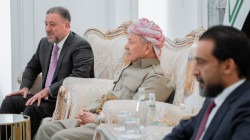
Masoud Barzani casts his ballot, calls for wide participation in Iraq’s parliamentary elections
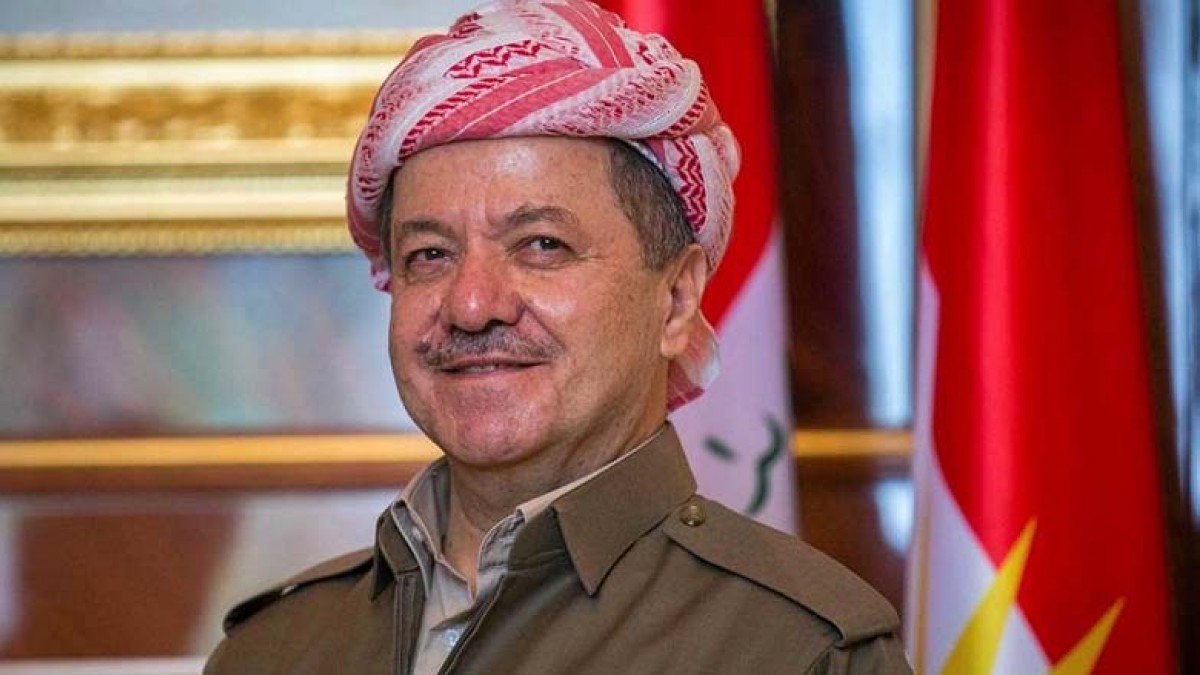


Shafaq News – Erbil
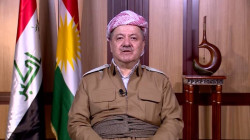
Masoud Barzani, leader of the Kurdistan Democratic Party (KDP) and former President of the Kurdistan Region, cast his ballot on Tuesday morning in the Iraqi parliamentary elections and urged citizens across Iraq and the Kurdistan Region to take part in large numbers.
Barzani said broad participation was essential to strengthening Iraq’s democracy and ensuring that “the people’s will is clearly reflected in the next parliament.”
Voting took place in Erbil as polling stations across Iraq and the Kurdistan Region opened at 7:00 a.m. and are scheduled to remain open until 6:00 p.m. More than 21 million Iraqis are eligible to vote in both the special and general ballots to elect 329 members of parliament from among 7,744 candidates.
In Erbil Province, 108 candidates are competing for 16 seats, including one reserved for the Christian quota and four for women. The KDP, led by Barzani, has fielded 30 candidates in the province. In Duhok Province, 58 candidates are contesting 12 seats, including one for the Christian community and three for women, with the KDP again leading the race with 22 candidates.
Al-Sulaymaniyah and Halabja provinces together have 135 candidates competing for 18 seats, including five reserved for women. In Al-Sulaymaniyah, the KDP is fielding 36 candidates as part of its effort to extend its political presence beyond its traditional strongholds.
The KDP remains the dominant Kurdish party in federal politics, securing 25 seats in the 2018 parliamentary elections and increasing its share to 31 in 2021—its strongest showing since 2003.
Read more: The Kurdish spine of Iraq’s elections: Unity tested by division
Barzani’s participation and his call for wide voter engagement highlight the KDP’s push to maintain a leading role within Iraq’s next parliament and reinforce the Kurdistan Region’s influence in shaping the country’s political future.
Read more: Iraq’s 2025 poll: +21M voters, new law, fading monitors, and fierce bloc rivalries