US envoy: Iraq holds 'magic key' to regional solutions


Shafaq News- London
Iraq holds the "magic key" to resolving regional crises and facilitating dialogue with Iran, US envoy to Iraq Tom Barrack said on Wednesday, stressing that this approach would continue alongside US economic sanctions against Tehran and the possibility of military action if necessary.
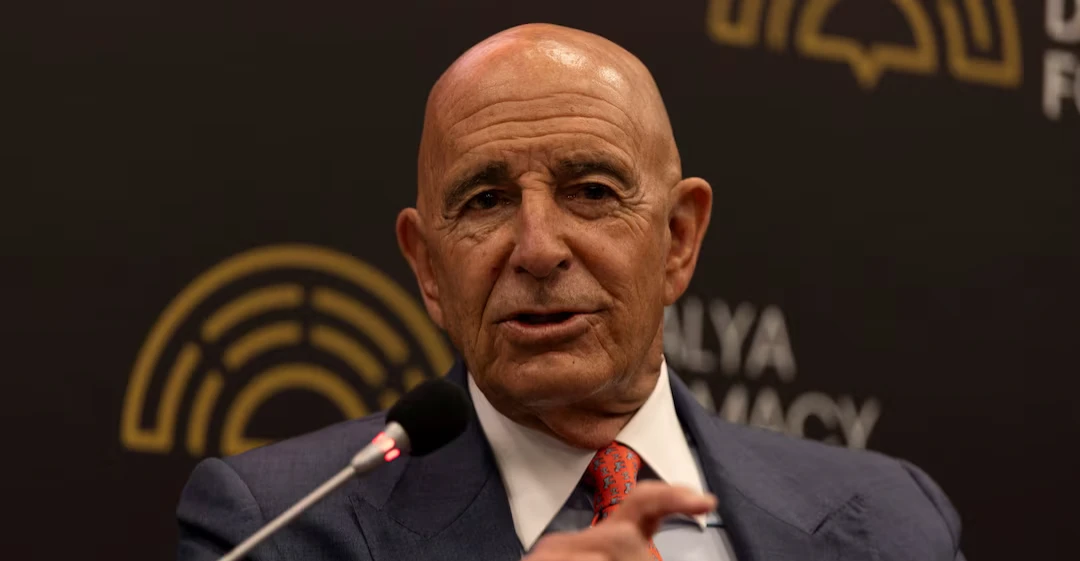
Speaking during a discussion hosted by the Royal Institute of International Affairs, also known as Chatham House, in London, Barrack noted that Washington encourages Baghdad to strengthen trade ties and religious visits with Tehran rather than adopt a hostile stance toward its neighbor.
He also insisted on “the need to end the presence of armed factions and bring all security forces under state authority.” The US envoy highlighted the importance of reorganizing security structures and integrating regular forces into a unified framework, drawing on successful security models to strengthen the rule of law.
The United States wanted to learn from past mistakes and recognize the importance of the rule of law and democracy, he added. "We need to review what we have done in Iraq over the past 23 years. We were guests in this country, and many times we were bad guests. We were not the owners of the house.”
Barrack described Iraq's position as particularly sensitive because of its extensive religious and border ties with Iran, arguing that this required a distinct approach to relations with both countries.
Addressing the conclusion of the Global Coalition’s mission in Iraq, Barrack said Washington's position had been clear from the beginning, explaining that coalition forces would leave Iraq while the United States maintained its broader partnership with Baghdad. “As guests, we have left, but we will remain as a permanent partner and will not abandon Iraq."
Barrack added that Washington did not intend to remain indefinitely to guarantee Iraq's security and stability directly. Instead, he said, the United States sought to support Iraq's unity, stability and rule of law so that the country could eventually defend itself amid continuing regional changes.