Rejecting ‘normalization’ entrenches Iraq’s political failure, says politician Al-Alousi
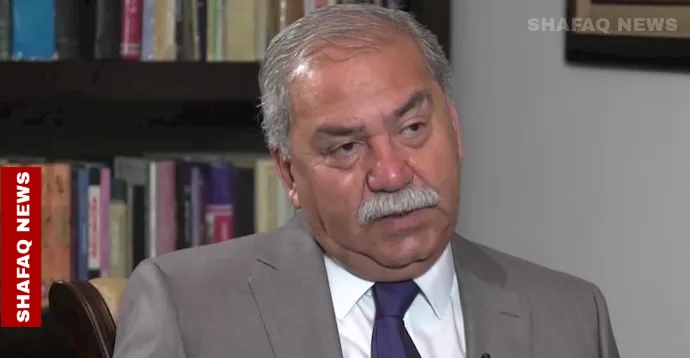


Shafaq News – Baghdad
Rejecting “normalization” in its broader sense entrenches political failure and deepens deadlock, Iraqi politician Mithal Al-Alousi said on Thursday, calling instead for comprehensive internal reconciliation to restore coexistence and stability in Iraq.
Speaking to Shafaq News, Al-Alousi noted that, linguistically and politically, normalization means returning relations to their natural state—whether between individuals, communities, tribes, political actors, sects, or religions. He said rigid positions and political tension only worsen crises and prolong instability.
Al-Alousi cited the Sinjar Agreement as an example, noting that it was framed as a normalization effort aimed at stabilizing the Yazidi-majority district and restoring governance after years of insecurity. He said some observers argued that had Sinjar been dominated by ruling Islamic sects, the agreement would have succeeded, allowing the area to move from chaos to normal life where Yazidis, Shiites, Sunnis, Arabs, and Kurds coexist peacefully.
He questioned which forces stood behind the failure of normalization in Sinjar, asking whether they were the same actors opposing normalization between Erbil and Baghdad, resisting the implementation of Article 140 of Iraq’s constitution, or promoting an exclusionary vision of Iraq as a purely Islamic state that marginalizes minorities such as Jews, Christians, Yazidis, and Mandaeans.
Read more: Into 2026, Baghdad and Erbil face the same disputes—with higher stakes
On Palestine and Israel, Al-Alousi said the land historically hosted Judaism, Christianity, and Islam, and that followers of these faiths lived together for centuries. He argued that coexistence is the natural state of human relations, while wars reflect an inability to accept others.
He said normalization, in this context, should be understood as reform, reconciliation, and the rejection of conflict-driven politics that serve rigid ruling systems resistant to modernization and change. Rejecting normalization, he added, amounts to rejecting reform and enforcing anxious and polarized political agendas.
Al-Alousi also referred to remarks by the Chaldean Patriarch Louis Raphael Sako, saying they reflected historical realities, including Iraq’s role as the birthplace of Prophet Abraham and a center of ancient civilizations. He stressed that Iraq urgently needs internal normalization and reconciliation, describing it as a political priority that should be adopted by the next Iraqi government.
He concluded by saying that “rejecting normalization represents a harmful attachment to failure.”
The comments come amid controversy sparked by the Chaldean Patriarchate, which issued a clarification after debate arose over Patriarch Sako’s use of the term “normalization” during a Christmas Mass in Baghdad. The patriarchate said the term referred to “normalization with Iraq” as a land of civilizations and religions, not normalization with any foreign state.
The clarification followed criticism from caretaker Prime Minister Mohammed Shia al-Sudani, who rejected the term and linked it to relations with an occupying entity [Israel], while Muqtada al-Sadr, leader of the Patriotic Shiite Movement (PSM), called for accountability for those promoting normalization.