CF divided over Prime Minister nominee as Iraq's April 26 deadline looms


Shafaq News- Baghdad
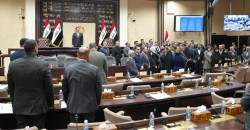
Iraq's political forces remain divided over the pace of government formation as a constitutional deadline approaches, with some insisting the process is on track while others warn of legal violations, disrupted governance, and eroding public confidence.
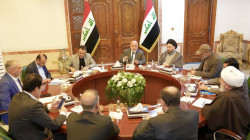
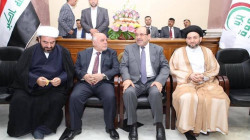
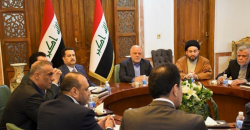
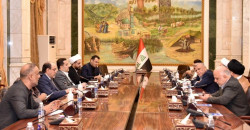
Under Article 76 of the constitution, the Coordination Framework (CF) —a coalition of predominantly Shiite parties holding 162 seats in the 329-member parliament— had 15 days following the election of President Nizar Amedi on April 11 to nominate a prime minister. The nominee would then have 30 days to form a cabinet and secure a parliamentary confidence vote. With only days remaining, the bloc has yet to agree on a candidate.
Hassan Fadam, a member of the National Wisdom (Al-Hikma) Movement within the CF, pushed back against characterizations of a slowdown, telling Shafaq News the process remains within constitutional timelines. He outlined the sequence governing government formation —electing the parliament speaker and president before tasking the largest bloc with forming a cabinet— and described the current phase as a natural political process.
"A nominee will be presented within the legal timeframe," he said.
Dissenting voices within the CF itself indicate the consensus is not holding. Imran al-Karkoushi, a member of the State of Law Coalition led by former Prime Minister Nouri al-Maliki, described the delay as unjustified and in violation of constitutional timelines.
“The continuation of a caretaker government weakens Iraq's capacity to address regional security challenges and reflects an absence of clarity within the framework.”
Al-Maliki, nominated by the bloc on January 24, remains committed to his candidacy pending a final internal decision, al-Karkoushi confirmed.
Fahd al-Jubouri, also a member of Al-Hikma, said the situation has already exceeded constitutional deadlines and is undermining public trust in the political system. "Iraq faces sensitive regional conditions that require a fully empowered government rather than an extended transitional phase," he said.
Khaled Walid, a leader in the Reconstruction and Development Coalition headed by caretaker Prime Minister Mohammed Shia al-Sudani, warned that the prolonged process is disrupting public services, delaying passage of the federal budget, and hampering the work of service ministries.
Continued uncertainty, he said, risks destabilizing Iraq's domestic political environment and its regional and international relations. Walid pointed to recurring post-election disputes since 2003 as evidence of structural failures in managing political transitions.
The CF's 15-day nomination window, triggered by President Amedi's election on April 11, expires April 26.
Read more: Coordination Framework: Can govern Iraq, but cannot agree on a prime minister