Ali al-Zaidi's nomination tests Iraq’s 2003 order as consensus system holds


Shafaq News – Baghdad
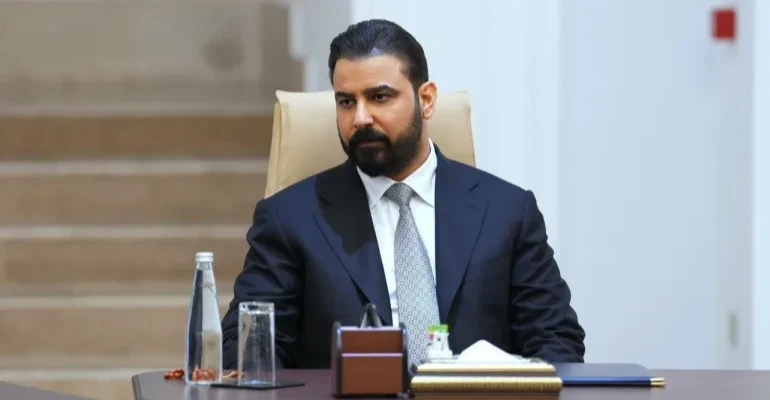
Iraq’s nomination of Prime Minister-designate Ali al-Zaidi is being presented by political actors as a potential shift from the post-2003 governing model, while others point to the continuation of the same consensus-based system that has shaped successive governments.
Since 2003, executive authority has passed through successive leaders under varying internal and external conditions, from Iyad Allawi’s interim government to Ibrahim al-Jaafari, Nouri al-Maliki’s two terms, Haider al-Abadi during the war against ISIS, Adel Abdul Mahdi, Mustafa al-Kadhimi, and most recently Mohammed Shia al-Sudani.
This trajectory reflects a pattern in which governments are formed through political settlements aimed at managing crises rather than advancing long-term reform agendas. Within this context, Fahd al-Jubouri, a senior figure in al-Hikma (Wisdom) Movement led by Ammar al-Hakim, described the nomination as a departure from the established framework, stating it “falls outside the political system that has governed since 2003” and could mark “the beginning of a new phase in governance.”
At the same time, the broader context of the nomination and the forces backing it point to the persistence of the same consensus mechanisms, indicating that any change will depend on implementation rather than political framing.
Support for al-Zaidi has also come from other political actors. Ali al-Ahmad of the Taqaddum party, led by Mohammed al-Halbousi, confirmed backing for the Coordination Framework’s choice after “a prolonged period of negotiations.” He described the candidate as non-sectarian and capable of managing the next phase, while outlining priorities including political balance, resolving displacement, facilitating the return of residents to areas such as Jurf al-Sakhar -due to a combination of displacement, armed factions' control, and unresolved governance disputes- and maintaining balanced relations with neighboring states.
Read more: Who is Ali Al-Zaidi? The businessman tapped for Iraq's premiership
Al-Ahmad emphasized that the agreement reflects both political consensus and expectations tied to the government’s performance, effectively setting conditions for the next administration.
Armed factions also remain influential in shaping the political environment. Kazem al-Fartousi, spokesperson for Kataib Sayyid al-Shuhada, stated that “the premiership in Iraq is a constitutional entitlement representing the Shiite component,” linking the selection process to the Shiite Coordination Framework’s role, which holds about 162 of parliament’s 329 seats, as a representative of voters.
He added that factions expect “real investment in the political process” and that the government program must prioritize “achieving full Iraqi sovereignty.”
These positions reflect the role of armed groups within the governing structure, where their expectations intersect with political decision-making and shape the operating environment for the prime minister-designate.
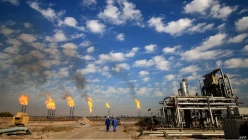
Economic conditions remain a central challenge as Iraq continues to rely heavily on oil revenues, with limited diversification, rising unemployment, and persistent administrative and financial corruption. Al-Jubouri described these pressures as “existing and cannot be denied,” underscoring the constraints facing any incoming government.
These conditions point to the need for structural reforms, including economic reorganization, activation of productive sectors, and stronger oversight of public resources, although such measures often face resistance from entrenched interests.
Relations between the federal government and the Kurdistan Region remain another key issue. Former Kurdistan parliament member Abdul Salam Barwari stated that tensions are “not the result of personal disputes” but stem from differing visions of the state.
Barwari indicated that the Kurdistan Region adheres to the constitution on which the Iraqi state was established, while arguing that some actors in Baghdad continue to favor a centralized model, contributing to ongoing misunderstandings.
Read more: Ali al-Zaidi named Iraq's prime minister: Easy nomination, harder road ahead