Coexistence by design: Iran's Kurds straddle the line between inclusion and autonomy


Shafaq News
Iran's Kurds have occupied a unique position in the Middle East's Kurdish landscape for decades. Unlike neighboring Iraq, where Kurdish self-rule evolved into a recognized autonomous Region, Iran's Kurdish population remains part of a highly centralized state. Yet Kurdish identity continues to shape political debate inside the country, with Kurdish communities participating in elections, public institutions, and national life while pressing for greater recognition, cultural rights, and a stronger voice in local governance.
Stretching across Iran's western frontier, Kurdish communities have preserved a distinct language, culture, and identity. Their relationship with Tehran, however, has rarely been static; it has shifted through periods of cooperation and confrontation, political participation, and armed resistance, often reflecting broader transformations within the Islamic Republic itself.
Fourteen Percent Fractured
Although Iran does not conduct an official ethnic census, most international estimates place the country's Kurdish population between 12 million and 15 million people —around 14% of the total population— making the Kurds one of Iran's largest non-Persian communities.
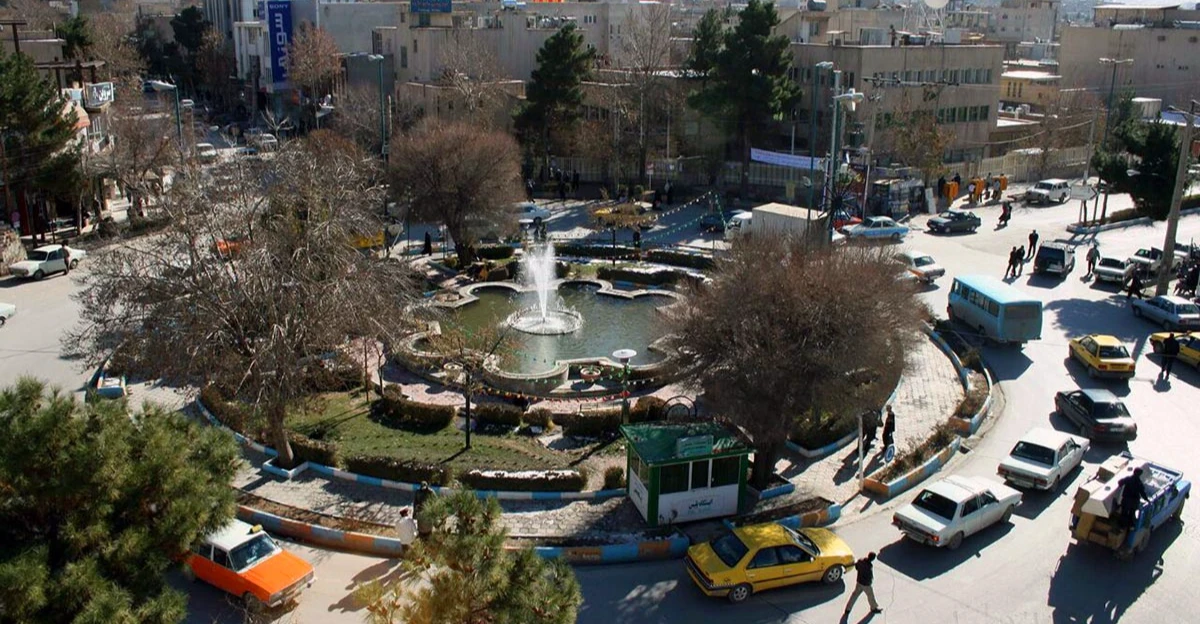
What is often referred to as Iranian Kurdistan is not an official administrative unit but a broad geographic and cultural region encompassing the provinces of Kurdistan, Kermanshah, West Azerbaijan, and Ilam. Major cities, including Sanandaj, Mahabad, Saqqez, Bukan, and Piranshahr, have long served as centers of Kurdish political, economic, and cultural life.
The region's mountainous landscape has played a defining role in its development. Stretching across the Zagros Mountains and bordering both Iraq and Turkiye, much of Iranian Kurdistan has historically remained connected to neighboring Kurdish regions through trade, migration, and social ties, while the rugged terrain helped preserve strong local identities.
At the same time, decades of internal migration have expanded the Kurdish presence far beyond the country's western provinces. Large Kurdish communities can now be found in Tehran, Karaj, Isfahan, and Mashhad, giving the community a growing presence in many of Iran's major urban centers.
Yet Iran's Kurds are far from a single, uniform group. Sorani, Kurmanji, Southern Kurdish, and Gorani are spoken across different regions, reflecting significant linguistic diversity. Religious affiliations are equally varied. While Sunni Muslims constitute the majority in many Kurdish areas, particularly in Kurdistan Province, large Shia Kurdish populations (known as Feylis) live in Kermanshah and Ilam. Smaller Yarsani (Ahl-e Haqq) communities, along with limited Christian populations, add further layers to the region's social and cultural mosaic.
Integration without Autonomy
Few issues illustrate the Kurdish experience in Iran more clearly than the gap between participation and recognition.
Kurds vote, run for office, and serve across the state's institutions. Kurdish candidates regularly win seats in the Majles (Iranian parliament), while Kurdish citizens work throughout local administrations, universities, government agencies, and the private sector.
Yet political participation has not translated into collective rights. Unlike Iran's recognized religious minorities, Kurds receive no constitutionally guaranteed representation. Five of the parliament's 290 seats are reserved for Armenians, Assyrians, Jews, and Zoroastrians, but no comparable provisions exist for the country's ethnic communities. Kurdish lawmakers, therefore, reach parliament through electoral victories in Kurdish-majority constituencies rather than through a quota system.
For many Kurdish activists, that distinction lies at the heart of the debate. Tehran frequently points to Kurdish participation in elections and public institutions as evidence of inclusion. Kurdish politicians and activists argue that individual representation does not amount to recognition of Kurdish political identity or collective rights. The dispute has resurfaced repeatedly in debates over language rights, political appointments, and unfulfilled promises to Kurdish voters. Former Kurdish lawmaker Abdullah Suhrabi voiced that frustration after filing a lawsuit against former President Hassan Rouhani over commitments he contended were "never honored," remarking that Kurdish voters had backed him "for the sake of obtaining our rights."
The same divide appears at the administrative level. Unlike Iraq's Kurdistan Region, which has its own parliament, government, and security forces, Iran's Kurdish-majority provinces remain fully integrated into the country's centralized structure. Successive governments have categorically rejected proposals that could open the door to territorial autonomy, arguing that centralized governance and national unity are essential to preserving stability.
Mistrust Deeply Rooted
Many of the dynamics shaping Kurdish politics in today's Iran trace back to the turbulent years surrounding the fall of the Pahlavi monarchy and the establishment of the Islamic Republic.
Under the Shah, political activity in Kurdish regions faced tight restrictions, driving much of it underground. In that environment, two of the most influential Kurdish organizations in Iran —the Kurdistan Democratic Party of Iran (KDPI) and Komala— consolidated their political identities and expanded their networks.
The 1979 Islamic Revolution initially raised expectations among many Kurdish activists that the collapse of the monarchy would open space for greater political freedoms, cultural rights, and local authority. Those expectations quickly collided with the priorities of the new leadership in Tehran.
Disputes over governance, autonomy, and the structure of the state soon escalated into armed confrontations across Kurdish provinces. Cities including Sanandaj and Mahabad became centers of conflict as Islamic Revolutionary Guard Corps (IRGC) units launched operations against Kurdish groups, which mobilized armed supporters in response.
The fighting is estimated to have claimed between 10,000 and 20,000 lives, according to data from the Uppsala Conflict Data Program (UCDP). Although large-scale clashes gradually subsided during the 1980s, their legacy endured, reinforcing cycles of militarization and mistrust that continue to shape Kurdish-state relations decades later.
Read more: Iran’s protests between economic crisis and political contestation
Reimagining the Resistance
The organizations that have defined Kurdish politics in Iran for decades now operate largely beyond the country's borders, primarily from bases in Iraq’s Kurdistan Region. While they differ in ideology, strategy, and long-term vision, most share a common objective: expanded rights, representation, and self-governance for Kurdish communities.
At the center of this landscape stands the KDPI. Founded in Mahabad in 1945, it is widely regarded as the oldest and most influential Kurdish party in the country. Its platform calls for a federal and democratic Iran in which Kurdish-majority areas hold broad authority over local affairs while remaining within the state.
A broadly similar objective has long guided Komala, though its history has been marked by ideological debates, internal splits, and shifting factions. Rooted in leftist student and labor movements, it has evolved but remains a major force in Iranian Kurdish politics, advocating democratic reform, decentralization, and expanded political freedoms.
Neither KDPI nor Komala participates in Iran’s electoral system or holds seats in the Majles. Both are banned by Iranian authorities and have operated for decades from Iraqi Kurdistan. Their influence rests less on formal representation and more on their historical role in Kurdish mobilization, along with sustained ties to communities inside Iran and across the diaspora.
A different model is advanced by the Kurdistan Free Life Party (PJAK), which emerged in the early 2000s. Drawing on the ideas of Abdullah Öcalan, the imprisoned leader of the Kurdistan Workers’ Party (PKK), PJAK promotes democratic confederalism —a system centered on grassroots governance, local councils, gender equality, and decentralized decision-making. It also maintains an armed presence in border areas, placing it among the Kurdish groups most closely monitored by Iranian security institutions.
Beyond these larger actors, smaller organizations such as the Kurdistan Freedom Party (PAK), the Khabat Organization of Iranian Kurdistan, and the Kurdistan Hardworking Group remain active in Kurdish political life. None matches the influence of KDPI, Komala, or PJAK, but together they reflect the fragmentation that has long defined the political landscape.
Efforts to narrow those divisions have surfaced periodically. In 2025, PAK, PJAK, Khabat, and the Kurdistan Hardworking Group joined KDPI in a new alliance aimed at improving coordination among Kurdish opposition groups in Iran.
Speaking to Shafaq News, Karim Parwizi, a senior KDPI member, described the initiative as part of a “historic responsibility” to defend Kurdish rights and advance “a democratic system that upholds justice and equality.”
Read more: 650 Strikes in Iraqi Kurdistan: How deniability became a weapon
Slogans and Shrapnel
If there is one external arena that has shaped contemporary Kurdish politics in Iran more than any other, it is Iraq’s Kurdistan Region.
For decades, the Kurdistan Region has functioned as both a refuge and an operational base for Iranian Kurdish opposition groups. That reality remains a persistent source of tension with Tehran, which accuses several of those organizations of supporting unrest and engaging in activities it views as threats to national security.
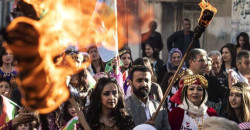
The issue returned to the spotlight following the death of Mahsa Amini in September 2022. A 22-year-old Kurdish woman from Saqqez, Mahsa Amini, died in the custody of Iran’s morality police in Tehran, triggering nationwide demonstrations that became one of the most serious political challenges faced by the Islamic Republic in recent years.
Kurdish cities quickly emerged among the most active protest centers. Demonstrations repeatedly erupted in Saqqez, Sanandaj, Mahabad, and Bukan, while the slogan “Woman, Life, Freedom” —rooted in the Kurdish phrase Jin, Jiyan, Azadi— became the movement’s defining rallying cry.
As unrest spread, Iranian officials increasingly turned their focus to Kurdish opposition groups, accusing them of amplifying protests through messaging networks and cross-border influence.
Iranian lawmaker and former IRGC commander Mohammad Esmail Kowsari stated that “Kurdish separatist groups, especially the PDKI, Komala, and PJAK, sought to take control over some areas in Iran’s Kordestan province,” adding that their presence contributed to the deployment of IRGC forces in western Iran.
The organizations named in those accusations rejected the claims. Komala described Kowsari’s remarks as “unfounded” and “politically driven,” arguing they were intended to justify possible cross-border strikes against its positions.
The unrest sparked by Amini’s death marked only one layer of a broader shift surrounding Iran’s Kurdish opposition movements. As tensions between Iran, the United States, and Israel escalated in subsequent years, Kurdish groups increasingly appeared in discussions over possible regional escalation scenarios.
Reports cited by international media outlets, including Reuters and Axios, suggested Kurdish factions had been included in contingency planning tied to Western and Israeli intelligence assessments in the event of a possible confrontation with Iran. The debate intensified further after political remarks, including comments attributed to US President Donald Trump, indicating openness to Kurdish participation in a potential strike on Iran.
For Kurdish opposition groups, the discussion reinforced a longstanding reality: political visibility does not automatically translate into operational capacity.
Speaking to Shafaq News, Khalil Kanisanani, spokesperson for the Kurdistan Freedom Party (PAK), noted that any meaningful involvement in a military campaign would depend heavily on external support. Such a role, he argued, would require “a real US military and logistical support, not merely political backing or media statements.”
Kanisanani also pointed to a “major vulnerability” for Iraq’s Kurdistan Region itself. “Kurdistan remains largely without effective air defense protection,” he noted.
While acknowledging the presence of limited US defensive capabilities in Erbil, he added that no clear guarantees exist for broader protection should a large-scale regional war erupt.
Ultimately, Kurdish factions were not drawn into the joint US-Israeli war on Iran that began on February 28. Even so, several groups publicly signaled readiness to become involved if what they described as “favorable conditions and an enabling environment " emerged.
The conflict nevertheless carried direct consequences for Kurdish opposition movements.
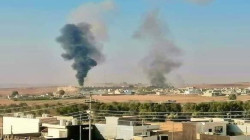
Following the outbreak of the war, Iranian forces carried out repeated strikes inside Iraqi Kurdistan, targeting “opposition infrastructure.” According to Community Peacemaker Teams–Iraqi Kurdistan (CPT-IK), the Kurdistan Region recorded 809 drone and missile attacks between February 28 and April 20, 2026. The strikes left 20 people dead and 123 injured, with roughly 31% of the assaults targeted at facilities used by Iranian Kurdish opposition groups.
The campaign continued even after the April 8 US-Iran ceasefire.
Shafaq News reported at least 15 additional attacks on opposition-related sites following the truce. Komala recently indicated that two Iranian missiles struck one of its sites in Erbil, adding that Iranian forces have carried out more than 82 missile and drone strikes against its headquarters and military positions since regional tensions escalated.
Those developments underscore the complex position Kurdish groups from Iran continue to occupy. Despite their demographic weight and long political history, their movements have often struggled to translate influence into unified action. Differences in ideology, strategy, and priorities continue to shape the Kurdish political landscape, even as many groups pursue similar demands. How those movements navigate those divisions may prove as important to their future as their relationship with Tehran itself.
Read more: Caught between war and neutrality: Kurdistan navigates escalating US-Iran confrontation
Written and edited by Shafaq News staff.