Al-Sadr calls armed factions to join state, excludes PSM from Iraq cabinet


Shafaq News- Najaf
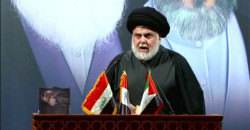
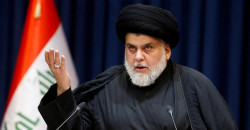
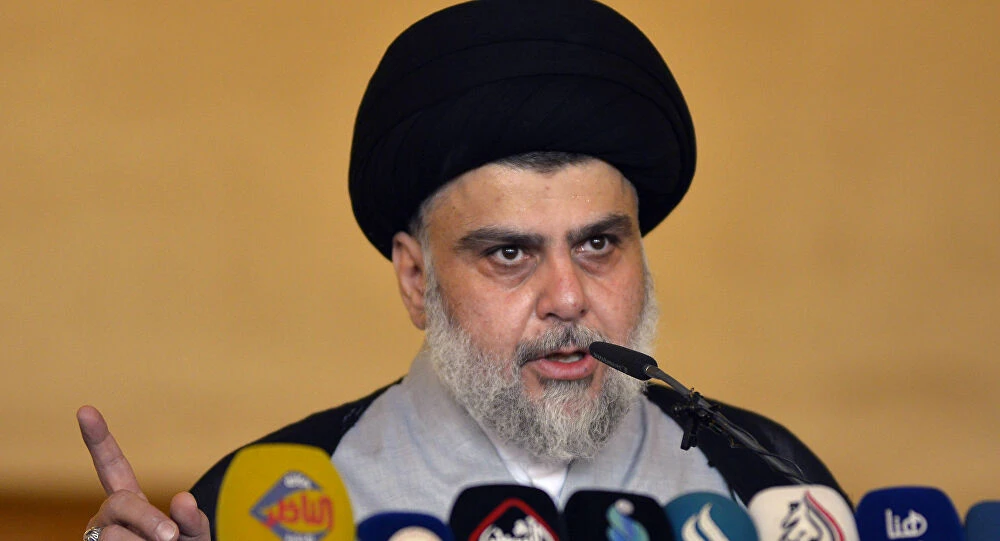
Muqtada Al-Sadr, leader of the Patriotic Shiite Movement (PSM), called on Friday for all armed factions in Iraq to be integrated into state-controlled institutions, stressing that his movement would not take part in the next government.
In a statement, Al-Sadr said he was prepared to place Saraya al-Salam (Peace Brigades), the PSM’s main armed wing, under the authority of Iraq’s commander-in-chief if all other factions do the same “as quickly as possible.”
He further signaled readiness to dissolve Liwa’a al-Yawm al-Maw'oud (the Promised Day) Brigade, an elite force established in 2008 after the disbandment of the Mahdi Army, which fought US-led coalition forces in Iraq. Al-Sadr had already ordered the brigade dissolved in November 2021 and instructed its members to hand over their weapons to the state. Saraya al-Salam itself was suspended for six months in December 2025 after al-Sadr said repeated violations by members had damaged the group’s reputation.
Although he did not identify any faction by name, the remarks were widely seen as directed at Iran-backed groups operating under the Islamic Resistance in Iraq umbrella, including Kataib Hezbollah, Asaib Ahl al-Haq, Kataib Sayyed al-Shuhadaa, and Harakat al-Nujaba. Many of these factions are formally part of the Popular Mobilization Forces (PMF), a predominantly Shiite umbrella force incorporated into the Iraqi state in 2016, but they continue to maintain separate command structures and weapons networks outside direct government control.
Al-Sadr addressed Prime Minister-designate Ali Al-Zaidi without naming him, saying all armed factions must join either “Jund al-Sha'air al-Diniyya” (the Soldiers of Religious Rites), which operates under the Hajj and Umrah Commission linked to the Prime Minister’s Office, or a humanitarian relief body. Groups that refuse, he warned, would be considered “outside the law.”
Read more:Twenty-three years on: Iraq got what the 2003 invasion produced
Cabinet Formation
On government formation, Al-Sadr said parties with armed wings “must be excluded entirely from the incoming cabinet,” rejecting Iraq’s quota-based political system and calling for a government that answers to the public rather than political blocs.
“We do not accept the presence of any member of our movement in the ministerial cabinet, and no minister would represent the PSM.”
He adopted a long-running policy of distancing his movement from formal political participation. His bloc’s 73 lawmakers resigned from parliament in June 2022, a move he described at the time as a rejection of Iraq’s “corrupt political order.” Al-Sadr later boycotted the November 2025 parliamentary elections, warning that Iraq was “living its final breaths.”
The parliament elected in those polls is now overseeing negotiations to form a new government under Iraq’s muhasasa system, the post-2003 power-sharing arrangement that divides senior positions among the country’s main political, ethnic, and sectarian groups.
Prime Minister-designate Al-Zaidi has submitted his government program to Parliament Speaker Haibet Al-Halbousi ahead of a planned confidence vote next week, alongside a 14-point ministerial platform outlining the incoming cabinet’s priorities.
Read more: Ali al-Zaidi named Iraq's prime minister: Easy nomination, harder road ahead