Al-Maliki: Iraq committee to begin work on state weapons control


Shafaq News- Baghdad (Updated at 15:17)
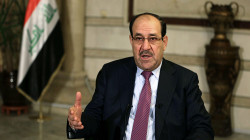
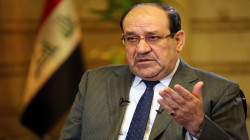
Former Iraqi Prime Minister Nouri al-Maliki, leader of the State of Law coalition, said on Tuesday that a committee, formed to develop mechanisms for bringing weapons under state control, will begin work ahead of the September 30 deadline, in coordination with the government.
The committee was set up by the Coordination Framework, the alliance of Shia parties that leads the government.
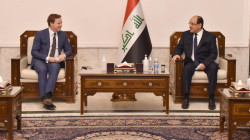
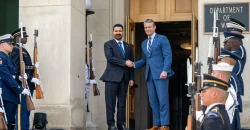
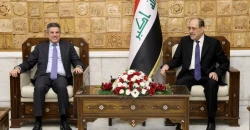
Speaking during a meeting with US Chargé d'Affaires Joshua Harris, al-Maliki said the committee would work with the government "to find suitable mechanisms" for carrying out the process. He said that the state and its constitutional institutions are the authority responsible for security and military affairs.
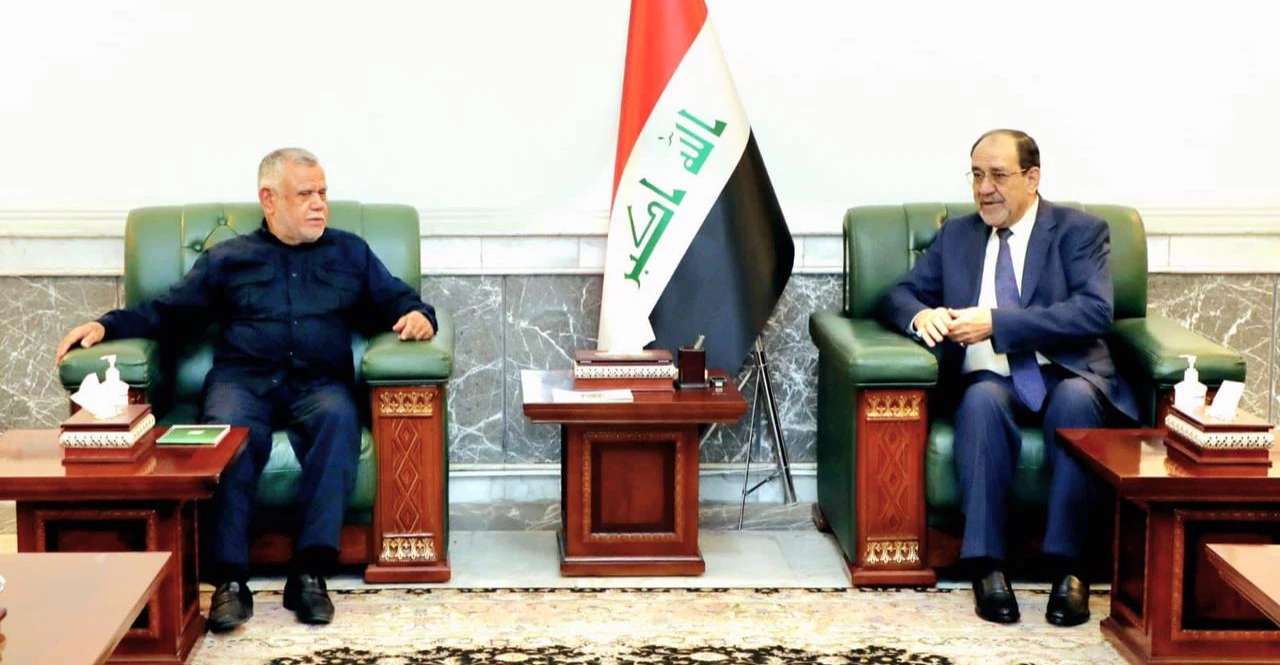
A day earlier, a source within the Framework told Shafaq News that al-Maliki had proposed keeping the withdrawal of US forces from Iraq separate from efforts to bring weapons held by armed factions under state control.
The government has also formed a new committee, with representatives from the interior, justice, and agriculture ministries and the Popular Mobilization Forces Commission, to review security arrangements in Jurf al-Sakhr, an area north of Babil province where Kataib Hezbollah retains partial control over security.
Read more: Jurf al-Sakhr and Iraq's push to disarm factions
September 30, now about six weeks away, is the date Iraq's main political forces have set to end all armed activity outside state control. On August 5, the State Administration Coalition, the ruling alliance of the principal Shia, Sunni, and Kurdish parties, affirmed that weapons must be held by state institutions and described groups operating outside the state as outlaws. It warned that armed activity after the deadline would be treated under the counterterrorism law.
Hadi al-Amiri, secretary-general of the Badr Organization, one of the largest such groups, called on all sides to remain calm and avoid provocation and said he trusted the intentions of both Prime Minister Ali al-Zaidi and the armed factions.
Leader of the National Wisdom Movement (Al-Hikma) Ammar al-Hakim renewed his call to address the disarmament issue through dialogue and understanding. “Once again, we call for restricting weapons to the state through dialogue and mutual understanding,” al-Hakim said, describing the move as “a constitutional and legal requirement.”
Read more: What happens to Iraq's armed factions after September 30?
Kataib Hezbollah, one of the most hardline Iran-aligned groups, set three conditions for any understanding: a complete withdrawal of US forces from Iraqi territory and airspace, with a guarantee they will not return; the withdrawal of Turkish forces from northern Iraq; and the dissolution of the Peshmerga, the armed forces of the Kurdistan Region.
Asaib Ahl al-Haq and Kataib Imam Ali have backed the government's effort to bring weapons under state control.
Esmail Qaani, commander of Iran's Quds Force, met Coordination Framework leaders and armed factions in Baghdad earlier this month. Shafaq News sources said he urged the factions not to hand over their weapons at this stage, while warning them against armed confrontation with the government and calling for a political settlement.
Read more: Days to disarm Iraq's factions: deadline or negotiable ceiling?