Two forgotten goalkeepers stole the 2026 World Cup group stage
 AI-generated image


Shafaq News
For ninety minutes in Atlanta, a 40-year-old man from a Cape Verdean town of 70,000 people stood between Spain and the goal it could not find. He had spent two decades as football's afterthought –a goalkeeper who drifted from one obscure league to the next, the kind of name even devoted fans had never spoken aloud.
Then, on a Monday night in June, the world learned it in a single breath. Vozinha made seven saves on June 15, holding one of the tournament favourites to a stunning 0-0 draw as Spain and its supporters grew visibly frustrated. The European champions took 27 shots and could not break through, and Cape Verde –playing the first World Cup match in their history– became just the seventh team ever to avoid defeat on debut.
When the final whistle came, Vozinha walked off in tears that were not tears of disbelief, but of memory. The grandparents who raised him had died years before, and his mother could not make the trip because the family could not cover the visa costs in time.
"I work all my life for this, for this moment, for this dream," he declared afterward.
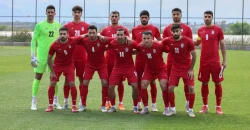
Six days later, two time zones away, a taller and younger man did almost precisely the same thing to Belgium. On June 21, Iran's Alireza Beiranvand made seven saves in a goalless draw against Belgium, and was named Man of the Match. By one analytical measure he prevented an estimated 1.70 goals, with four diving stops and three high claims, while Belgium owned the ball and got nothing for it. The Belgians were reduced to ten men when Nathan Ngoy was sent off in the 66th minute, and Iran had already seen a Mehdi Taremi strike chalked off for a marginal offside after a VAR review.
Stranded after misjudging an interception, Beiranvand somehow hauled his huge frame upward and flung out a left hand to block Maxim De Cuyper's point-blank shot, a stop ESPN named the moment of the day.
Arguably the best goalkeeper on the planet was watching from the other end, and he understood exactly what he had seen. Belgium's Thibaut Courtois praised Beiranvand, swapped shirts with him, and offered the line that framed the whole tournament: "It's the World Cup of goalkeepers."
Vozinha: The Wanderer
Even his name began as a joke at his own expense. "Vozinha" means "little grandmother" in Portuguese –a nickname older boys gave him after beating him on the pitch, taunting that he was running home to complain to his grandparents. Born Josimar José Évora Dias in Mindelo, on the island of São Vicente, he built his living across Cape Verde, Angola, Moldova, Portugal, Cyprus and Slovakia.
In roughly twenty years he won a single trophy, the 2018-19 Cypriot Cup, and has worn the Cape Verde shirt since 2012. His most recent club was Chaves in Portugal's second division, which he left around his 40th birthday as his contract ran out.
Against Spain, the wandering finally meant something. At 40 years and 12 days, Vozinha became the oldest player ever to appear in a nation's first World Cup match –breaking a record set only a day earlier by Curaçao's Eloy Room.
Beiranvand: The Shepherd
If Vozinha's story is one of patience, Beiranvand's is one of escape. He was born into a nomadic family that settled only when he was 12, herding sheep in Iran's Lorestan province and discovering football in the village of Sarab-e Yas.
Speaking to The Guardian, Beiravand explained that his father opposed the dream so completely that he tore up his son's goalkeeping gloves, so the boy ran, took a bus to Tehran, slept rough outside a club's gates, and scraped by on odd jobs –a car wash, a dressmaking factory, a pizza shop, sweeping streets– until Naft Tehran gave him a chance.
The hand that denied De Cuyper was shaped on those hillsides. Beiranvand traces his throwing power to Dalparan, a rock-hurling game he played while tending the flock. He holds two Guinness World Records, among them the longest football throw at 61.0026 metres, set against South Korea in 2016.
The world had met him once before, too; at the 2018 World Cup, the man whom Iran calls the "Wall of Persia" saved a penalty from Cristiano Ronaldo, and the Belgium match was his 88th appearance for his country.
When the Spotlight Turned
As Brazilian broadcaster CazeTV urged viewers mid-game to follow him, Vozinha's Instagram audience, about 50,000 before kickoff, passed a million within minutes of the final whistle, then neared 10 million inside a day, eclipsing the likes of NBA star Victor Wembanyama and the NFL's Patrick Mahomes. It has since climbed beyond 15 million, lifting his estimated worth to roughly 2.5 million rand per sponsored post.
Beiranvand's surge, meanwhile, has since risen to around 4.5 million, a vast audience for a goalkeeper from the Persian Gulf Pro League, even if it never matched Vozinha's overnight eruption.
For both men, recognition came late –at 40 and at 33, at the tail end of long careers spent doing the least glamorous job on the field. Iran now sit second in Group G with qualification in their own hands, facing Egypt in Seattle on June 27 at 06:00 a.m. Baghdad time, where a top-two finish would carry them into the Round of 32 for the first time in their history. Cape Verde, in their very first tournament, are already rewriting their record books simply by refusing to lose.
For one extraordinary fortnight, the camera turned away from the strikers and the teenage phenoms and pointed instead at the back of the pitch, at two men who had spent their whole lives waiting for the single shot that would define them.
And when it came, neither one let it past.