Paralyzed body, limitless spirit: The bedridden Iraqi woman educating a village


Shafaq News/ In rural Iraq, afternoon silence often breaks with the sound of chalk scratching on broken tiles, or children huddled around torn notebooks in the shade of crumbling homes.
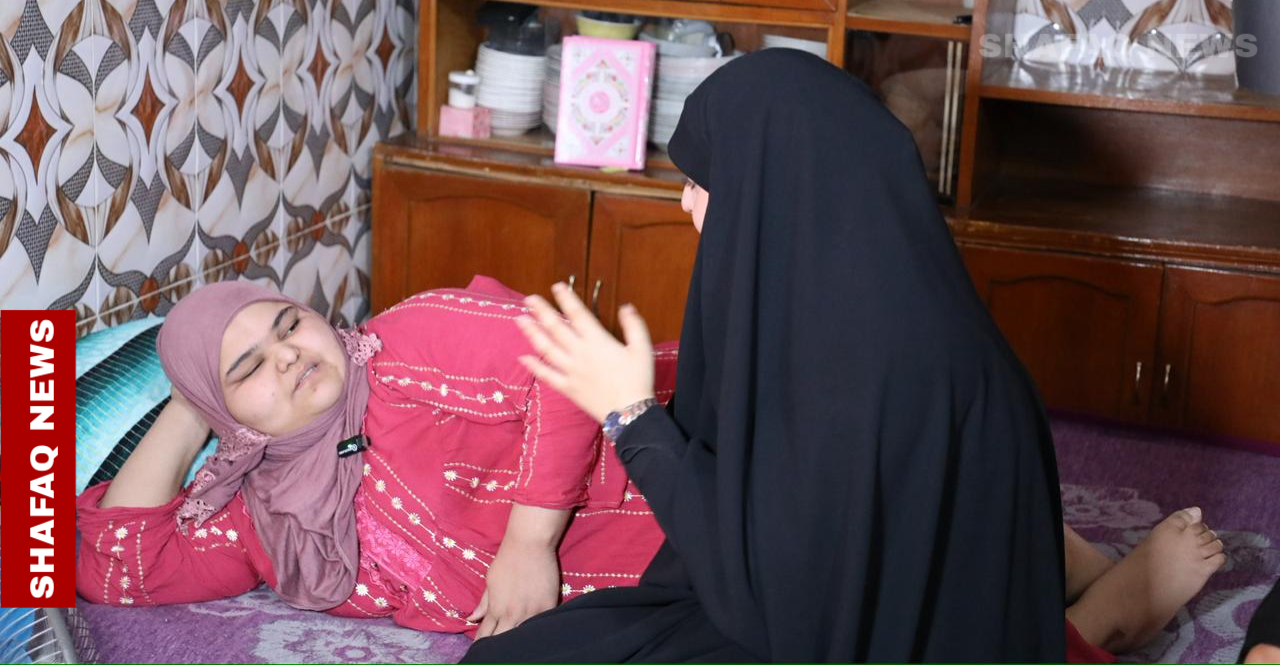
In places where school is a privilege, not a given, education finds unlikely champions—sometimes in the form of a woman who cannot walk, sitting upright on a thin mattress.
In Al-Mallal, a neglected village on the outskirts of Shatrah in southern Dhi Qar, Wijdan Hassan, a woman in her twenties, has become a lifeline for children deprived of basic schooling. Though she never attended class herself, she now teaches dozens of neighborhood students—Arabic, English, grammar, and writing—entirely from her bed.
“I used to ask the kids what they learned at school,” Wijdan told Shafaq News. “That’s how I began—just listening. Then I started writing with them, learning the letters one by one.”
Wijdan was born healthy, but a lack of vaccines and a local clinic in the village left her vulnerable to polio. The disease eventually paralyzed her lower limbs, confining her to a small room, and with no access to doctors and no means to purchase a wheelchair, her world shrank—but her drive didn’t.
Determined not to surrender to illiteracy, Wijdan taught herself how to read and write by shadowing local children’s lessons, until her literacy eventually outpaced theirs. She now tutors them daily, replicating the classroom environment with whatever tools and books are available.
Each evening, children visit her home carrying their textbooks and pens. Sitting on plastic stools around her bed, they listen to their self-taught teacher. “She makes everything easier to understand,” one child remarked. “We don’t want to miss a single day.”
While official education services in Al-Mallal are sparse—one elementary school exists on the village’s edge—many children never attend due to family poverty or a lack of transportation. In some homes, young children are expected to work, help in farming, or tend livestock.
Wijdan’s own family couldn’t afford her care, let alone formal schooling either. Still, she mastered the Arabic curriculum and covered most of the English taught in Iraq’s sixth-grade textbooks.
“I always dreamed of being a teacher,” she said. “Even if I never stepped into a real classroom.”
Now, her biggest dream is mobility. “If I had a wheelchair, I could see the village again. Maybe even walk to the school one day and stand beside the teacher,” she said. “But for now, this bed is my classroom.”
No local authority has offered support, and her family remains financially strained. “We’ve tried, but even basic healthcare is out of reach,” her mother noted.
Across Iraq, especially in underfunded rural areas, children like those in Al-Mallal depend on makeshift educators like Wijdan. Her story, though extraordinary, is a reflection of systemic neglect.
However, her persistence reminds the nation—and perhaps the world—what education can look like when delivered not by systems, but by sheer will.