Iraq’s severe drought turns Lake Anah into barren wasteland


Shafaq News – Al-Anbar
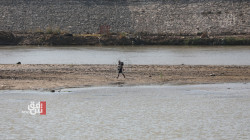
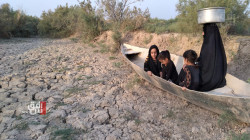
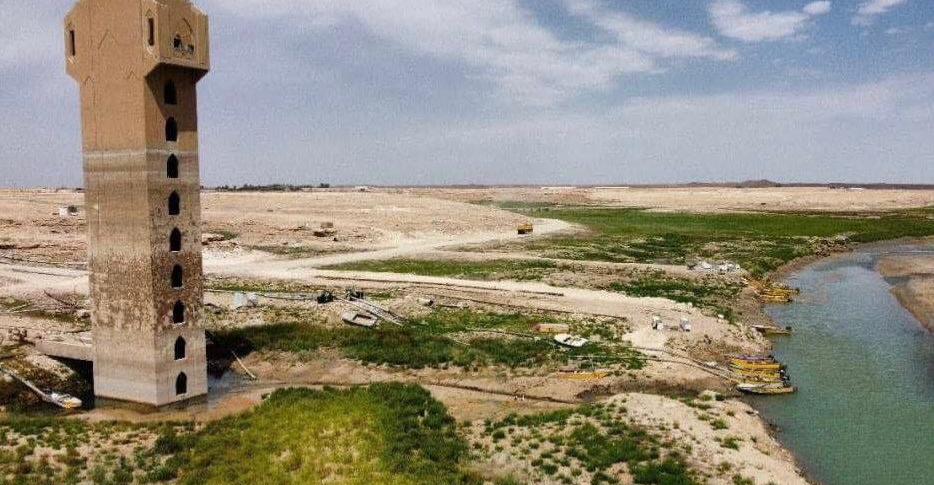
Lake Anah in Iraq’s Al-Anbar province is facing a silent environmental catastrophe, with its water level dropping to the lowest point in decades, causing a widespread loss of biodiversity.
Once a natural refuge for hundreds of species, the lake now mirrors the broader water crisis gripping Iraq, where water levels have plummeted over the past decade due to climate change, dam construction in Turkiye and Iran, and internal mismanagement. According to official and UN reports, the country has lost more than 50% of its arable farmland, while water levels in the Euphrates River dams have reached alarming lows.
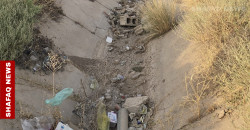
Civil society activist Zuhair Khamis, a resident of Anah district, told Shafaq News that foul odors rise from exposed mud, stagnant water is now a breeding ground for insects and skin diseases, and children who used to swim in it now get sick just by coming near.
The ecology professor at the University of Al-Anbar, Osman Khalaf, told Shafaq News that Lake Anah was one of the richest aquatic ecosystems in western Iraq due to its relatively moderate climate and diverse terrain. He explained that researchers used to document more than 60 species of resident and migratory birds, as well as over 20 species of fish and microorganisms that formed the base of the food chain.
“Today, more than 70% of that diversity is gone because of extreme drought and receding water levels,” he noted, warning that the disappearance of these species is not just an environmental loss but the collapse of entire interconnected ecosystems that once helped maintain natural balance.
Authorities, Khalaf cautioned, still treat lakes as mere water storage sites rather than ecosystems that must be protected, indicating that “this catastrophic mindset is accelerating the disappearance of the lake.”
In statements to our agency, Anah District’s media office acknowledged ongoing challenges facing the fishing sector but downplayed the role of water scarcity in this year’s production drop.
Despite the overall water shortage, the Euphrates River’s level this year is relatively better than in previous years, which helped reduce the expected damage to fish stocks, the office clarified, adding that water scarcity is not the only reason, as unregulated fishing and lack of environmental oversight are also major contributing factors.
Water researcher Qasim al-Rawi linked the lake’s deterioration to Iraq’s broader water management crisis and an imbalance in agreements with upstream countries, particularly Turkiye and Iran, noting that Ankara has built more than 22 dams without regard for the needs of Iraq and Syria.
Lake Anah, he confirmed, relies almost entirely on the Euphrates River, whose flow has dropped to just 35% of its historic average, and emphasized that solutions must go beyond international appeals. “We need to restructure Iraq’s internal water management and implement water harvesting and wastewater treatment plans,” he stressed.