Iraq prepares 13K graves as mass grave legacy deepens


Shafaq News- Baghdad
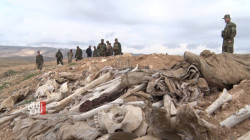
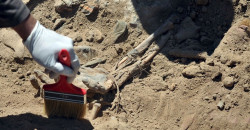
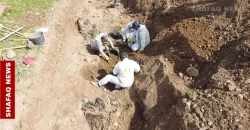
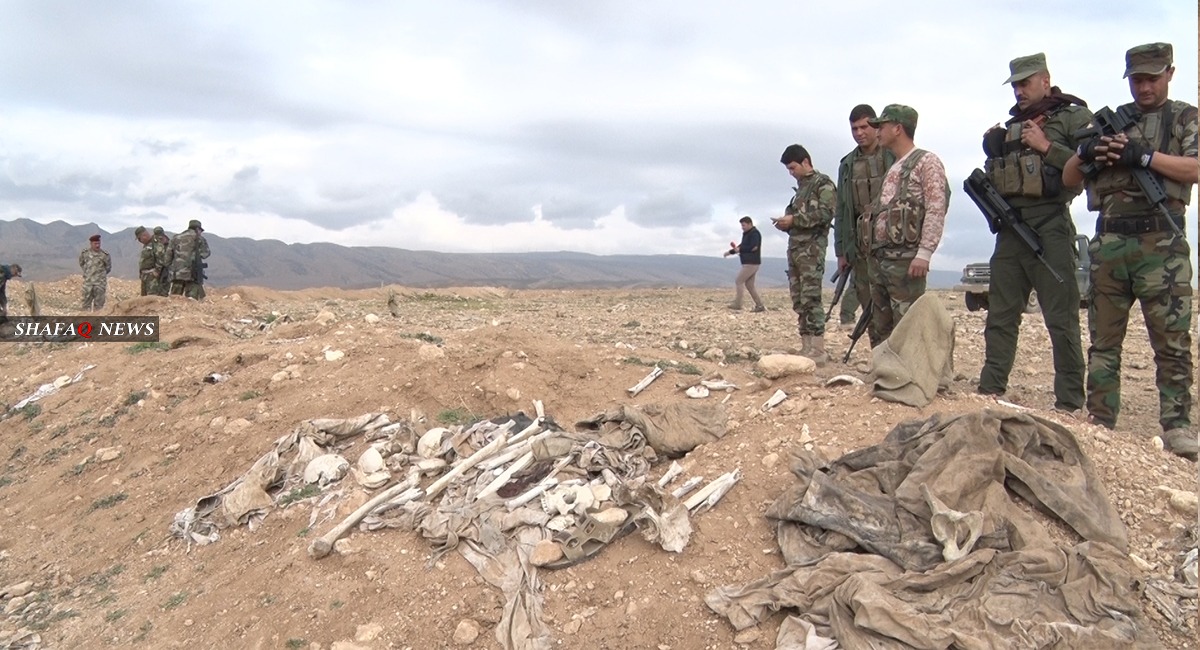
Iraq’s forensic authorities are preparing 13,000 graves to receive victims’ remains recovered from mass grave sites across the country after identification and examination procedures are completed, a source told Shafaq News.
The source said Iraq’s Medico-Legal Directorate is currently holding around 13,000 sets of remains extracted from mass graves pending DNA matching and identification before they are returned to families for burial.
The update came as the Iraqi Center for Documenting Crimes of Extremism held a scientific symposium titled “Mass Graves… Living Testimonies to the Crimes of the Baath Regime,” focused on documenting historical violations and promoting transitional justice efforts.
Center head Abbas al-Quraishi said the event brought together researchers and specialists in history, law, and human rights to examine “one of the darkest chapters in Iraq’s modern history.”
The symposium focused on documenting evidence, testimonies, and historical records linked to mass grave crimes while discussing mechanisms for justice, compensation, and national reconciliation, al-Quraishi told Shafaq News. According to our correspondent, participants said systematic repression under Saddam Hussein’s Baathist regime targeted broad segments of Iraqi society, particularly Shiites, Kurds, Feyli Kurds, and Shiite Turkmen, alongside other religious and sectarian communities subjected to arbitrary detention, forced displacement, enforced disappearance, and mass killings.
Read more: HRW urges Iraq to intensify mass grave exhumations
According to Iraq’s Martyrs Foundation and United Nations reports, more than 200 mass grave sites have been identified across Iraq, many dating back to the Baath era, including graves linked to the 1988 Anfal campaign against Kurds, the 1991 Shaaban uprising, and crackdowns on political opponents during the 1980s.
New waves of mass killings emerged after 2003 with the rise of extremist groups including al-Qaeda and ISIS. Among the most notorious atrocities were ISIS’s 2014 massacre of Yazidis in Sinjar and the execution of more than 1,700 Iraqi military cadets at Camp Speicher.
Read more: A decade of suffering: Yazidis still seeking justice after ISIS atrocities
ISIS captured large parts of northern and western Iraq in 2014 and left behind dozens of mass graves after being driven from its strongholds by Iraqi and Kurdish forces.
A 2018 report by the United Nations Assistance Mission for Iraq documented at least 202 ISIS-linked mass grave sites across Nineveh, Kirkuk, Saladin, and al-Anbar provinces, estimating that between 6,000 and 12,000 victims were buried in those locations.