Hundreds of ISIS families from Al-Hol camp resettle in Saladin


Shafaq News – Saladin
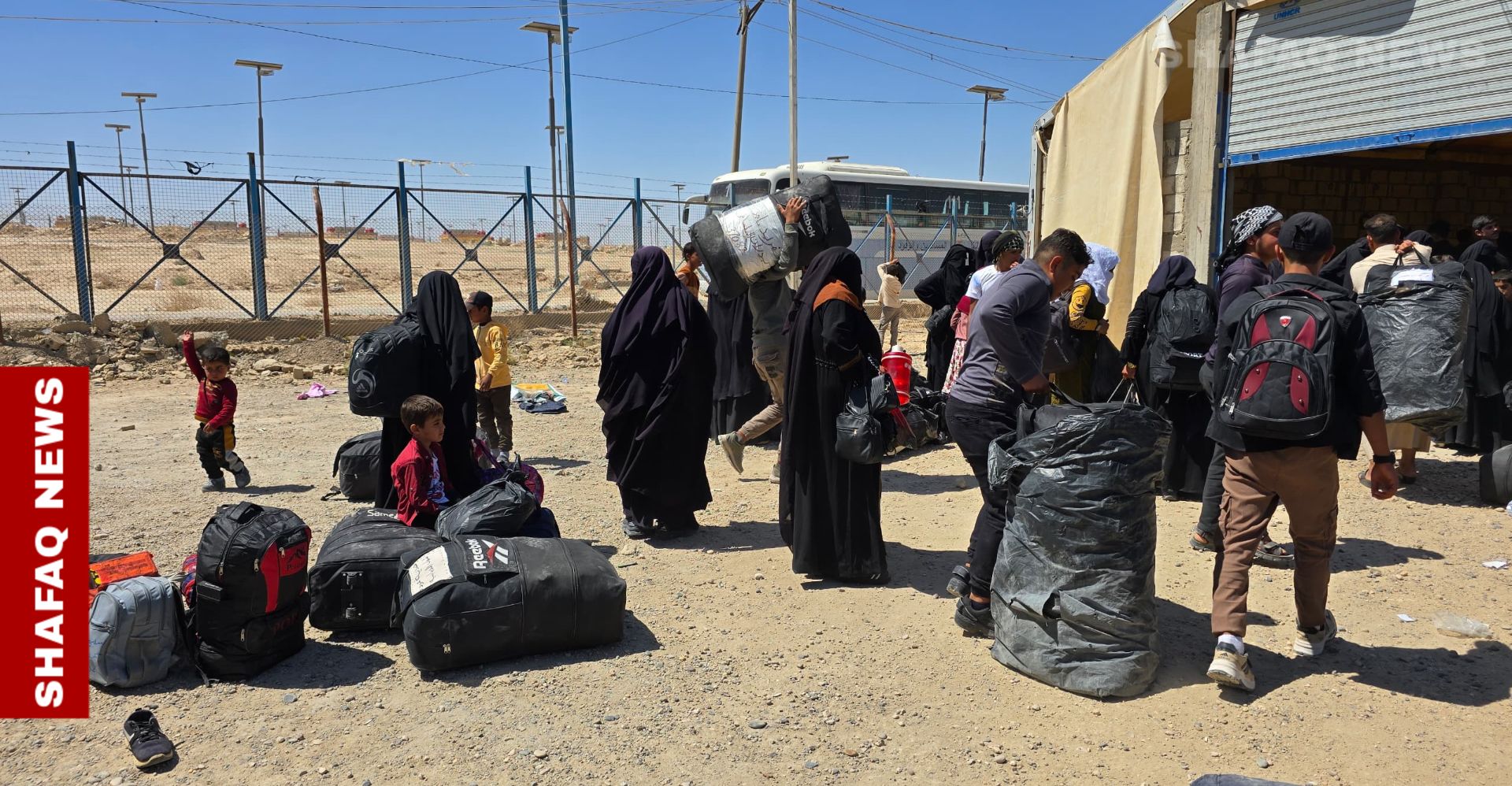
Nearly 500 families associated with the Islamic State (ISIS) have returned to Saladin province since the beginning of July, an Iraqi security source told Shafaq News on Wednesday.
The source explained that the families were relocated in phases after undergoing strict security screening and preliminary rehabilitation at Al-Jadaa camp, southern Mosul. They have since been distributed across several districts, including Baiji, Shirqat, Tikrit, Dhuluiya, Samarra, and Balad, under the supervision of Saladin Operations Command and local security forces.
The returns coincide with Iraq’s preparations to receive a new batch of displaced families from Al-Hol on Thursday. According to the source, around 230 families are expected to arrive at Al-Jadaa, where they will participate in psychological and social rehabilitation programs before being sent back to their hometowns.
Security warnings
Security expert and academic researcher Khalil al-Jubouri warned that reintegration efforts could backfire without effective rehabilitation programs addressing the psychological, social, and security dimensions of these families.
“Integrating ISIS families into Iraqi society is a major challenge, especially in areas still reeling from the war, sectarian conflict, and tribal disputes,” he told Shafaq News, noting that earlier reintegration programs, funded by the United Nations Development Programme (UNDP), have largely stalled following US President Donald Trump’s decision to withdraw financial support.
Civil society activist Hussein Abdullah emphasized the need for meaningful local participation in the reintegration efforts. “The challenge isn’t just about returning the families—it’s about ensuring they’re not marginalized again, which could lead to isolation or renewed radicalization,” he told Shafaq News.
Abdullah noted that while civil society organizations have worked to promote social cohesion, these efforts need tangible support from both the government and international partners to be sustainable.
Additionally, Sheikh Saadoun al-Dulaimi, a community leader in Saladin, voiced concern over the return of ISIS-affiliated families, particularly to areas that were directly targeted by the group during years of conflict.
“Forgiveness or reconciliation cannot be imposed through administrative measures,” al-Dulaimi affirmed to Shafaq News, stating that real healing requires genuine community reconciliation, security guarantees, and continuous monitoring.
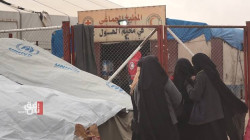
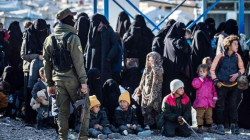
Located in northeastern Syria, Al-Hol camp is considered one of the world’s most complex displacement sites, housing some 50,000 people—mostly women and children, including thousands of Iraqis.
United Nations reports have described the camp as a “ticking time bomb,” warning that it serves as fertile ground for extremist recruitment and ideology amid deteriorating security and humanitarian conditions.
According to official figures, Iraq has repatriated over 5,000 individuals from Al-Hol as of mid-2025 as part of a broader plan to close the file on ISIS-linked displacement. However, authorities acknowledge that major social, political, and security obstacles remain.