Dhi Qar: Iraq water crisis has displaced 60,000 people


Shafaq News- Dhi Qar
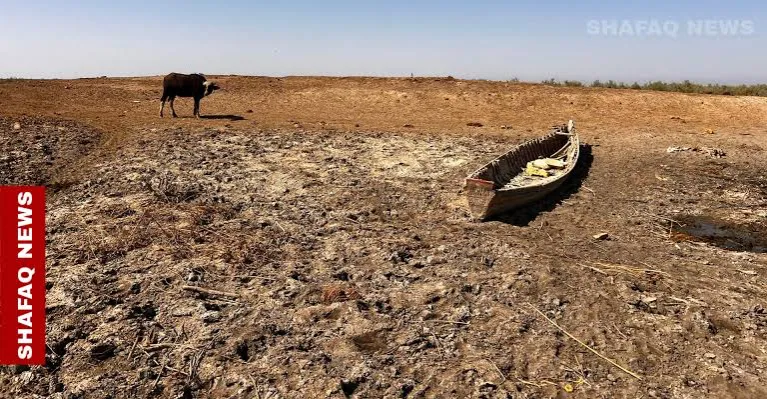
More than 10,500 families —nearly 60,000 people— have been displaced in Iraq’s southern Dhi Qar province due to worsening water shortages and climate change, a provincial adviser said on Tuesday, warning of escalating social and economic consequences.
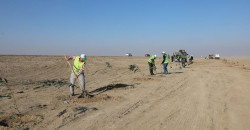
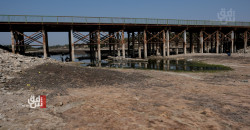
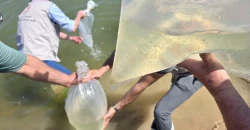
Haider Saadi, adviser to the Dhi Qar province on desertification and drought affairs, told Shafaq News that 98% of the province’s wetlands and agricultural areas have turned into barren, desert-like land after a sharp decline in water inflows, adding that the crisis over the past four years has led to the death of more than 15,000 buffalo and the loss of 90% of fish stocks, describing it as “the destruction of biodiversity in the region.”
Saadi warned that the mass displacement has increased unemployment and illiteracy, triggered demographic shifts, and contributed to social tensions between host communities and displaced families. Areas receiving migrants are facing severe pressure on education and healthcare services, while abandoned villages have become “empty barracks” that could be exploited by criminal groups.
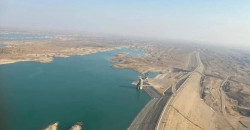
Recent water releases —an increase of 80 cubic meters per second into the Gharraf River— are insufficient to offset declining supplies, particularly as Euphrates River inflows dropped from 44 to 33 cubic meters per second, Saadi explained, calling for declaring a state of emergency and allocating an emergency budget to compensate affected families.
He also urged the federal government to press Turkiye to increase water releases, especially as Iraq enters its sixth consecutive year of drought.
Rural communities across Iraq, especially in southern provinces, have experienced demographic change and migration under mounting drought conditions, contributing to livestock losses, declining fish stocks, soil degradation, and pressures on food security and ecological balance.
Earlier, Iraqi Water Resources Minister Aoun Diab Abdullah said that Iraq is experiencing its most severe drought years due to climate change and upstream dam projects. Chairing a meeting of the central crisis cell to address water scarcity, the minister called for coordinated efforts among state institutions to manage what he described as a “harsh water shortage crisis.” He attributed the situation to both climatic shifts and water storage and irrigation projects built by upstream countries, particularly Turkiye.
The United Nations ranks Iraq among the five countries most vulnerable to climate change impacts, while a World Bank report estimated that by 2040, the country will require $233 billion in investments —equivalent to about 6% of its annual GDP— to meet urgent development needs while pursuing inclusive, low-carbon growth.
Read more: Iraq’s water crisis: A structural rewrite of agricultural governance