Celebrity Chips fuel prize craze across Iraq’s markets


Shafaq News- Baghdad
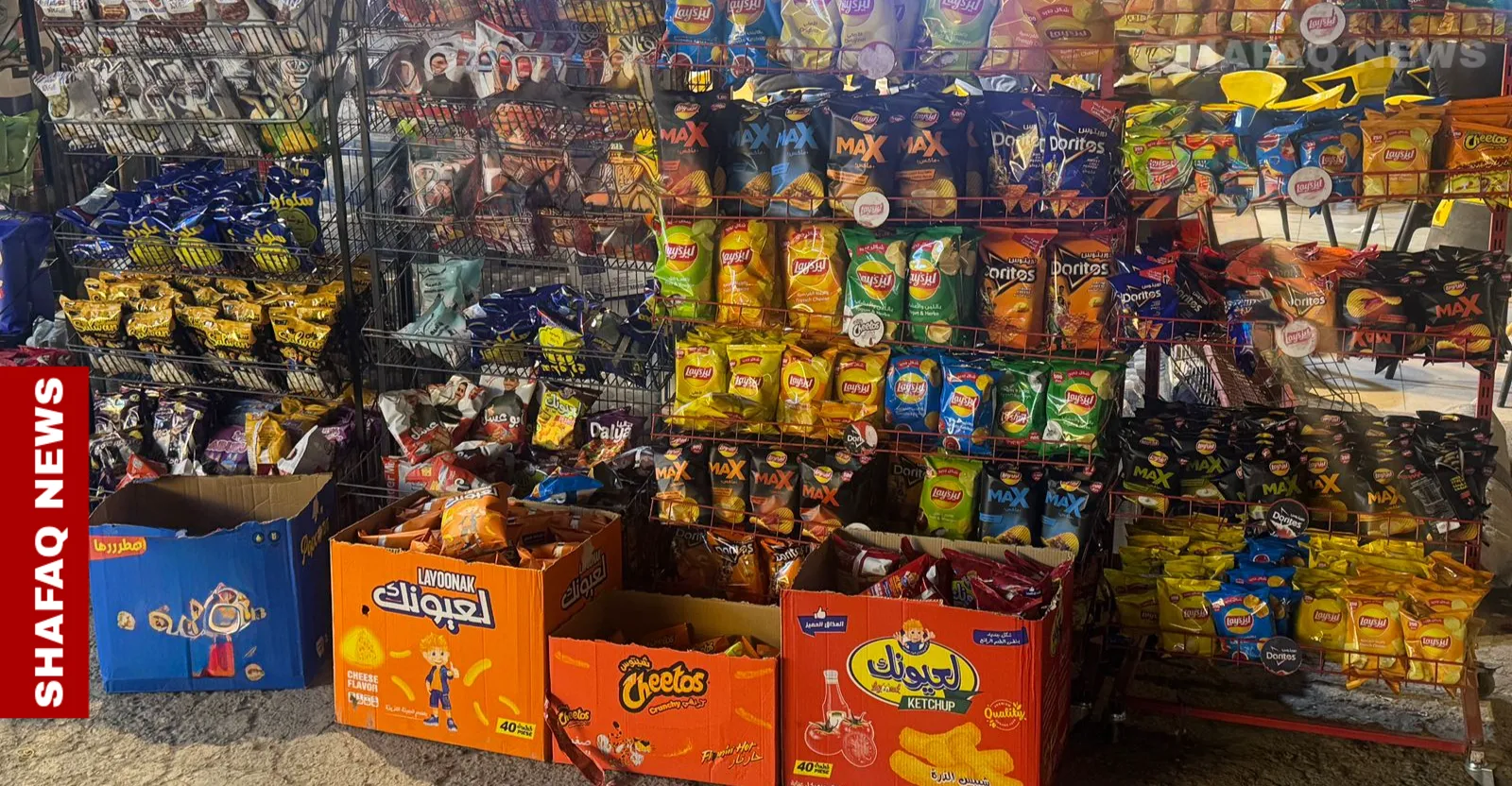
Brightly colored bags of Celebrity Chips (Al-Mashaheer) have swept through Iraqi markets at remarkable speed, driven less by flavor than by the promise printed on their packaging: a chance to win a car, a smartphone, or a cash reward. Promoted heavily by social media influencers, the snacks have turned from a simple treat into what many buyers describe as a “ticket to a dream.”
The idea is simple. Consumers buy bags of chips branded with the names and images of local internet personalities, collect codes or letters inside, and enter prize draws advertised online. The more bags purchased, the higher the perceived chance of winning.
Videos circulating on Iraqi social media platforms show buyers purchasing entire cartons at once, hoping to secure the elusive grand prize.
One such buyer is Abu Jarrah al-Jubouri, who told Shafaq News he sold one of his sheep for 400,000 Iraqi dinars (about $300) to buy a truckload of celebrity-branded chips. “I bought huge quantities, but I didn’t win anything,” he said. “They keep announcing prizes, but I didn’t get a single one.”
Mustafa Hantoush, an Iraqi economic analyst, said the strategy relies on popularity rather than product innovation, pointing out that this business model itself is not illegal and reflects a broader global trend of influencer-driven consumer marketing, adapted to local conditions.
“Some well-known figures use their social media following to market food products like chips or juices,” he explained. “Placing their images on packaging is meant to attract buyers, and from a marketing perspective, this is a natural practice,” Hantoush added that snack foods typically generate high profit margins and that brand recognition plays a significant role in consumer choice. “There is a kind of marketing intelligence here,” he said. “But success still depends on quality. If the product is poor or fails to gain traction, the campaign will fail.”
Behind the boom, however, concerns persist about food safety and oversight. A senior official at Iraq’s Ministry of Health, who requested anonymity, told Shafaq News that food producers are legally required to obtain health licenses through the ministry’s Public Health Department.
Inspection teams collect samples from factories to test quality and compliance, he said, adding that Baghdad alone is divided into 11 health sectors, each responsible for monitoring shops, factories, and salons. Yet he acknowledged that violations can occur.
“Some inspection teams can overlook unlicensed facilities or health violations in exchange for bribes,” the official said. “This happens, though it is not widespread due to existing oversight mechanisms.”
Even some celebrities whose faces appear on chip packaging privately question the trend. One influencer, speaking anonymously, described most celebrity-branded chips as “imitations,” adding that many advertised prizes may not exist. “Most of this is just copying what others are doing,” he said. “Many of these celebrities don’t actually own cars or real cash rewards.”
He warned that the phenomenon could edge into what he called disguised commercial gambling. “If people buy the product mainly to enter a draw, not because they want the food itself, this becomes an issue that needs regulatory intervention to protect society from economic exploitation.”
Despite the controversy, Celebrity Chips remain popular across age groups. University student Rita Mansour said families enjoy eating chips during trips or picnics, and some brands are popular simply because they taste good, not because of fake prizes. But she noted a shift among children. “Kids are now obsessed with these chips because of the prizes they see in social media trends on their phones and their parents’ phones.”
Another Baghdad resident, Rifaat Abdul Qader, said he continues to follow prize announcements despite never seeing a winner. “I believe the prizes are real,” he said. “I buy good quantities, and maybe one day I’ll win a car.”
Shafaq News attempted to contact several celebrities who promote chip products bearing their names, seeking clarification on factory ownership, profit margins, and health standards. None responded before publication.
While the rise of celebrity chips has created jobs for unemployed youth, Hantoush said economic benefits should not shield the phenomenon from scrutiny. “Regulators must review how these products are produced, marketed, and monitored, especially when families, children, and teenagers are the primary targets.