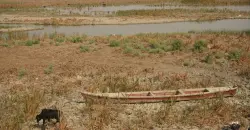
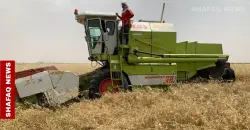
Basra farmers abandon land over water scarcity


Shafaq News – Basra
Severe water shortages in Iraq’s northern Basra have caused major agricultural damage, forcing many farmers to abandon their land, according to the head of the province’s Farmers’ Associations Union.
Raad Al-Abadi told Shafaq News on Saturday that approval to expand cultivation by 30,000 dunams was tied to the use of center-pivot sprinkler systems, a condition he described as impractical because oil companies control large tracts of land and many farm leases remain unrenewed.
The requirement triggered farmer protests and formal petitions to the Basra Provincial Council and the Iraqi Ministry of Agriculture, requesting an exemption and temporary permission to continue conventional irrigation until a final decision is reached.
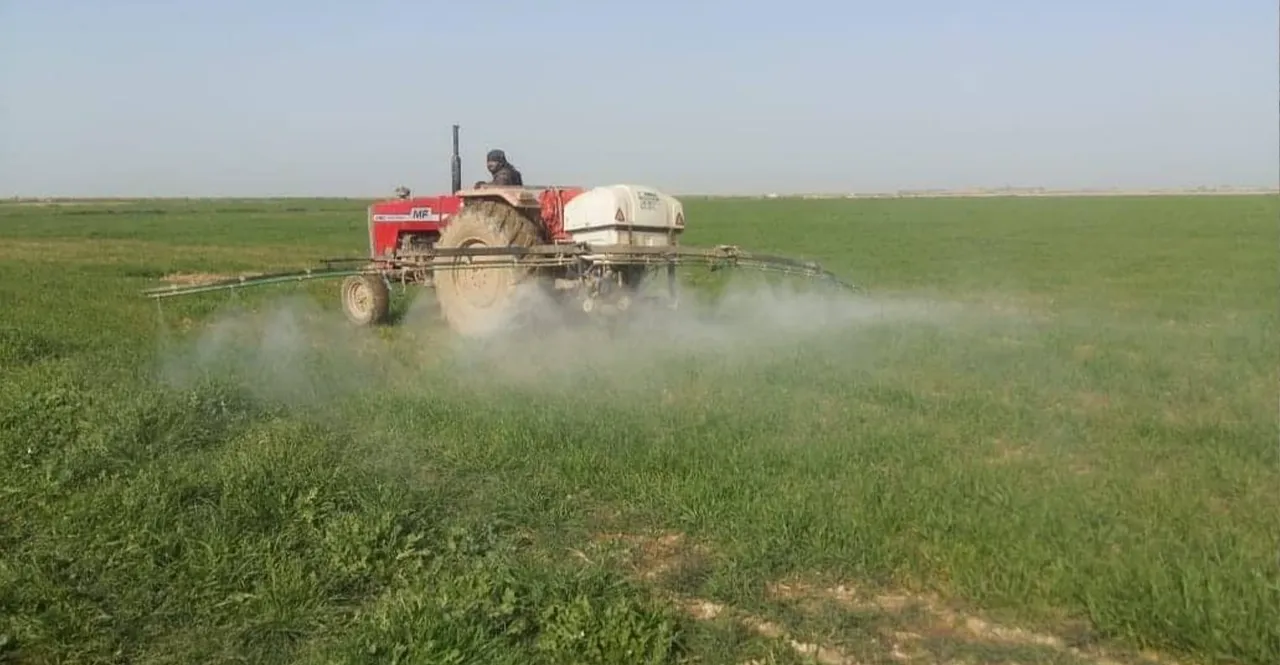
Basra’s agriculture, Al-Abadi explained, relies on date palms, strategic crops, leafy vegetables, and tomatoes, with production concentrated in the southwest, including Al-Zubair, Safwan, Umm Qasr, and Khor Al-Zubair. He noted that tomato farming spans both summer and winter seasons and requires high upfront investment for land preparation, fertilizers, seeds, pesticides, and plastic coverings.
Support for tomato growers in Al-Zubair remains minimal, he added, with pesticide assistance covering less than 1% of demand, a gap that has pushed some farmers to leave agriculture altogether.
Al-Abadi urged authorities to release overdue payments for the 2024–2025 season, introduce emergency aid, protect tomato production, and increase water releases to curb saltwater intrusion, warning that these steps are critical to restoring Basra’s agricultural output and food security.
The United Nations ranks Iraq among the world’s five most climate-vulnerable countries, while the World Bank warned in late 2022 of urgent climate risks requiring a shift toward low-carbon development.
Read more: Drop by drop: Can Iraq avert a thirsty future?
In early 2025, the Iraq Strategic Center for Human Rights reported that climate pressures have erased about 30% of productive farmland over three decades, posing a growing threat to food security.
Water conditions have worsened over the past four years as the Tigris River and Euphrates River fell to historic lows, a decline the General Directorate of Dams and Reservoirs linked to reduced rainfall and snowfall upstream.
Official figures show desertification consuming about 100,000 dunams annually and cutting arable land in half, while the UN Food and Agriculture Organization estimates forest cover at just 8,250 square kilometers, roughly 2% of Iraq’s territory.
Read more: From drought to saltwater: Iraq's deepening water crisis