Ancient bridge partially uncovered at Iraq's Larsa


Shafaq News- Dhi Qar
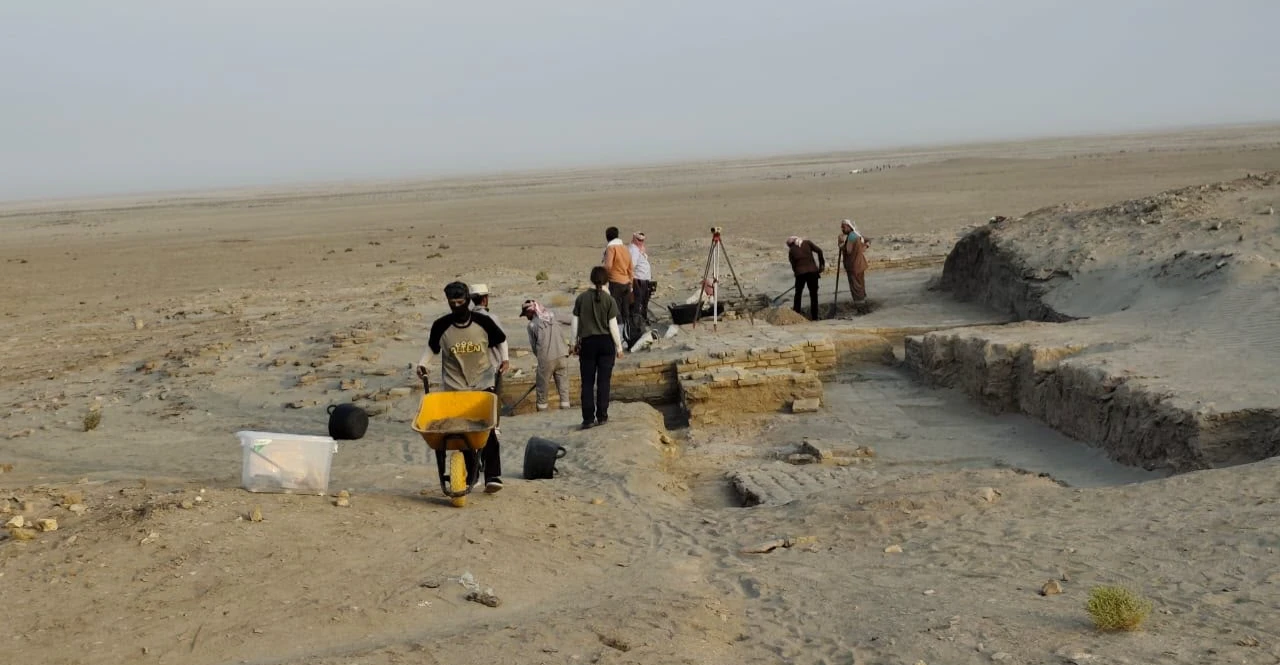
Archaeologists have uncovered part of an ancient bridge in the Mesopotamian city of Larsa in Iraq's Dhi Qar province, provincial Antiquities and Heritage Director Shamil Al-Rumaidh told Shafaq News on Sunday.
The bridge, named after King Sin-iddinam, crosses the city's main irrigation canal and was constructed using fired and paving bricks. Excavations have exposed only half of the structure, with work on the remaining section planned for future archaeological seasons, according to Al-Rumaidh.
The French archaeological mission also discovered a clay tablet containing an account of the bridge, offering new information about its history and use in the ancient city.
Al-Rumaidh explained that a French mission led by Regis Vallet conducted excavations between 2022 and 2026, uncovering six city gates, a palace, and a major temple. The mission also recovered around 15 artifacts from the palace, including clay tablets, pottery jars, and statues. This season's work focused on the bridge and temple, with no artifacts found inside the irrigation canal.
Located in northern Dhi Qar and also known as Tell al-Senkereh, Larsa flourished after the fall of the Third Dynasty of Ur —a Sumerian dynasty based in the ancient city of Ur. During King Sin-iddinam's reign, the city saw major construction projects, including temples dedicated to Tammuz and Ishtar and the Silasi Palace.
Archaeological excavations at Larsa began in 1950 under a French mission and resumed after 2003, revealing numerous historical structures and artifacts.
Read more: Discover Iraq: Dhi Qar, the forgotten gem of Mesopotamia