Bangladeshi students defiant after PM's pledge, protests intensify
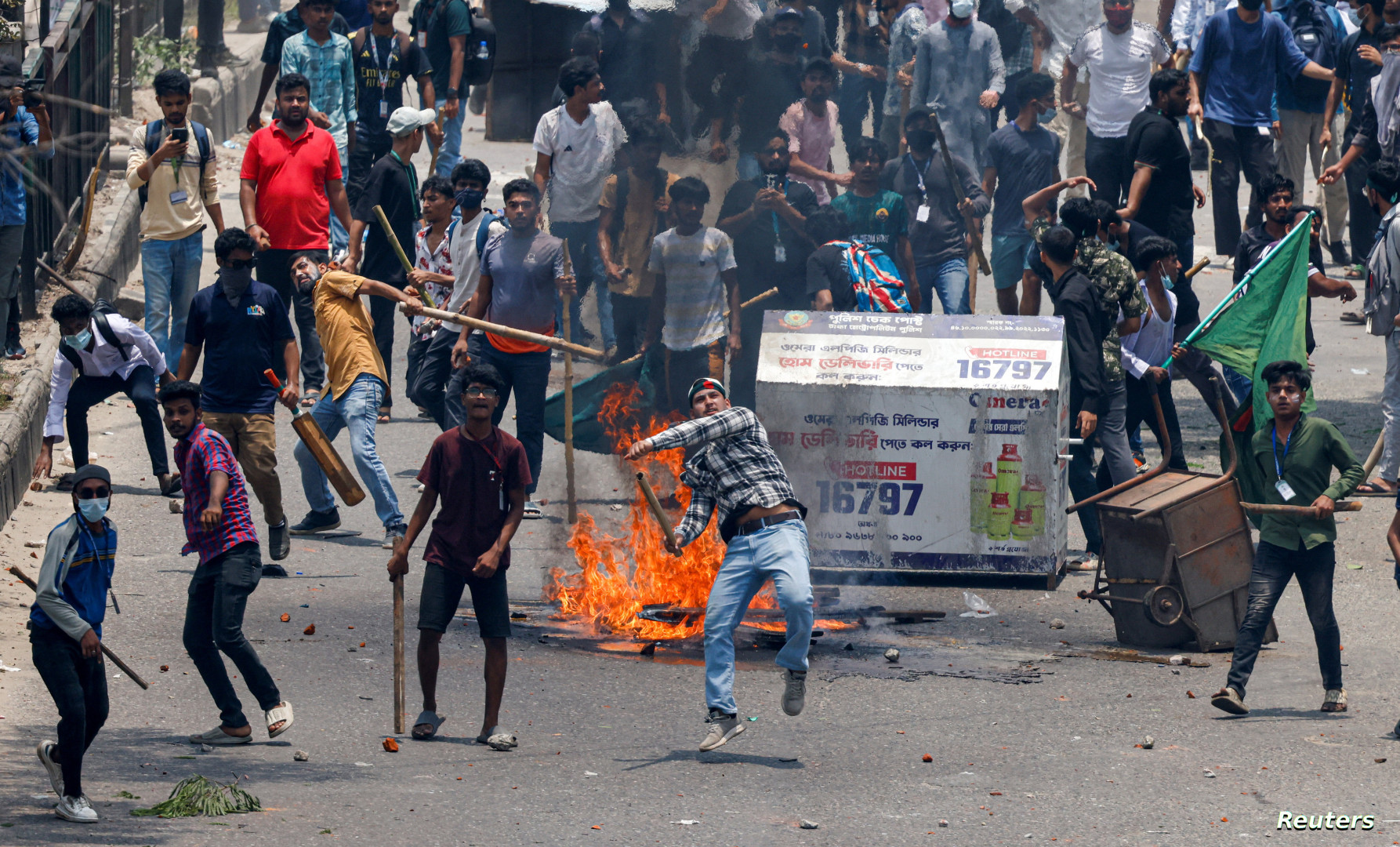


Shafaq News/ On Thursday, Bangladeshi students pressed on with nationwide protests against civil service hiring rules, rebuffing an olive branch from Prime Minister Sheikh Hasina, who pledged justice for 18 killed in the demonstrations.
Hasina's government has ordered schools and universities to close indefinitely and stepped up efforts to contain weeks of rallies demanding equal access to public sector jobs.
Riot police again fired tear gas and rubber bullets to disperse crowds of protesters, with 11 more deaths reported throughout the day as the government ordered the shutdown of mobile internet networks to quell demonstrations.
Hasina condemned the "murder" of protesters in a televised address on Wednesday and vowed that those responsible will be punished regardless of their political affiliation. But Students Against Discrimination, the main group behind this month's rallies, dismissed her words as insincere and urged supporters to press on. "It did not reflect the murders and mayhem carried out by her party activists," Asif Mahmud, one of the coordinators of the protests, told AFP.
Gulf Times news stated that fresh clashes broke out in several cities across Bangladesh throughout the day as riot police marched on protesters, who began another round of human blockades on roads and highways. Police injured dozens of students by firing rubber bullets and tear gas canisters at a crowd of more than 1,000 people gathered at Bangladesh's top private university in Dhaka.
It added, helicopters rescued 60 police officers who were trapped on the roof of a campus building at Canadian University, the scene of some of the capital's fiercest clashes on Thursday, the elite Rapid Action Battalion police force said in a statement.
Three students and a rickshaw driver were brought dead to one Dhaka hospital. "They all had rubber bullet injuries," Kuwait Moitri Hospital assistant superintendent Mahfuz Ara Begum told AFP. "More than 150 students are also being treated here. Rubber bullets hit most in their eyes."
Other hospitals reported a combined total of seven other deaths to AFP throughout the day, including five in Dhaka and two in nearby cities. Seven others were killed earlier this week.
Bangladeshis reported widespread mobile internet outages around the country on Thursday, two days after internet providers cut off access to Facebook -- the protest campaign's key organizing platform.
Minister of state for Posts, Telecommunications and Information Technology, Zunaid Ahmed Palak told AFP that the government had ordered the network cut off. He earlier told reporters that social media had been "weaponized as a tool to spread rumors, lies, and disinformation," forcing the government to restrict access.
Along with police crackdowns, demonstrators and students allied to the premier's ruling Awami League have also battled each other on the streets with bricks and bamboo rods.
Hasina's speech did not assign responsibility for the deaths, but descriptions from hospital authorities and students suggest at least some died when police used supposedly non-lethal weapons in demonstrations. Rights group Amnesty International said video evidence from clashes this week showed that Bangladeshi security forces had used unlawful force.
Clashes overnight included a battle on Dhaka's outskirts between police and more than 1,000 protesters who set fire to a roadside toll booth. "We spent the whole night fending off attacks from the protesters," deputy police commissioner Iqbal Hossain told AFP.
Critics say the scheme benefits children of pro-government groups that back Hasina, 76, who has ruled the country since 2009 and won her fourth consecutive election in January after a vote without genuine opposition. Her administration is accused by rights groups of capturing state institutions and stamping out dissent, including by the extrajudicial killing of opposition activists.
Mubashar Hasan, a Bangladesh expert at the University of Oslo in Norway, said the protests had grown into a wider expression of discontent with Hasina's autocratic rule. "They are protesting against the repressive nature of the state," he told AFP. "Protesters are questioning Hasina's leadership, accusing her of clinging onto power by force," he added. "The students are, in fact, calling her a dictator."