Washington disables cargo ship in Gulf of Oman


Shafaq News- Washington
US forces disabled a Panama-flagged cargo vessel in the Gulf of Oman after it attempted to breach Washington’s naval blockade against Iran, US Central Command (CENTCOM) said on Sunday.
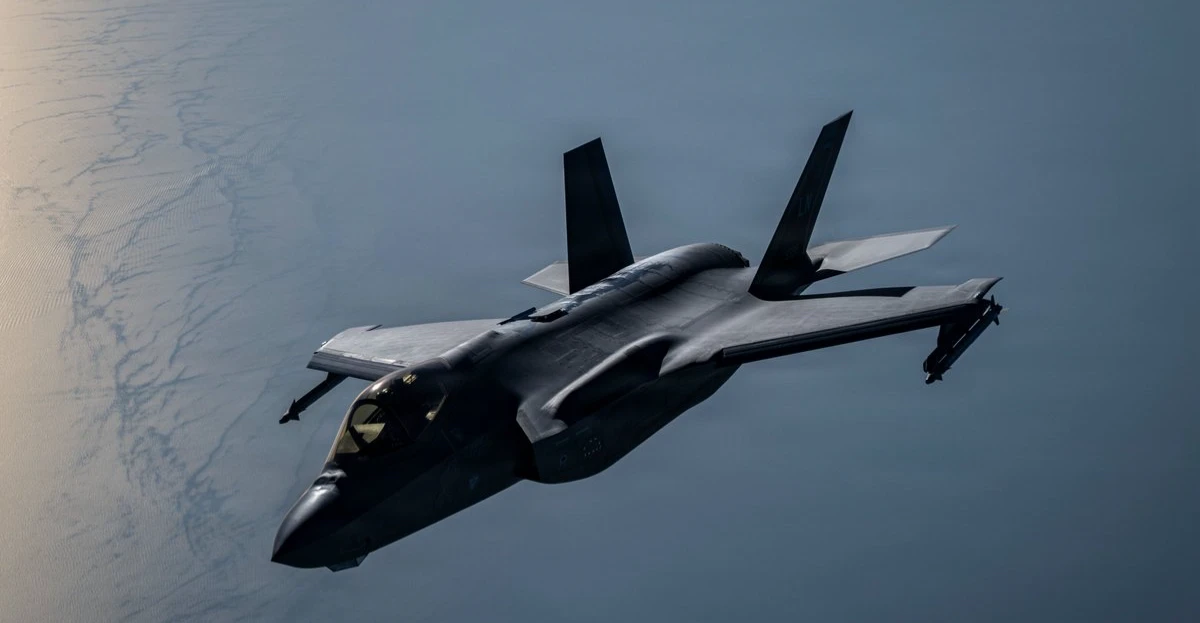
A US fighter jet struck the stern of the M/V Ocean Molica, also known as Arika Sun, on Oct. 10 after its crew ignored repeated warnings, according to CENTCOM, which added that the strike disabled the ship’s propulsion system without causing casualties.
U.S. Forces Disable Cargo Vessel Attempting to Violate Blockade TAMPA, Fla. — U.S. Central Command (CENTCOM) forces disabled a commercial cargo vessel in the Gulf of Oman, Oct. 10, after the ship’s crew ignored repeated warnings and attempted to run the ongoing naval blockade against Iran. A U.S. military fighter jet struck the stern of Panama-flagged M/V Ocean Molica (also known as the “Arika Sun”) with a precision munition, fully disabling the ship’s propulsion without harming the crew. The large cargo vessel was attempting to transit regional waters after having previously departed an Iranian port. CENTCOM forces resumed America’s blockade against all ships entering or departing Iranian ports on July 14. Four commercial vessels have been disabled and 135 ships have been turned around during three months of strict enforcement. Additionally, U.S. forces have destroyed 10 tankers linked to the Islamic Revolutionary Guard Corps' multibillion-dollar shadow network over the same period. All mariners are advised to heed blockade warnings from CENTCOM forces. Crews should also continue to monitor Notice to Mariners broadcasts and contact U.S. naval forces on bridge-to-bridge channel 16 when operating in the Gulf of Oman and Strait of Hormuz approaches.
— U.S. Central Command (@CENTCOM) October 11, 2026
The vessel had departed an Iranian port and was attempting to transit regional waters despite the blockade, which Washington resumed on July 14.
Over three months of enforcement, US forces have disabled four commercial vessels, turned back another 135, and destroyed 10 tankers allegedly linked to the Islamic Revolutionary Guard Corps’ (IRGC) shadow shipping network, CENTCOM reported.
The command urged mariners near the Strait of Hormuz and Gulf of Oman to heed blockade warnings, monitor maritime notices, and maintain communication with US naval forces.
A day earlier, the IRGC Navy claimed that a crude oil supertanker had struck a sea mine and exploded while attempting to leave Hormuz through a route Tehran considers unauthorized. Iranian forces alleged that the unidentified vessel had switched off its navigation and positioning systems.
The IRGC had also threatened on Friday sanctions against shipping companies complying with US instructions and warned of action against vessels using routes it considers illegal, including beyond the strait.
Citing maritime security sources, Reuters documented at least 12 attacks, attempted strikes, or harassment incidents involving tankers near Hormuz between Sept. 28 and Oct. 5.
Shipping traffic has declined sharply, with Kpler data cited by Reuters showing just seven commodity vessels crossing the waterway on Oct. 6, the lowest daily figure since July 23. Crude oil flows stood at approximately 10.1 million barrels per day, about 74% of pre-war levels.