Putin offers to mediate Iran-Israel crisis


Shafaq News/ Russian President Vladimir Putin expressed readiness to mediate an end to the escalating conflict between Iran and Israel, proposing a settlement that safeguards Tehran’s right to pursue a peaceful nuclear program.
Speaking to international news agency journalists on the sidelines of the St. Petersburg International Economic Forum, Putin called the situation “delicate,” but said a resolution was possible. “In my opinion, a solution can be found,” he noted.
Putin confirmed that Russia had shared its proposals with Iran, Israel, and the United States. “We are not imposing anything on anyone, we are simply talking about how we see a possible way out of the situation. But the decision, of course, is up to the political leadership of all these countries, primarily Iran and Israel,” he said.
In remarks avoiding speculation, Putin declined to comment on suggestions that Israel or the US could attempt to assassinate Iran’s Supreme Leader Ayatollah Ali Khamenei. “I don’t even want to discuss such a possibility,” he said.
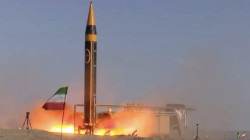
He also revealed that despite Israel’s airstrikes, Iran’s nuclear program remains intact. “These underground factories, they exist, nothing has happened to them,” adding that over 200 Russian employees at the Russian-built Bushehr nuclear plant remain safe under an agreement with Israel.
Putin’s remarks follow his earlier offer to US President Donald Trump to mediate the crisis. However, Trump reportedly rejected the proposal, telling Putin, “Do me a favor, mediate your own. Let's mediate Russia first, okay?,” referring to the war in Ukraine.
While Putin has positioned Russia as a potential broker, the US has voiced increasing frustration. Russian officials say the Middle East risks tipping into chaos if the US joins Israel militarily.
Russian Deputy Foreign Minister Sergei Ryabkov warned Wednesday that direct American involvement would “radically destabilize” the region.
Russia, which signed a strategic partnership with Iran earlier this year but has not included a mutual defense clause, has repeatedly backed Tehran’s right to a peaceful nuclear program under the UN’s Treaty on the Non-Proliferation of Nuclear Weapons.