The Smuggler's Almanac: Iraq's war against narco-innovation



Shafaq News – Baghdad
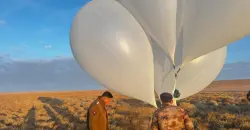
This week, Iraqi security forces in Al-Anbar province intercepted a helium balloon drifting in from Syria, carrying narcotics.
The balloon is the latest in a string of attempts; one in September held 245,000 Captagon pills, another in November carried 22,000, as traffickers search for new ways to float contraband across a border that ground surveillance cannot fully police.
Brigadier General Akram al-Rashid, director of Al-Anbar's Anti-Narcotics Directorate, told Shafaq News the security forces have intercepted every balloon so far. Still, the method signals a new phase in an “arms race” that grows stranger every year.
The UN Office on Drugs and Crime recorded a 3,380% surge in Iraqi Captagon seizures between 2019 and 2023. Behind that spike lies a catalogue of concealment methods that would be absurd if they were not deadly.
In March 2024, security forces dismantled a network moving crystal meth inside hollowed walnut shells—eleven traffickers across four provinces, packaging narcotics like pistachios. Months later, the same substance appeared in Baghdad baked into flatbread.
Hussein al-Tamimi, spokesperson for Iraq’s General Directorate of Narcotics, told our agency that traffickers have gone further, surgically implanting drugs inside the stomachs of livestock. In August 2025, Baghdad authorities found meth hidden in children’s toys, a pistol inside a car wheel, and in Babil, narcotics stuffed into a shoe hanging from a motorbike.
At the Baghuz crossing along the Euphrates, Captagon and hashish floated downriver in sealed plastic containers, some wrapped in reeds to blend in with debris.
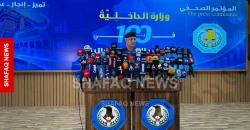
“The methods traffickers use are evolving,” Al-Tamimi said. “While they innovate, our officers adapt.”
Iraq has deployed radar systems and thermal drones with ranges of up to 80 kilometers. The Interior Ministry reported 1,201 trafficking networks dismantled over three years, 14 tons of narcotics seized, and 23,118 convictions. Even so, crystal meth accounts for 37% of national consumption, and Captagon 34%, with most users between the ages of 15 and 30.
Security expert Ali al-Maamari told Shafaq News that trafficking flourishes amid porous borders and Iraq’s relatively stronger economy, drawing products from Syria, Iran, and Afghanistan.
Every walnut cracked open, every balloon shot down, is a “tactical” win. Yet somewhere across the border, the next method is already in the making.