Iraq’s fire risk landscape at the start of 2026


Shafaq News- Baghdad
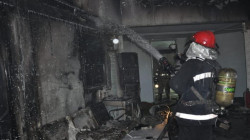
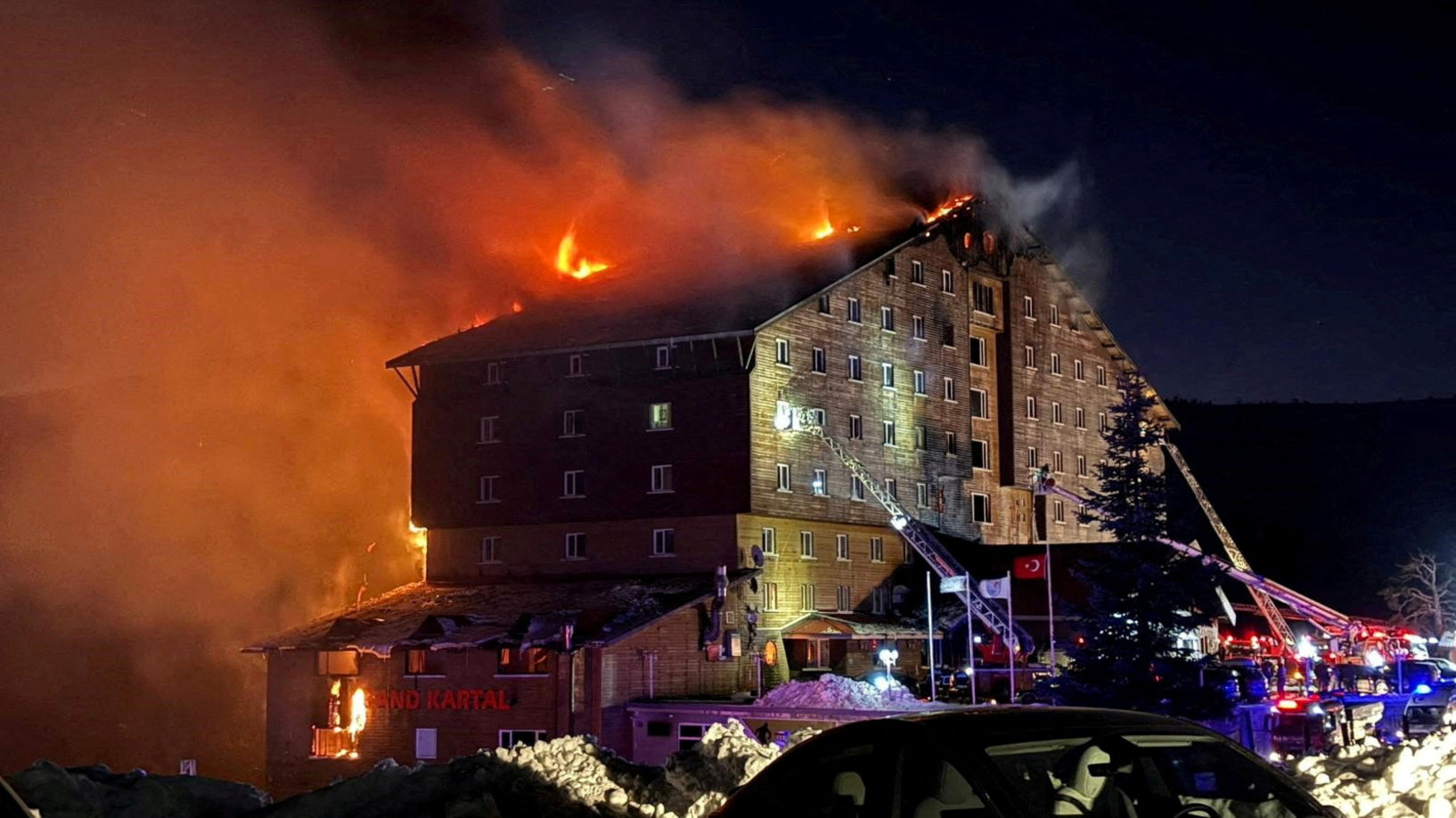
Iraq opened 2026 with a series of fires across homes, displacement camps, markets, factories, state institutions, and energy facilities, leaving multiple people dead, others injured, and causing significant material losses in several provinces during the year’s first weeks.
The incidents come despite the General Directorate of Civil Defense reporting a 74% nationwide drop in fire cases in 2025 compared with previous years, attributing the decline to stricter enforcement, public awareness campaigns, faster emergency response, and the closure of more than 10,000 buildings that failed safety standards.
Homes and Families
Residential fires accounted for some of the heaviest human losses in the opening weeks of 2026, with preliminary accounts repeatedly pointing to electrical faults and gas leaks. In southern Baghdad, a Civil Defense official told Shafaq News that a fire inside a residential apartment in Al-Mahmoudiyah killed a man, his wife, and their daughter, with initial findings attributing the blaze to a short circuit.
Other fatal incidents were reported in Baghdad neighborhoods, including Al-Adhamiya and Al-Sadr City, where fires broke out inside homes after electrical faults and gas-related explosions, including a case in which an electrical short circuit was reported to have triggered a water heater blast before flames spread through the house.
The owner of a bakery was killed in western Baghdad after a fire broke out inside the oven area due to a gas leak, with Civil Defense teams extinguishing the flames and transferring the body for forensic procedures.
Across the cases, authorities said they opened investigations, with forensic steps typically initiated after firefighting teams secure sites and complete cooling operations.
Displacement Camps
Fires also struck displacement camps in the Kurdistan Region, where repeated incidents highlighted the vulnerability of tented and prefabricated housing, and the speed with which flames can spread in crowded settings.
In Duhok, a large fire broke out inside Sharya camp, burning two tents and causing major material losses without injuries. A camp resident, Jamal Sinjari, told Shafaq News that the fire destroyed a tent sheltering a widowed mother and four orphaned children, who lost clothing, documents, and other personal belongings. Local accounts cited wind and limited on-site capabilities as factors that accelerated the spread before Civil Defense teams brought it under control.
Elsewhere in Duhok province, a major fire was reported at Dawoodiya camp, destroying eight cabins used by displaced families and causing significant material losses without injuries, with an investigation opened to determine the cause.
In the Zakho area, another blaze broke out inside Bajed Kendala camp, injuring a woman and a girl, in what officials described as the second fire recorded there in less than two months.
Markets and Commercial Spaces
Urban markets and restaurants were another recurring setting for early-2026 fires, often resulting in heavy material damage in densely built commercial zones.
In Kirkuk, a Civil Defense source said a large fire broke out inside a restaurant on Baghdad Road, prompting security forces to impose a cordon to prevent the flames from spreading to adjacent shops. No injuries were reported, but the blaze caused extensive damage inside the premises.
In Diyala’s Al-Muqdadiyah district, a restaurant fire triggered by a gas leak engulfed the building before workers and customers evacuated. Civil Defense teams, supported by residents, brought the fire under control, with no casualties recorded.
Baghdad also saw blazes in popular markets and warehouses. In Al-Kadhimiya, a fire broke out in the “Balat” market area, while in Kirkuk, a warehouse storing large quantities of powdered milk caught fire in the central market near Al-Jumhouri Hospital. Authorities said the incidents caused significant financial losses, with investigations launched to determine whether electrical faults or storage negligence were involved.
In Erbil, a large fire broke out at a showroom for new vehicles on the main road linking the city to the Khabat district. Civil Defense teams said flammable materials inside the building contributed to the rapid spread of flames, though no injuries were reported.
Factories and Workshops
Industrial and small-scale production facilities also recorded multiple fires, often at sites storing combustible materials or operating heavy electrical equipment. In Baghdad’s Al-Kadhimiya industrial zone, Civil Defense teams extinguished a fire inside a plastic materials factory and warehouse, with preliminary indications pointing to an electrical short circuit. No injuries were reported.
Erbil also witnessed a major blaze inside a potato chip manufacturing plant. Civil Defense officials said 20 firefighting teams were deployed to prevent the flames from reaching nearby warehouses, noting that the fire caused extensive material damage but no casualties because workers had not yet begun their shifts.
Additional incidents were reported in workshops and storage facilities in Baghdad, including a car repair workshop and spare parts warehouse built with materials that Civil Defense described as violating safety requirements. Firefighting teams said they carried out direct entry operations to contain the flames and prevent the spread to neighboring structures.
Across these cases, preliminary accounts frequently cited electrical faults or gas leaks as possible causes.
State Institutions and Critical Infrastructure
Fires even reached state facilities and regulated institutions. In central Baghdad, a fire broke out on one floor of the Ministry of Agriculture building. The ministry said its internal Civil Defense unit, working with government firefighters, contained the blaze quickly, reporting no casualties and limited material damage.
A separate fire erupted at Ibn Rushd psychiatric hospital in Baghdad, prompting emergency evacuation procedures. Civil Defense officials later announced that teams had extinguished the blaze in what they described as record time, without injuries among patients or staff, and requested a forensic investigation into the cause.
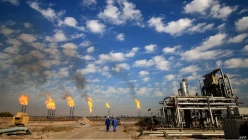
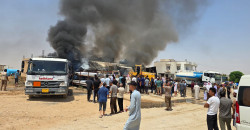
However, the most severe incident of the year so far occurred at the Baiji refinery in Saladin province, one of Iraq’s key oil processing facilities. The Oil Ministry explained that the fire broke out during routine maintenance work to replace a compressor unit, killing two workers and injuring 13 others. The blaze was brought under control “within minutes.”
The refinery fire stood out not only for its casualties but for its location inside strategic energy infrastructure.
By the Numbers
Although overall fire cases declined in recent years —including a drop of nearly 3,000 incidents in the Kurdistan Region between 2024 and 2025— the opening weeks of 2026 have already seen fires reported across residential, humanitarian, commercial, and strategic sites.
Taken together, the early pattern suggests that, despite improved enforcement and faster emergency response, electrical faults, gas leaks, and safety violations remain recurring risks across residential, humanitarian, commercial, and strategic sectors at the start of the new year.