When home becomes the first crime scene: Child abuse inside Iraqi families


Shafaq News
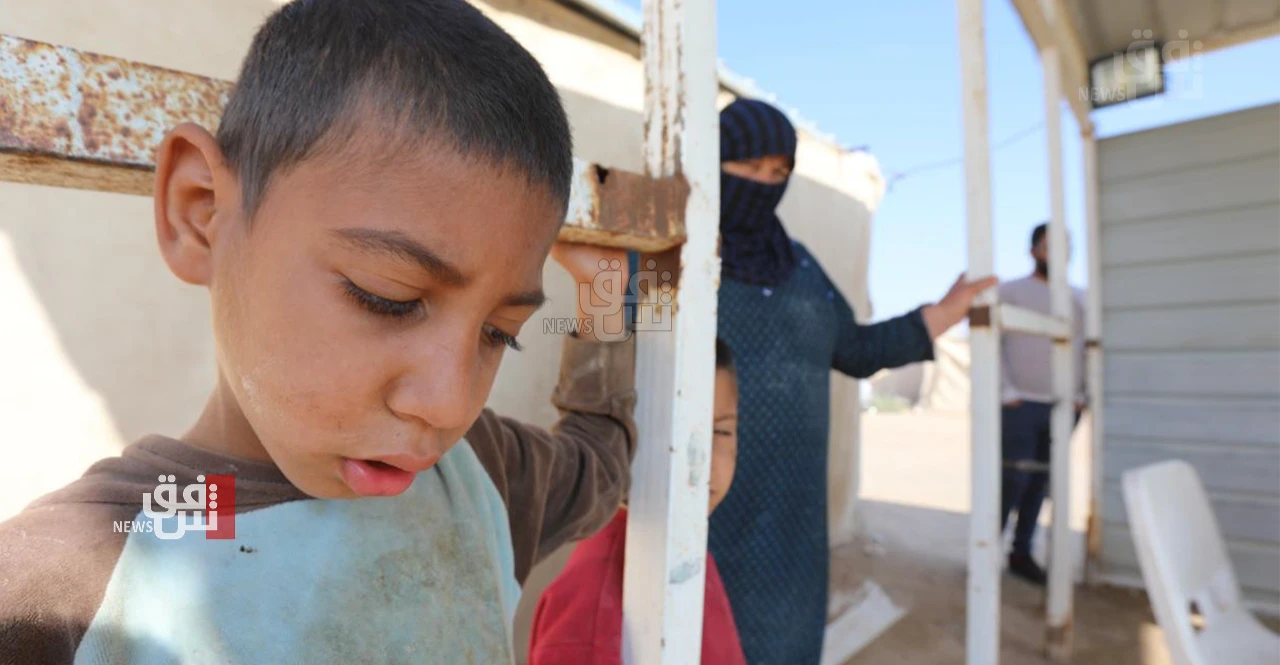
On a winter morning in eastern Baghdad, emergency room staff grew uneasy as they examined Salem (pseudonym), a nine-year-old boy brought in by a neighbor. The bruises along his back and arms were old and new, layered like shadows over his small frame. The explanation offered by his family —that he had fallen while playing— collapsed under medical scrutiny.
The violence had not happened in the street. It had happened at home.
Cases like Salem’s have become increasingly visible across Iraq, surfacing in hospitals, schools, and police stations. Each incident sparked public outrage, yet official data suggested that these are not isolated horrors but fragments of a much larger crisis.
According to the Iraqi Ministry of Interior’s 2025 domestic violence report, approximately 14,000 cases were recorded nationwide, with 6% involving child victims, translating into roughly 840 incidents of abuse inside the family. The Strategic Human Rights Center in Iraq reported that Baghdad alone accounts for about 31% of these cases.
Speaking to Shafaq News, Ali Hassan Al-Khafaji, a clinical psychologist specializing in childhood trauma, explained that most abused children never appear in official statistics. “Accusing a parent often means accusing the person who controls food, shelter, and daily survival,” he added, noting that silence becomes a survival strategy, not a choice. For many children, home —the place that should offer safety— becomes the most dangerous space they know.
Read more: Child abuse in Iraq: a cry for justice and systemic change
Inherited Scars
Parental abuse in Iraq cannot be understood without looking at the past. Decades of war, political instability, and occupation have left deep scars on the nation and on the adults who grew up amid them. Violence was not just visible; it was normalized.
Weak governance and inconsistent law enforcement reinforced the perception that authority is selective —and at home, this often translates into unchecked discipline. A 2024 UNDP governance survey found that more than 50% of Iraqis report low confidence in law enforcement or the judiciary, a vacuum that allows violence to persist behind closed doors.
Zainab Mahdi Al-Bayati, professor of sociology at the University of Baghdad, observed that many parents discipline their children exactly as they themselves were disciplined. “Over time, violence became confused with authority, and fear with respect,” she remarked, noting that cycles of intergenerational violence intensify the problem.
That pattern appears in recent international data. 2025 figures from UNICEF Iraq indicated that children exposed to family or community violence are 2–3 times more likely to replicate it as adults, perpetuating patterns of abuse. Trauma, untreated for decades, continues to shape parenting practices as a default form of control.
According to the same report, UNICEF cited the European Union Agency for Asylum (EUAA) report on Iraq, found that 81% of children under 14 experience violent discipline, while 31% endure severe physical punishment. Legal ambiguity has historically reinforced this normalization. The EUAA report noted that Iraqi legislation once permitted corporal punishment by parents and teachers. Although a Supreme Court interpretation in 2025 prohibited all forms of violence against children, enforcement remains uneven, and public awareness is limited.
“Many families, neighbors, and extended relatives view physical punishment as a necessary method to instill order,” Al-Bayati commented, referencing a recent UNICEF survey that found 67% of caregivers believe corporal punishment is sometimes necessary. That normalization reflects a wider global pattern. In a 2025 technical report, the World Health Organization (WHO) estimated that around 1.2 billion children worldwide are subjected to corporal punishment at home each year, warning that the practice remains “alarmingly widespread” despite mounting evidence of its long-term psychological and social harm. For children, obedience lessons often come at the cost of safety, dignity, and trust.
Read more: From love to bloodshed: Iraq’s family violence epidemic
Hunger Breeds Rage
Economic stress acts as a powerful accelerator of domestic violence. According to UNICEF Iraq, nearly 47% of Iraqi children —around 8.7 million— live in multidimensional poverty, facing deprivation in income, housing, healthcare, education, and nutrition. Meanwhile, Iraq’s updated 2025 Multidimensional Poverty Index (MPI), launched in 2026 by the Iraqi government in partnership with UNDP, recorded nationwide multidimensional poverty at 14.8%, underscoring persistent gaps in education, living conditions, and access to essential services. The same report also recorded 20% unemployment among heads of households, fueling frustration that sometimes falls on children and turns their daily life into a test of endurance.
Speaking to Shafaq News, Ahmed Karim Al-Saadi, a researcher specializing in poverty and social instability, explained that chronic financial strain fosters feelings of failure and humiliation, particularly among parents unable to meet basic needs. In such households, control over children often becomes a substitute for the control lost in society.
“Child labor compounds this pressure, with many children working in street vending, car washing, or workshops to supplement family income,” he noted, adding that when children return home with little to show, punishment frequently follows.
Data from the Ministry of Interior indicated that 73% of registered domestic violence victims are female. Al-Saadi clarified that girls are often controlled through restriction and fear, whereas boys are frequently subjected to physical punishment. “Both patterns undermine a child’s sense of safety,” he assessed. He further explained that cultural expectations and labor pressures shape these patterns: Boys are often expected to work to support the family, while girls manage household duties.
“Failure to meet expectations frequently triggers punishment,” he continued, mentioning that mothers sometimes act as perpetrators, particularly when they themselves endure stress, violence, or humiliation.
Displacement further increases vulnerability. Millions of Iraqis have been forced to flee conflict or disasters, from the US occupation in 2003 to ISIS attacks and subsequent waves of violence, often living in cramped, temporary shelters. The UN found that 36% of displaced households reported at least one child experiencing physical or emotional abuse, underscoring how uncertainty, hunger, and crowded conditions turn ordinary days into constant stress for children.
Failed by Law
Mohammed Fadhil Al-Rubaie, professor of law at the University of Baghdad, pointed out that most child abuse cases conclude with written pledges or informal reconciliation. “Criminal prosecution is the exception,” he explained to our agency, underscoring the limited legal recourse for victims.
The EUAA 2025 report also confirmed that Iraq lacks comprehensive child protection legislation that criminalizes all forms of domestic abuse and enforces nationwide reporting. Schools and hospitals are not consistently required to report suspected abuse. Specialized shelters remain scarce —fewer than 100 nationwide— and rehabilitation services are unevenly distributed.
Warning that the consequences extend well beyond childhood, Al-Rubaie pointed to depression, addiction, and violent behavior, noting that when thousands of children are affected, the issue evolves into a national public health crisis.
Amid this environment, Iraq’s greatest reconstruction challenge may not be rebuilding roads or power grids. It may be restoring the meaning of home itself. At the end, Salem returned to his family after his parents signed a written pledge. No court case followed, and no monitoring mechanism was implemented. He went back to the same house, facing the same risks.
Read more: Child abuse in Iraq: a cry for justice and systemic change
Written and edited by Shafaq News staff.