US repeals 1991 and 2002 Iraq war authorizations, redefining ties with Baghdad


Shafaq News – Baghdad
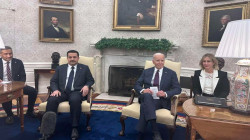
The US Congress’s vote to repeal the 1991 and 2002 Authorizations for Use of Military Force (AUMFs) against Iraq marks a notable shift in the trajectory of relations between Baghdad and Washington, following more than three decades during which Iraq was legally linked to an open state of war.
Included in the draft National Defense Authorization Act (NDAA) for fiscal year 2026, the decision has prompted questions about its political and security implications, as well as the scope of its actual impact on Iraq’s sovereignty, internal stability, and foreign relations.
In Baghdad, the move is seen as the culmination of a prolonged effort to restore sovereignty and close the chapter of past wars. Experts and analysts interviewed by Shafaq News, however, argue that the repeal does not amount to a full withdrawal of US influence, but rather signals a shift away from direct military intervention toward alternative tools, including security and economic mechanisms, that may carry greater weight in the next phase.
Sovereignty Shift
Addressing the issue, Caretaking Government spokesperson Bassem al-Awadi told Shafaq News that he would confine his remarks to the Iraqi Ministry of Foreign Affairs’ statement, describing it as “Baghdad’s clear and official position on the US decision.”
Previously, the Foreign Ministry characterized the US Congress vote as historic, saying it represented a pivotal turning point in redefining the legal nature of relations between Iraq and the United States.
According to the ministry, repealing the authorizations lays the groundwork for a new relationship based on respect for Iraq’s sovereignty, the conclusion of the war legacy, and the strengthening of the strategic partnership. It added that the decision sends a positive signal to the international community that Iraq has become a safe and attractive destination for investment.
From Conflict to Partnership?
Describing the move, Prime Ministerial Adviser for Foreign Relations Farhad Alaaeldin said the repeal constitutes an “important political and legal step that reflects the reality that Iraq today is a fully sovereign state and that the era of war has passed.”
In remarks to Shafaq News, Alaaeldin said the decision confirms a transformation in relations with Washington “from conflict to partnership and mutual respect,” noting that its security implications include reinforcing sovereignty, supporting political stability, and consolidating a normal framework for bilateral relations.
For security expert Sarmad al-Bayati, the decision carries dual significance, delivering a clear message to both the international community and the Iraqi public that the country no longer faces the threat of imminent military action.
Speaking to Shafaq News, al-Bayati said the importance of the repeal lies in affirming that Iraq “has become secure and no longer requires external military intervention as in previous years,” adding that it provides the government with greater momentum and authority to manage state affairs without pressure linked to the potential use of force.
He added that the move contributes to strengthening internal and external stability, while undermining perceptions or scenarios that could justify foreign military intervention under the pretext of Iraq’s security situation.
Military Independence
Within the same security context, a senior security source told Shafaq News that Iraq has increasingly relied on its own capabilities, particularly in the air domain, where military operations and airstrikes are now conducted under full Iraqi management, alongside noticeable improvements in army armament.
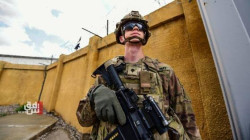
This development follows an announcement by the US-led Combined Joint Task Force on November 5 that Iraqi armed forces had obtained full certification to carry out independent airstrikes after achieving a 100 percent targeting accuracy rate using F-16 and AC-208 aircraft.
US Central Command (CENTCOM) described the achievement as a historic step toward Iraq’s self-reliance in confronting ISIS, citing a decline in the group’s conventional threat and the dispersal of its fighters.
Changing Tools
Offering a political reading, analyst Ramadan al-Badran said the repeal cannot be viewed in isolation from a broader US strategy aimed at avoiding direct military intervention through ground forces in different regions of the world.
He told Shafaq News that the absence of a need for such authorization in Iraq was among the reasons for the repeal, alongside granting the US president alternative authorities to manage limited tactical operations against threats to US security or interests, or those of its allies.
Al-Badran highlighted the growing reliance on small unmanned aerial vehicles, particularly in the Middle East, as a defining feature of this shift, allowing the withdrawal of authorization for deploying conventional forces without diminishing Washington’s capacity to act in defense of its interests.
Economic Alternative
Haitham Numan al-Hiti, a professor of political science at the University of Exeter, said repealing the authorization to use force against Iraq marks the start of a new phase in which the state of war between the two countries formally and fully ends.
At the same time, he warned in comments to Shafaq News that this change “does not necessarily mean a reduction in US pressure, but rather its transfer to the economic and financial sphere.”
Al-Hiti said any future disputes between Baghdad and Washington could be managed through sanctions or financial accountability tools, given US control over key elements of the global financial system. He noted that the repeal coincided with granting the US Department of War authority to reduce security assistance by up to 50 percent, reflecting “a clear inclination toward economic rather than military engagement.”
Iraq’s greatest challenge in the coming period, according to him, will be economic and financial, amid population growth, accumulated debt, corruption, and unstructured public-sector employment. “Washington is fully aware of these vulnerabilities and seeks to address them through non-military instruments.”
Read more: Can the Iran-Israel conflict push Iraq toward the frontline?
US Pressure Cards
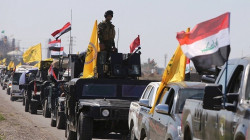
Accordingly, US pressure on Iraq remains in place, albeit in a different form. Washington retains a broad array of tools it can employ to reshape the nature of its relationship with Baghdad. A review of US Treasury Department data shows that some measures continue to target Iraqi figures over what the department describes as links to Iranian entities. At the same time, political pressure from the United States has not subsided at various levels regarding the issue of weapons held by Iraqi factions allied with Iran, with their disarmament repeatedly presented as a fundamental condition for progress in Iraq. US envoy to Iraq Mark Savaya has consistently articulated this position, most notably in one of his recent high-profile statements.
Another question also arises: what if Israel were to target sites inside Iraqi territory with US political backing? This scenario remains possible as long as the region has not moved toward a firm settlement, particularly since the factors that could drive a second large-scale Israeli-Iranian confrontation remain clearly present.
On the economic front, US leverage over Iraq is no less significant. Iraq’s economic reality—characterized by financial fragility, an import-heavy trade balance, and weak domestic production—continues to represent a point of vulnerability that could be used by any regional or international actor during periods of strained relations with Baghdad.
Iraq also faces a severe water crisis, one that recent rainfall is unlikely to ease in the long term. Many critics argue that the water agreement with Turkiye favors Ankara more than Baghdad, turning such challenges into indirect pressure tools on Iraq. These are compounded by Iraq’s economic ties with Iran, which remain a source of concern for Washington. Over the past year, the United States has largely succeeded in blocking agreements for importing Iranian gas used to generate electricity in Iraq.
All of these factors, however, are outweighed by what is considered the most critical issue for Iraq’s economy: oil revenues. As the near-exclusive source of funding for the Iraqi treasury, these revenues are transferred to the US Federal Reserve before being returned to Iraq, underscoring the extent of US control over key Iraqi economic levers.
Despite indications that Iraq is unlikely to face direct US military action, the pressure tools available to Washington remain substantial and effective, confirming that the balance of relations between Baghdad and Washington continues to tilt clearly in favor of the latter.
Written and edited by Shafaq News staff.